CM Dhami Calls for Modern Education in Madrasas
Synopsis
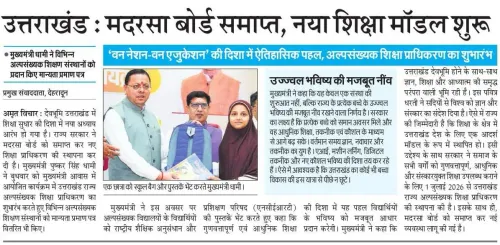
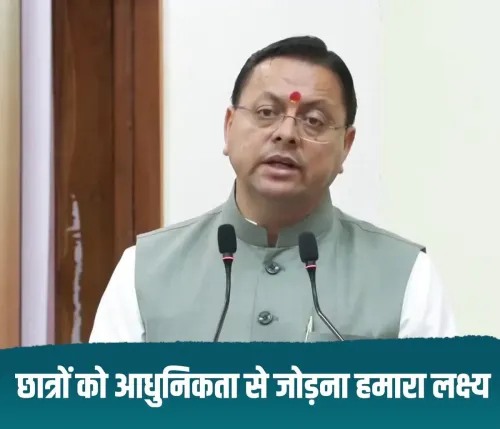
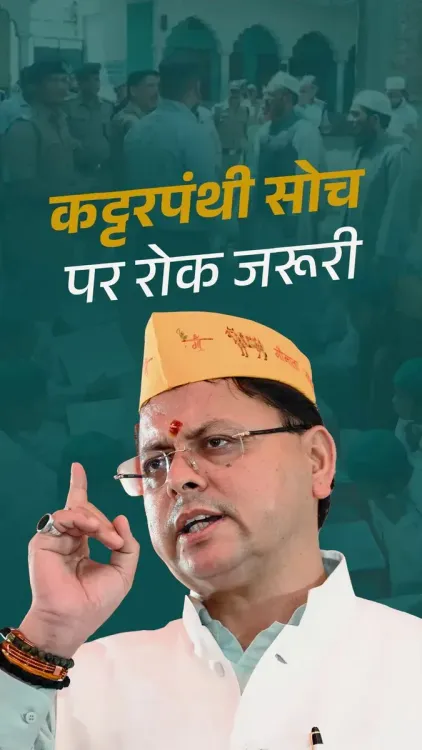
Uttarakhand Chief Minister Pushkar Singh Dhami has called for replacing what he termed 500-year-old orthodox thinking in madrasas with modern, scientific and employment-oriented education, saying every child must connect with the national mainstream and contribute to India's development.
Key Takeaways
CM Pushkar Singh Dhami on June 7, 2026 publicly called for modern, scientific and employment-oriented education in madrasas, replacing what he described as centuries-old orthodox thinking.
He stated the goal is for children from every section of society to receive quality education and integrate with the national mainstream.
The Scheme for Providing Quality Education in Madrasas (SPQEM) , launched in 2004 , and the National Education Policy 2020 already mandate modern curriculum integration in madrasas.
Uttar Pradesh and Assam have undertaken madrasa surveys and regulatory measures since 2017 , reflecting a broader BJP-state pattern that Uttarakhand's position echoes.
No specific legislative measure or funding order was announced alongside the post; the statement signals policy intent pending formal government action.
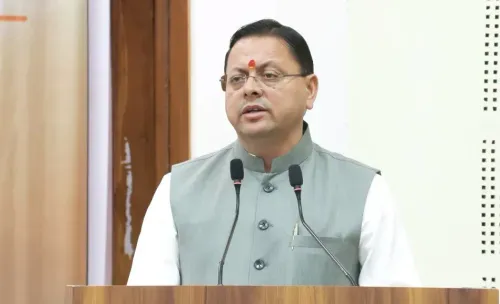
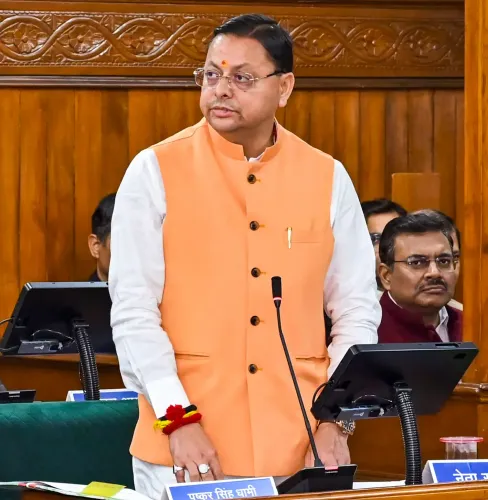
Uttarakhand Chief Minister Pushkar Singh Dhami on Sunday, June 7, 2026, called for replacing what he described as centuries-old orthodox thinking in madrasas with modern, scientific and employment-oriented education, asserting that every child in society deserves quality schooling and a place in the national mainstream.
Context
Posting in Hindi on X, CM Dhami stated: 'मदरसों में 500 वर्ष पुरानी कट्टरपंथी सोच की नहीं, बल्कि आधुनिक, वैज्ञानिक और रोजगारोन्मुखी शिक्षा की आवश्यकता है' ('Madrasas need not 500-year-old orthodox thinking, but modern, scientific and employment-oriented education'). He added that the goal is for children from every section of society to receive quality, contemporary education, connect with the national mainstream, and contribute meaningfully to the country's development and national interest.
The statement comes as BJP-governed states have increasingly pushed for curriculum integration in traditional Islamic seminaries, framing the issue as one of equal educational opportunity rather than religious identity.
Policy Backdrop
The Scheme for Providing Quality Education in Madrasas (SPQEM), launched by the central government in 2004, introduced modern subjects and teacher training in registered madrasas across India. The National Education Policy (NEP) 2020 further mandated integration of contemporary curricula, scientific temper and vocational training across all forms of schooling, explicitly including minority educational institutions.
These frameworks provide the policy scaffolding for state-level drives. Uttar Pradesh and Assam have conducted madrasa surveys, reallocated grants and introduced regulatory measures since 2017, with the stated aim of reducing parallel schooling systems and bringing students into a uniform national curriculum.
Uttarakhand, governed by the BJP under CM Dhami since 2021, has similarly emphasised modernising traditional institutions as part of its broader education access agenda.
Stakeholders and Impact
The primary stakeholders are madrasa students and minority communities across Uttarakhand, for whom such policy shifts carry direct implications for curriculum, teacher qualifications and institutional funding. Proponents argue that introducing STEM subjects and vocational training expands students' employment prospects and social mobility.
Critics from minority education bodies have historically contended that modernisation drives, when linked to regulatory pressure or funding conditions, risk undermining the religious and cultural character of madrasa education protected under the Constitution. CM Dhami's post does not reference any specific legislative measure or funding reallocation, framing the statement as an expression of intent and policy direction.
What's Next
Observers will watch for follow-up notifications from the Uttarakhand government on madrasa curriculum changes, possible state-level surveys of registered madrasas, and any specific budget allocations or legislative proposals in the next state assembly session. Whether the statement translates into a formal policy order or remains a political position will determine its practical impact on the estimated madrasa student population in the state.
The broader national pattern suggests that such statements often precede regulatory action; the degree to which Uttarakhand moves from rhetoric to enforceable reform will be the key measure of this policy push's significance.
Point of View
Multi-state BJP strategy of reframing madrasa reform as an equity and employability issue rather than a religious one — a framing designed to broaden political appeal while advancing curriculum standardisation. The invocation of '500-year-old orthodox thinking' is rhetorical shorthand that signals ideological positioning as much as educational policy. Historically, such public statements from BJP chief ministers have served as precursors to regulatory surveys or funding conditions, making the Uttarakhand government's next administrative steps the real indicator of intent. The tension between constitutional protections for minority educational institutions and the push for uniform national standards remains the unresolved fault line underlying this debate.
NationPress
26 Oct 2026
Frequently Asked Questions
What did Uttarakhand CM Dhami say about madrasa education?
CM Pushkar Singh Dhami said madrasas need modern, scientific and employment-oriented education rather than what he called 500-year-old orthodox thinking, and that every child should connect with the national mainstream.
Is there a central government scheme for madrasa modernisation in India?
Yes. The Scheme for Providing Quality Education in Madrasas (SPQEM), launched in 2004, funds the introduction of modern subjects and teacher training in registered madrasas, and the National Education Policy 2020 further mandates contemporary curricula across all schooling forms.
Which other BJP-ruled states have undertaken madrasa reform?
Uttar Pradesh and Assam have conducted madrasa surveys, introduced regulatory measures and reallocated grants since 2017 as part of similar drives to mainstream madrasa students into a national curriculum.
Does CM Dhami's statement announce a specific new law or policy for Uttarakhand?
No specific legislation or funding order was announced in the post. The statement expresses policy intent and direction; formal government notifications or budget provisions would be needed to convert it into enforceable reform.
How does the National Education Policy 2020 apply to madrasas?
NEP 2020 mandates integration of scientific temper, vocational skills and contemporary curricula across all forms of schooling in India, which includes minority educational institutions such as madrasas.