CM Dhami: UCC, Anti-Conversion Laws Protect Uttarakhand's Social Fabric
Synopsis
Chief Minister Pushkar Singh Dhami says Uttarakhand has enacted the UCC, strengthened anti-conversion laws, and passed anti-riot legislation to protect the state's cultural heritage, Sanatan values, and social harmony — positioning the state as India's frontrunner on social legislation.
Key Takeaways
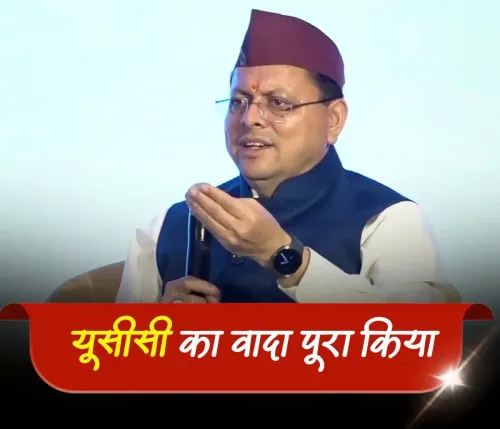
Uttarakhand became the first Indian state after independence to pass a Uniform Civil Code , enacted by the state assembly in February 2024 .
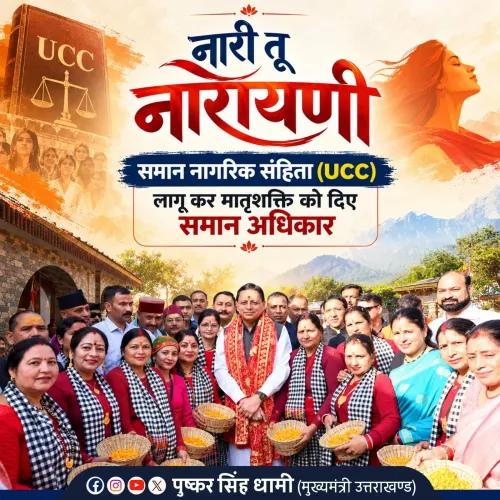
CM Pushkar Singh Dhami cited the UCC as a measure for women's rights and equal justice , covering marriage, divorce, inheritance, and adoption.
The state strengthened its anti-conversion law through amendments in 2022 , introducing stricter penalties for unlawful religious conversion.
Dhami also referenced an anti-riot law , warning that those who disturb Uttarakhand's peace 'have no place' in the state.
The legislation mirrors a broader BJP governance pattern of pairing development with social and cultural laws, with other states watching Uttarakhand's model closely.
Final UCC implementing rules and potential High Court or Supreme Court challenges remain key developments to watch.
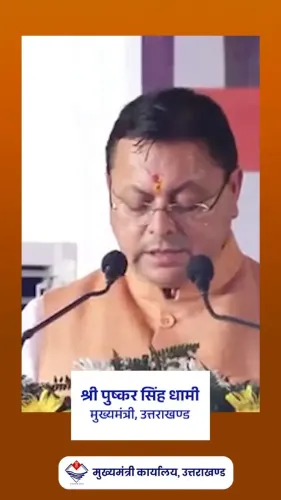
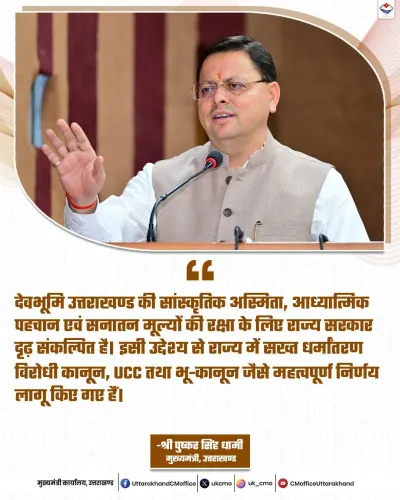
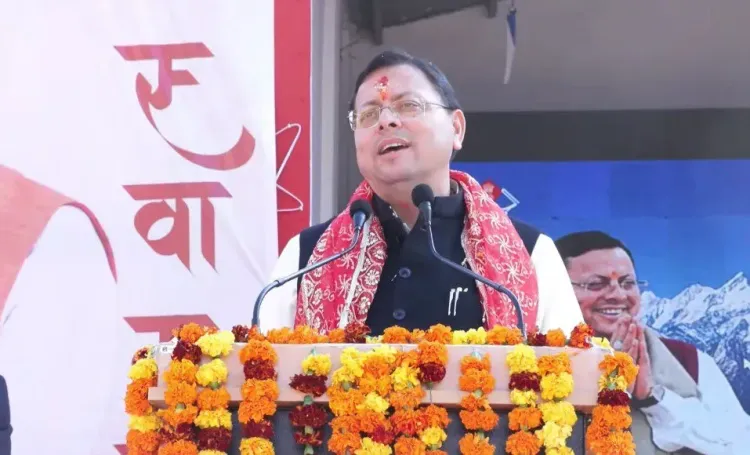
Uttarakhand became the first Indian state after independence to enact a Uniform Civil Code — and Chief Minister Pushkar Singh Dhami is making that milestone the centrepiece of his government's identity. On Saturday, 14 November 2026, the Chief Minister's Office of Uttarakhand posted a sharp statement from Dhami on X, asserting that his administration has taken decisive action not just on development but on protecting the state's cultural heritage, Sanatan values, and social harmony.
The statement, delivered in Hindi, reads: 'Hamaari sarkar ne vikaas ke saath-saath Devbhoomi ki saanskritik virasat, hamaare Sanatan mulyon aur saamaajik sadbhaav ki raksha ke liye bhi thos faisle liye hain' — 'Our government has taken concrete decisions not only for development but also to protect the cultural heritage of Devbhoomi, our Sanatan values, and social harmony.' Three specific laws anchor the claim: the Uniform Civil Code, a strengthened anti-conversion law, and an anti-riot law. Dhami's message to those who would 'disturb Uttarakhand's peace' was unambiguous — there is no place for them here.
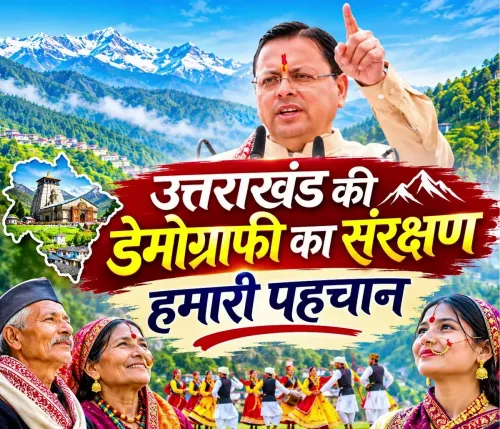
Uttarakhand's UCC: A First for Post-Independence India
The headline achievement Dhami points to is historic in constitutional terms. In February 2024, the Uttarakhand Legislative Assembly passed the Uniform Civil Code bill — the first state in India to do so since independence. The code brings a common legal framework to matters of marriage, divorce, inheritance, and adoption, superseding religion-specific personal laws. The government framed it explicitly as a step toward gender justice and equal rights for women, a framing Dhami repeated in Saturday's statement.
The political symbolism is equally significant. The UCC has been a long-standing plank in the Bharatiya Janata Party's national platform, and Uttarakhand's enactment — under a state that brands itself Devbhoomi (Land of the Gods) — positions it as a laboratory for legislation that other BJP-ruled states may follow.
Anti-Conversion and Anti-Riot Laws: The Harder Edge of the Agenda
Alongside the UCC, Dhami cited Uttarakhand's anti-conversion law, which was strengthened through amendments in 2022 with stricter penalties for unlawful religious conversion. The government frames these amendments as protecting vulnerable communities from coercive proselytisation. A separate anti-riot law was also referenced in the statement, though the precise provisions of that legislation remain subject to ongoing legal and political debate.
Critics and civil liberties advocates have raised questions about how broadly such laws are applied and their potential impact on minority communities — concerns that have drawn scrutiny in courts. The Uttarakhand government's position, as expressed by Dhami, is that firm law is the price of durable peace.
Devbhoomi as a Governing Philosophy
What Saturday's statement makes clear is that the Dhami government is consciously weaving cultural identity into its governance narrative. The repeated invocation of Devbhoomi, Sanatan values, and social harmony is not incidental — it is the frame through which the administration presents every policy choice, from road construction to personal law reform. The BJP has held Uttarakhand since 2017, and Dhami, who took over as Chief Minister in 2021, has deepened that cultural register.
With the UCC's implementing rules still being finalised and potential High Court or Supreme Court petitions on the horizon, the legal journey of these laws is far from over. But politically, Dhami has planted a clear flag: Uttarakhand is where this agenda runs first — and furthest.
The next test will be whether the courts validate the architecture Dhami has built, or whether legal challenges rewrite the blueprint that other states are already watching closely.
Point of View
Signalling that Uttarakhand's BJP government sees social legislation as inseparable from its development pitch. The UCC enactment is genuinely historic in constitutional terms, but the grouping of anti-conversion and anti-riot laws alongside it reveals a governing philosophy where legal uniformity and cultural assertion reinforce each other. This framing carries electoral weight in a state that brands itself Devbhoomi, but it also invites sustained judicial scrutiny that could test the durability of the architecture. How the Supreme Court ultimately treats the UCC and related laws will determine whether Uttarakhand remains a model or becomes a cautionary case.
NationPress
15 Nov 2026
Frequently Asked Questions
What is the Uttarakhand Uniform Civil Code and when was it passed?
The Uttarakhand Uniform Civil Code was passed by the state assembly in February 2024, making Uttarakhand the first Indian state after independence to enact such a law. It creates a common legal framework for marriage, divorce, inheritance, and adoption across all communities.
What did CM Pushkar Singh Dhami say about the UCC?
CM Dhami stated that the Uniform Civil Code was enacted to protect women's rights and ensure equal justice, framing it as one of several 'concrete decisions' his government has taken alongside development work to protect Uttarakhand's cultural heritage and social harmony.
What does Uttarakhand's anti-conversion law say?
Uttarakhand's anti-conversion law was strengthened through amendments in 2022, introducing stricter penalties for unlawful religious conversion. The government says it protects vulnerable communities from coercive proselytisation.
Is Uttarakhand the first state to implement UCC in India?
Yes. Uttarakhand is the first state in India after independence to legislate a Uniform Civil Code. The bill was passed in February 2024 under Chief Minister Pushkar Singh Dhami's BJP government.
What legal challenges does Uttarakhand's UCC face?
The final implementing rules for the UCC are still being finalised, and legal experts have flagged the possibility of High Court or Supreme Court petitions challenging various provisions of the code and related social legislation.