CM Dhami Vows Development for Poor, Backward, Minorities
Synopsis
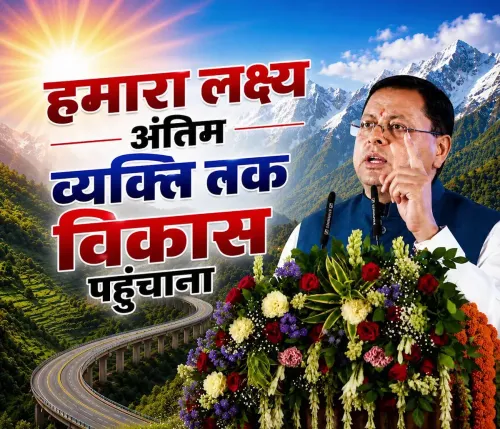
Chief Minister Pushkar Singh Dhami on 13 July 2026 declared that his government's clear goal is to bring the light of development to every poor, backward, and minority citizen of Uttarakhand, reaffirming the state's commitment to inclusive welfare under the Sabka Saath, Sabka Vikas framework.
Key Takeaways
CM Pushkar Singh Dhami on 13 July 2026 publicly reaffirmed Uttarakhand's inclusive development mandate via the Chief Minister's Office on X.
The statement explicitly names three target groups : the poor, backward classes, and minority communities.
The commitment aligns with the central government's 'Sabka Saath, Sabka Vikas' framework introduced in 2014 .
Uttarakhand , formed in 2000 , faces persistent challenges in delivering services to remote Himalayan communities.
Key minority and backward-class populations are concentrated in Terai districts including Haridwar and Udham Singh Nagar .
Upcoming state budget sessions will be watched for specific scheme launches that translate this commitment into policy action.
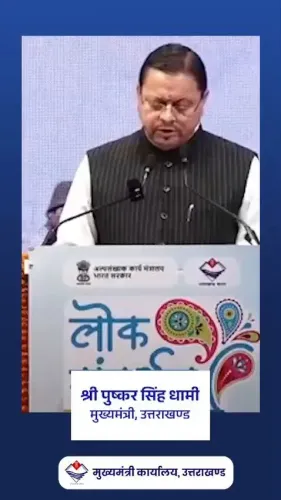
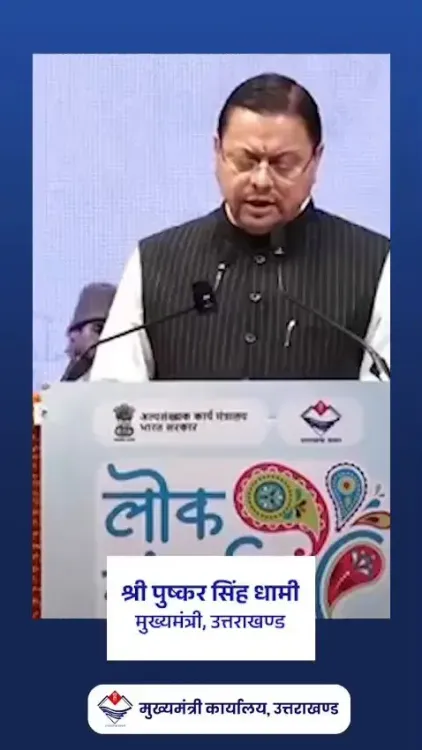
Chief Minister Pushkar Singh Dhami of Uttarakhand on Monday, 13 July 2026 reaffirmed his government's commitment to inclusive welfare, stating that the administration's singular goal is to bring the light of development to every poor, backward, and minority citizen of the state.
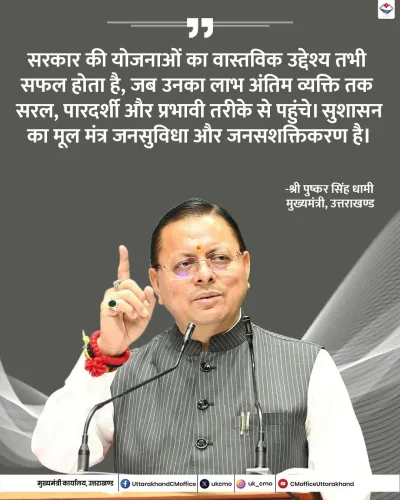
The Chief Minister's Office shared the statement on X, quoting CM Dhami in Hindi: 'हमारा लक्ष्य साफ है, हर गरीब, हर पिछड़े और हर अल्पसंख्यक भाई-बहन के जीवन में विकास की रोशनी पहुंचाना।' ('Our goal is clear — to bring the light of development into the lives of every poor, every backward, and every minority brother and sister.')
Context
Uttarakhand, a Himalayan state carved out of Uttar Pradesh in 2000, has long grappled with the challenge of reaching geographically remote and socially marginalised communities. A significant share of the state's population lives in hill districts where access to government services, healthcare, and economic opportunity has historically lagged behind the plains.
CM Dhami, who has led the state since 2021 under the Bharatiya Janata Party, has consistently framed his administration's agenda around closing these developmental gaps. Monday's statement reinforces that public posture ahead of what is expected to be an active legislative and budgetary calendar.
Policy Backdrop
The statement aligns closely with the central government's 'Sabka Saath, Sabka Vikas' framework, launched in 2014, which mandates inclusive development targeting poor, backward, and minority sections across all states. Uttarakhand has been an active participant in this federal architecture, channelling centrally sponsored schemes toward hill communities and marginalised groups.
Indian state governments routinely issue public commitments of this nature to signal alignment with national social-equity priorities. What distinguishes such statements is the degree to which they translate into measurable budget allocations and programme launches in subsequent assembly sessions.
Stakeholders and Impact
The three groups explicitly named — the poor, backward classes, and minority communities — represent constituencies that welfare economists and policy planners in Uttarakhand have identified as requiring targeted intervention. Backward classes in the state include both Other Backward Classes (OBCs) and Scheduled Castes spread across hill and Terai districts.
Minority communities, primarily Muslim populations concentrated in the Terai belt of districts such as Haridwar and Udham Singh Nagar, have at times been cited in policy discussions around access to government schemes. A direct public commitment from the Chief Minister signals at minimum a political intent to ensure these groups are not excluded from development outreach.
What's Next
Observers will look to Uttarakhand's upcoming state budget presentations and assembly sessions for concrete announcements — specific scheme launches, fund allocations, or new welfare programmes — that give operational weight to CM Dhami's stated goal. The political significance of the statement will ultimately be measured against the policy decisions that follow.
With welfare and inclusive growth remaining central themes in Indian state politics, the Dhami administration's ability to demonstrate tangible outcomes for poor, backward, and minority populations will be a key metric heading into the next electoral cycle.
Point of View
Sabka Vikas' brand — signalling that Uttarakhand intends to stay within that ideological frame heading into the next electoral cycle. The explicit mention of minorities is notable: it positions the Dhami administration as reaching beyond its core base, a move that carries both policy and political weight in a state with a visible Terai Muslim population. However, such declarations carry credibility only when followed by verifiable budget lines and programme outcomes. The statement is best read as the opening of a policy conversation, not its conclusion.
NationPress
13 Jul 2026
Frequently Asked Questions
What did CM Pushkar Singh Dhami say about development on 13 July 2026?
CM Pushkar Singh Dhami stated that his government's clear goal is to bring the light of development into the lives of every poor, backward, and minority brother and sister in Uttarakhand.
Which communities did CM Dhami mention in his welfare commitment?
CM Dhami specifically named three groups: the poor, backward classes, and minority communities, framing all three as equal priorities for his government's development outreach.
What is the 'Sabka Saath, Sabka Vikas' framework CM Dhami is aligned with?
'Sabka Saath, Sabka Vikas' is the central government's inclusive development framework launched in 2014, which directs states to ensure welfare schemes reach poor, backward, and minority populations without exclusion.
Why is inclusive development a challenge in Uttarakhand?
Uttarakhand's mountainous terrain makes it difficult to deliver government services to remote hill communities. A significant portion of its population lives in geographically isolated districts where access to healthcare, education, and economic opportunity has historically been limited.
What should we watch for after CM Dhami's welfare statement?
Upcoming state budget presentations and Uttarakhand assembly sessions will reveal whether specific schemes, fund allocations, or new welfare programmes are announced to give concrete effect to CM Dhami's stated commitment.