CM Dhami vows to reach last person in Uttarakhand's growth
Synopsis
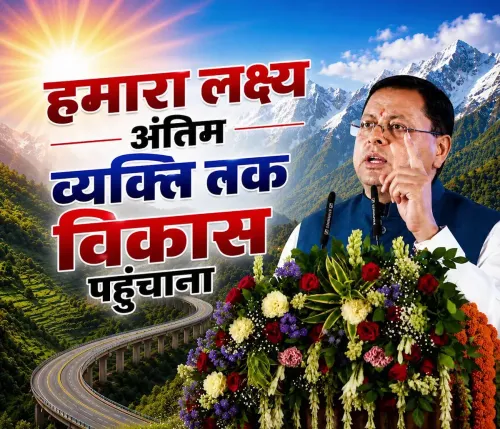
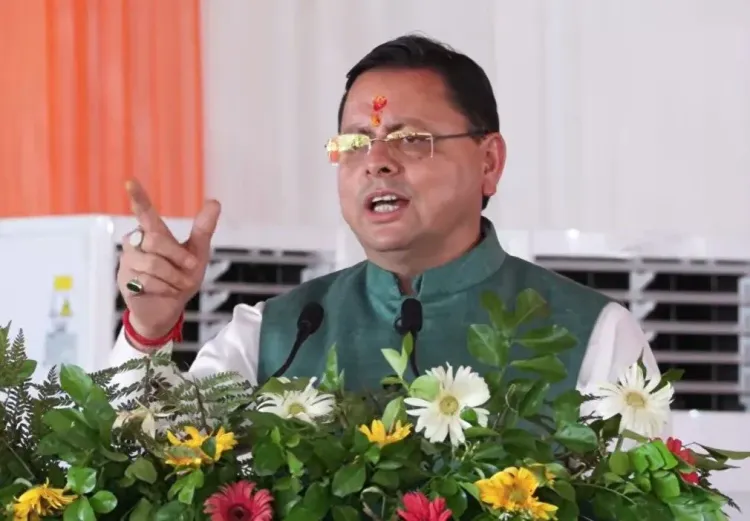
Chief Minister Pushkar Singh Dhami reaffirmed on 15 July 2026 that the Uttarakhand government will not rest until the light of development reaches the last person in society, invoking the Antyodaya principle of uplifting the most marginalised citizens.
Key Takeaways
CM Pushkar Singh Dhami on 15 July 2026 publicly committed to ensuring development benefits reach the most marginalised citizens of Uttarakhand .
The statement invokes the Antyodaya philosophy, a long-standing principle in Indian welfare policy centred on uplifting the poorest households.
Uttarakhand , formed in 2000 , has a large remote and hill-district population that poses significant last-mile delivery challenges.
The commitment aligns with the central government's emphasis on 100 per cent saturation of welfare scheme coverage across BJP-governed states since 2014.
Concrete follow-through is expected to be assessed in the next state budget or upcoming assembly session .
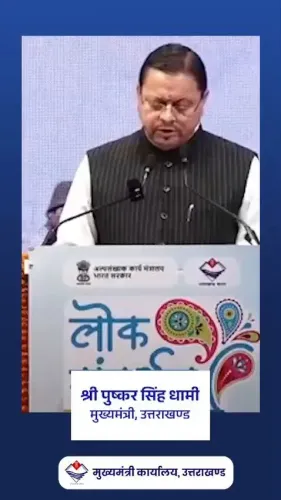
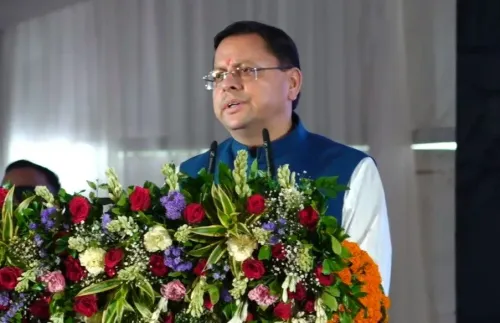
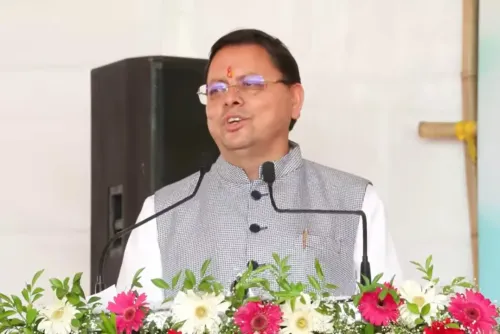
The Chief Minister's Office of Uttarakhand, on behalf of Chief Minister Pushkar Singh Dhami, on Wednesday, 15 July 2026, reaffirmed the state government's commitment to ensuring that the benefits of development reach every citizen, including those at the most marginalised fringes of society.
Context
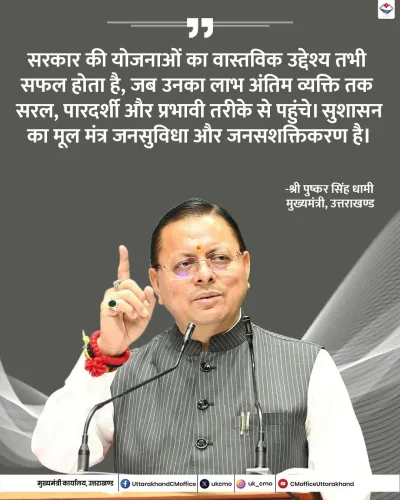
Speaking in Hindi, CM Dhami stated: 'Hamara spasht mat hai ki vikas ki roshni samaj ke antim chhor par khade vyakti tak pahunchni chahiye' ('Our clear position is that the light of development must reach the person standing at the last edge of society'). He added that the government would not rest until this mission is complete.
The statement invokes the Antyodaya philosophy — a concept rooted in the idea of uplifting the poorest of the poor — which has been a recurring anchor of Uttarakhand's governance messaging since Dhami assumed office in July 2021.
Policy Backdrop
Uttarakhand, a Himalayan state formed in 2000, has a significant share of its population living in remote, hill-district villages that are difficult to service through conventional welfare delivery channels. The state government has repeatedly cited last-mile connectivity — both physical and administrative — as a central challenge in equitable development.
Since 2014, the central government's flagship welfare programmes have emphasised 'saturation' — ensuring 100 per cent coverage of eligible beneficiaries rather than partial rollout. BJP-governed states, including Uttarakhand, have aligned their state-level messaging closely with this framework, positioning inclusion not as a target but as a non-negotiable outcome.
Stakeholders and Impact
The primary beneficiaries of this stated commitment are Uttarakhand's rural and remote households — particularly those in the state's 13 districts, many of which fall in high-altitude zones with limited road access and infrastructure. Marginalised communities, including Scheduled Castes, Scheduled Tribes, and economically weaker sections, stand to gain most from any intensification of last-mile welfare delivery.
Civil society groups and local governance bodies — gram panchayats and block-level administrators — are the operational stakeholders who translate such political commitments into ground-level action. Their capacity and resourcing will determine whether the stated intent translates into measurable change.
What's Next
Observers will watch for concrete follow-through in the form of updated coverage metrics for ongoing welfare schemes, announcements in the next Uttarakhand state budget, or directives issued ahead of the next assembly session. The statement sets a rhetorical benchmark against which the administration's performance will likely be measured by opposition parties and civil society alike.
If the government moves to back this commitment with specific programme targets or audit mechanisms, it could mark a meaningful shift from aspiration to accountability in the state's development agenda.
Point of View
Sabka vikas' narrative heading into a period of heightened electoral scrutiny. The invocation of Antyodaya is deliberate: it signals ideological continuity with both RSS social-service traditions and the central government's saturation-model welfare approach. What gives the statement weight — or exposes it to criticism — is the measurability question: Uttarakhand's remote Himalayan geography makes last-mile delivery genuinely difficult, and without specific targets or audit mechanisms, the pledge risks remaining aspirational. The real test will come when coverage data for the state's flagship welfare schemes is placed before the assembly.
NationPress
15 Jul 2026
Frequently Asked Questions
What did Uttarakhand CM Pushkar Singh Dhami say about development?
CM Dhami stated that the light of development must reach the person standing at the last edge of society, and the government will not rest until this is achieved.
What is the Antyodaya principle in Indian welfare policy?
Antyodaya is a concept meaning 'upliftment of the last person' and refers to prioritising the poorest and most marginalised households in welfare delivery. It has been a recurring theme in BJP governance at both state and central levels.
Why is last-mile delivery a challenge in Uttarakhand?
Uttarakhand is a Himalayan state with many remote, high-altitude villages that have limited road access and infrastructure, making it difficult to deliver government welfare benefits to all eligible residents.
When did Pushkar Singh Dhami become Chief Minister of Uttarakhand?
Pushkar Singh Dhami became Chief Minister of Uttarakhand in July 2021, representing the BJP.
What welfare schemes are being monitored for coverage in Uttarakhand?
The Uttarakhand government has aligned with central government schemes that aim for 100 per cent saturation among eligible beneficiaries, with coverage metrics expected to be reviewed in upcoming state budget and assembly sessions.