CM Dhami: Women Leading Uttarakhand Into Its Third Decade
Synopsis
Chief Minister Pushkar Singh Dhami on 22 July 2026 credited Uttarakhand's women with driving PM Modi's declared vision that the state's third decade would be transformative, citing their hard work, self-confidence, and self-reliance as the force behind the resolve.
Key Takeaways
The Chief Minister's Office of Uttarakhand shared a statement by CM Pushkar Singh Dhami on 22 July 2026 .
PM Modi had declared from Kedarnath that the third decade would belong to Uttarakhand .
CM Dhami credited the state's women ( matrishakti ) with fulfilling this vision through hard work, self-confidence, and self-reliance.
Uttarakhand was established in November 2000 ; its third decade (2020–2030) is the current focus of development messaging.
The statement aligns with the Atmanirbhar Bharat framework and state-level women's self-help group and entrepreneurship programmes.
Upcoming milestones to watch include Uttarakhand's foundation day and the next state budget for concrete scheme announcements.
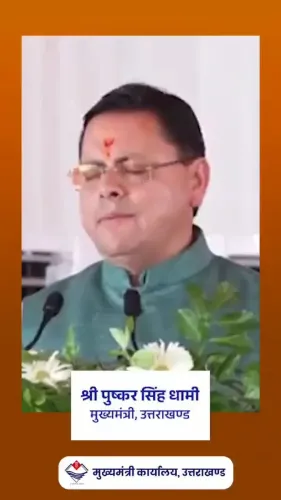
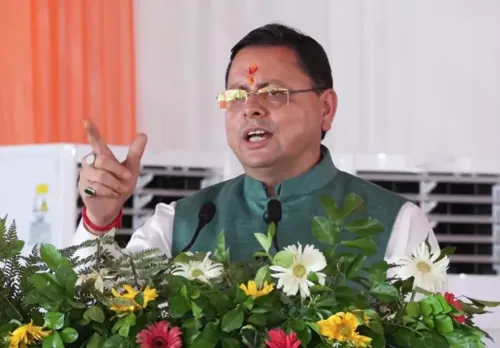
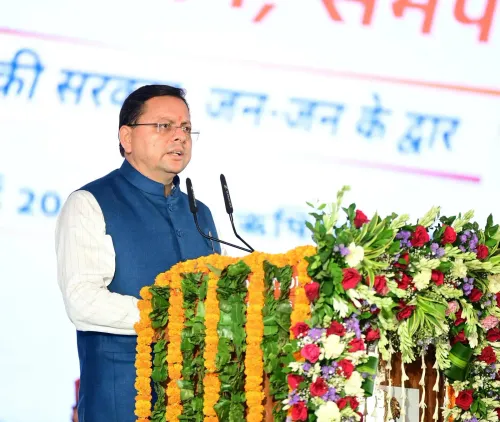
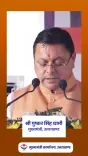
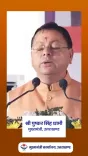
The Chief Minister's Office of Uttarakhand on Wednesday, 22 July 2026, shared a statement by Chief Minister Pushkar Singh Dhami crediting the state's women with realising Prime Minister Narendra Modi's vision that the third decade would belong to Uttarakhand.
Context
The post quotes CM Dhami as saying: 'Baba Kedar ki pavan dharti se aadaraniya Pradhan Mantri Shri Narendra Modi ji ne kaha tha ki teesra dashak Uttarakhand ka hoga' — ('From the sacred land of Baba Kedar, respected Prime Minister Shri Narendra Modi had said that the third decade will belong to Uttarakhand.'). The CM added that today the state's women — referred to as matrishakti, or mother-force — are playing a pivotal role in fulfilling that resolve through their hard work, self-confidence, and self-reliance.
Kedarnath, the revered Himalayan shrine in Uttarakhand, has served as a symbolic stage for major political and developmental announcements, with PM Modi visiting the site multiple times since 2014 to articulate visions for the state's progress.
Policy Backdrop
Uttarakhand was carved out as a separate state in November 2000, and its first two decades were largely defined by infrastructure development and the expansion of pilgrimage tourism. The current decade — the state's third — has been framed by the BJP-led government as a period of economic acceleration and gender-inclusive growth.
This messaging aligns closely with the Atmanirbhar Bharat (Self-Reliant India) framework championed by the Modi government at the Centre since 2014. State policies have promoted women's self-help groups, micro-enterprise credit, and skill development programmes as engines of Himalayan development, positioning rural women as frontline contributors to economic transformation.
Stakeholders and Impact
The primary beneficiaries highlighted in the statement are women across Uttarakhand, particularly those engaged in self-help groups and small entrepreneurship ventures in rural and semi-urban areas. CM Dhami's framing elevates matrishakti from a welfare recipient to an active economic agent — a rhetorical shift that carries policy implications for budget allocations and scheme design.
For the broader population, the statement reinforces the government's narrative that grassroots women's participation is central — not peripheral — to the state's development ambitions for the 2020–2030 period.
What's Next
Observers will watch for concrete programme announcements tied to this vision, particularly around Uttarakhand's foundation day in November and the next state budget presentation. Any expansion of women-focused entrepreneurship schemes or credit-linked self-help group programmes would be the clearest signal that this political messaging is translating into policy action.
With the state government consistently positioning Uttarakhand as a model for sustainable, gender-inclusive mountain development, the coming months are likely to see further announcements amplifying the role of matrishakti in the state's growth story.
Point of View
Making any shortfall in women's economic outcomes a shared accountability. By foregrounding matrishakti rather than infrastructure metrics, the government shifts the development narrative toward a social-capital frame that is harder to quantify but politically resonant. This fits a broader BJP pattern of using gender-inclusive language to broaden its coalition in hill states where women's labour has historically been invisible in economic accounting. The statement sets a high rhetorical bar that will be tested against actual scheme delivery in the run-up to the state's silver jubilee in 2025 and beyond.
NationPress
22 Jul 2026
Frequently Asked Questions
What did PM Modi say about Uttarakhand's third decade?
PM Modi declared from Kedarnath that the third decade would belong to Uttarakhand , framing the 2020–2030 period as the state's defining era of progress. The exact date and occasion of the statement could not be independently confirmed.
What is matrishakti and why is CM Dhami invoking it?
Matrishakti literally means 'mother-force' and refers to the collective strength of women. CM Dhami used the term to credit Uttarakhand's women with being the primary drivers of the state's development vision through self-reliance and entrepreneurship.
What schemes support women's self-reliance in Uttarakhand?
The state government has promoted women's self-help groups, micro-enterprise credit programmes, and skill development initiatives aligned with the central government's Atmanirbhar Bharat framework, though specific 2026 scheme details were not mentioned in the post.
Why is Kedarnath significant for political announcements about Uttarakhand?
Kedarnath is one of Hinduism's most revered pilgrimage sites and a symbol of Uttarakhand's identity. PM Modi has visited the shrine multiple times, using it as a backdrop for major statements on the state's development trajectory.
When was Uttarakhand formed and what is its third decade?
Uttarakhand was established as a separate state in November 2000 . Its third decade spans roughly 2020 to 2030 , the period the BJP-led government has identified as a phase of accelerated, gender-inclusive economic growth.