CM Dhami's Solar Self-Employment Scheme Powers 3,500 Jobs in Uttarakhand
Synopsis
Uttarakhand's Mukhyamantri Saur Swarojgar Yojana has commissioned 1,132 solar plants totalling 210 MW by June 2026, generating over 3,500 jobs. CM Pushkar Singh Dhami has now set a 250 MW target, positioning the scheme as a dual-purpose tool for green energy and curbing out-migration from mountain districts.
Key Takeaways
1,132 solar plants totalling 210 MW (2,10,420 kW) have been commissioned under MSSY by June 2026 .
The scheme has created employment — direct and indirect — for over 3,500 people across Uttarakhand.
Tehri leads district-wise with 369 plants at 69,050 kW ; Uttarkashi (227 plants, 43,660 kW) and Champawat (144 plants, 28,200 kW) follow.
Residents can install plants of 20, 25, 50, 100 , or 200 kW capacity and receive incentives under MSME Policy-2023 .
CM Pushkar Singh Dhami has set a new target of 250 MW of solar capacity under the scheme.
The scheme is designed to curb out-migration from mountain districts by anchoring livelihoods in rural and hilly areas.
In Uttarakhand's mountain districts, where young people have long packed their bags for the plains, Chief Minister Pushkar Singh Dhami is betting on sunlight to keep them home. The Chief Minister's Office of Uttarakhand announced on 10 August 2026 that the state's flagship Mukhyamantri Saur Swarojgar Yojana (MSSY) has crossed a landmark — 210 megawatts of installed solar capacity and 3,500-plus direct and indirect jobs created across the state.
1,132 plants, 210 MW — and Tehri leading the charge
The numbers are striking in their specificity. By June 2026, a total of 1,132 solar energy plants had been commissioned under the scheme, with a combined installed capacity of 2,10,420 kilowatts — roughly 210 MW. Tehri district sits at the top of the district-wise tally: 369 plants generating 69,050 kilowatts. Uttarkashi follows with 227 plants at 43,660 kW, and Champawat adds 144 plants at 28,200 kW.
The spread runs across the state's geography. Haridwar has 86 plants (16,900 kW), Pauri has 88 plants (15,440 kW), Chamoli contributes 72 plants (11,725 kW), and Almora adds 32 plants (5,600 kW). Dehradun, Rudraprayag, Bageshwar, Nainital, Pithoragarh, and Udham Singh Nagar are also part of the rollout, with installations still in progress.
How the scheme works — and who it targets
The design is deliberately accessible. Under MSSY, local residents — particularly youth and entrepreneurs — can set up solar plants of 20, 25, 50, 100, or 200 kilowatt capacity. Applicants receive the full suite of incentives available under Uttarakhand's MSME Policy-2023, lowering the financial barrier to entry for first-time entrepreneurs in remote areas.
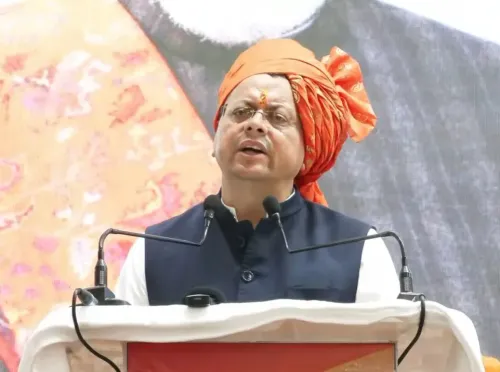
CM Dhami framed the scheme's purpose clearly: 'हमारा प्रयास है कि सौर ऊर्जा जैसे क्षेत्रों में स्थानीय स्तर पर उद्यमिता और रोजगार के अवसर बढ़ें' — 'Our effort is to grow entrepreneurship and employment opportunities at the local level in sectors like solar energy.' The subtext is migration. Uttarakhand's hilly districts have faced decades of out-migration as young residents seek work in cities. A locally anchored solar economy offers a structural alternative.
The 250 MW target and what it means for Uttarakhand's hills
With 210 MW already installed, CM Dhami has set the next milestone: a target of 250 MW of solar capacity under the scheme. Remaining projects are currently under installation. The push aligns with India's broader National Solar Mission, launched in 2010, which has consistently encouraged state-level renewable energy initiatives tailored to local conditions.
What distinguishes MSSY from a standard green-energy programme is its dual mandate — solar output and self-employment. The 3,500 jobs figure spans direct and indirect employment, meaning the economic ripple extends beyond plant operators to supply chains, maintenance, and ancillary services in villages that previously had little to offer a working-age resident.
Whether the 250 MW finish line also delivers measurable reductions in out-migration will be the real test. The data from Tehri and Uttarkashi — two districts historically marked by heavy emigration — will be the most closely watched. If solar plants can anchor livelihoods where nothing else has, Uttarakhand's mountain economy may have found its most durable engine yet.
Point of View
The Dhami government is attempting to institutionalise green jobs at the village level rather than relying on urban industrial corridors. The district-level data, with Tehri and Uttarkashi leading, is significant: these are precisely the high-emigration zones where previous employment schemes have struggled to take root. The credibility of the 250 MW target — and the scheme's long-term legacy — will ultimately depend on whether employment retention in these districts can be independently measured and sustained beyond the installation phase.
NationPress
10 Aug 2026
Frequently Asked Questions
What is the Mukhyamantri Saur Swarojgar Yojana in Uttarakhand?
The Mukhyamantri Saur Swarojgar Yojana (MSSY) is an Uttarakhand state scheme that enables local residents to set up solar power plants of 20 to 200 kilowatt capacity, providing them with self-employment and entrepreneurship opportunities backed by benefits under the MSME Policy-2023.
How many solar plants have been installed under MSSY so far?
As of June 2026, a total of 1,132 solar energy plants have been installed under the scheme across Uttarakhand, with a combined capacity of approximately 210 MW (2,10,420 kilowatts).
How many jobs has the Mukhyamantri Saur Swarojgar Yojana created?
The scheme has generated direct and indirect employment for over 3,500 people across Uttarakhand's districts, with Tehri, Uttarkashi, and Champawat accounting for the largest share of installations.
Which district has the most solar plants under MSSY?
Tehri district leads with 369 solar plants installed, totalling a capacity of 69,050 kilowatts — the highest among all districts in Uttarakhand under the scheme.
What is CM Dhami's solar energy target for Uttarakhand?
Chief Minister Pushkar Singh Dhami has set a target of 250 MW of solar capacity under the Mukhyamantri Saur Swarojgar Yojana, with remaining projects currently under installation across the state.