CM Fadnavis: Hyundai to invest ₹11,000 cr, make 3.2 lakh cars at Talegaon

Synopsis
Maharashtra CM Devendra Fadnavis announced on October 14, 2026, that Hyundai Motor India will invest ₹11,000 crore at its Talegaon plant near Pune and manufacture 3,20,000 vehicles, reinforcing Pune's standing as India's top automotive manufacturing hub.
Key Takeaways
Hyundai Motor India will invest ₹11,000 crore at its Talegaon manufacturing facility in Pune district, Maharashtra .
The plant is targeted to produce 3,20,000 vehicles as part of the expansion.
The announcement was made by Maharashtra Chief Minister Devendra Fadnavis on October 14, 2026 .
Talegaon is an established industrial node within Pune , Maharashtra's core automotive cluster.
The investment is a capacity scale-up by an existing operator, deepening Hyundai's India manufacturing footprint rather than a new greenfield project.
Employment generation, vendor development plans, and production ramp-up timelines remain key metrics to watch.
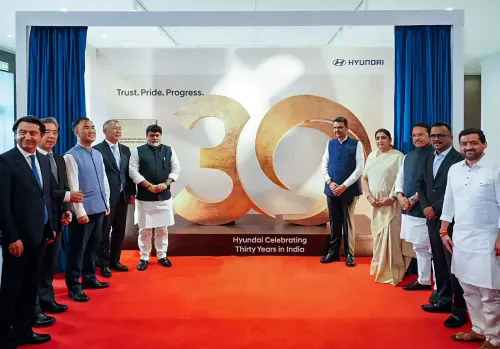
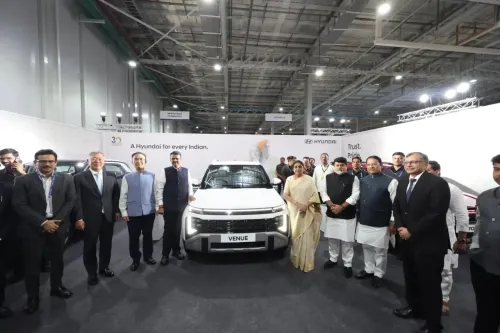
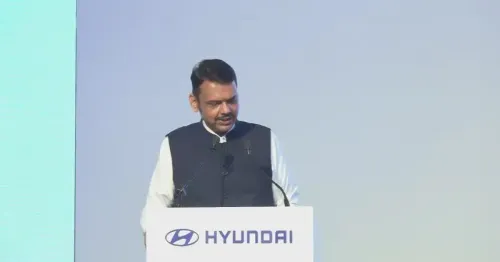
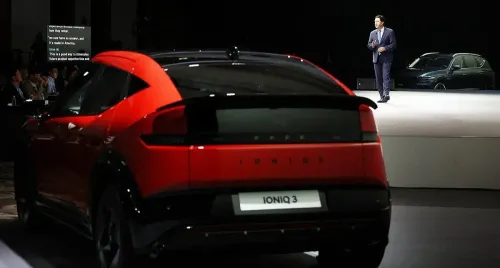
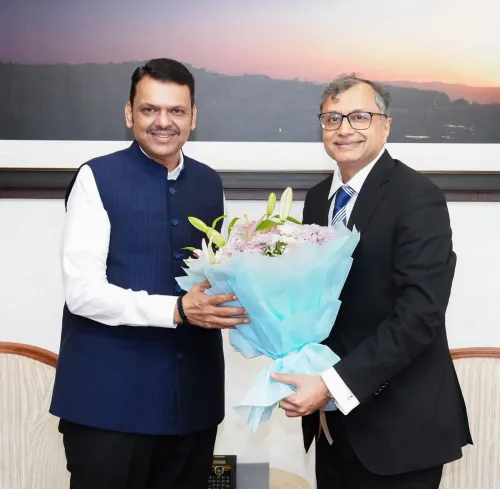
A ₹11,000 crore bet on Maharashtra's automotive future landed in Pune on Wednesday, October 14, 2026 — as Maharashtra Chief Minister Devendra Fadnavis announced that Hyundai Motor India will invest that sum at its Talegaon manufacturing plant and roll out 3,20,000 vehicles from the facility.
What Hyundai is committing at Talegaon
The announcement, made at Hyundai Motor India's Pune Manufacturing Plant, puts a hard number on a capacity expansion that the auto industry had been watching closely. At 3,20,000 units annually, the Talegaon plant would represent a significant production base within Hyundai's India footprint. The ₹11,000 crore outlay signals this is not a cosmetic upgrade — it is a structural scale-up.
CM Fadnavis posted the details bilingually, stating in Marathi: 'ह्युंदाईच्या तळेगाव येथील प्रकल्पात ₹11,000 कोटींची गुंतवणूक करणार असून, या प्रकल्पातून 3,20,000 वाहनांचे उत्पादन होणार आहे' — ('Hyundai's Talegaon facility will receive an investment of ₹11,000 crore, and 3,20,000 vehicles will be produced from this project').
Pune's place as Maharashtra's auto capital
Pune has been the gravitational centre of India's automotive manufacturing belt for decades. The city and its surrounding industrial corridors host assembly lines, component suppliers, and engineering talent that global original equipment manufacturers (OEMs) have consistently chosen for capacity additions. Talegaon, a dedicated industrial node in Pune district, is purpose-built for exactly this kind of large-scale plant investment.
Maharashtra has used successive industrial policy frameworks to keep Pune competitive against emerging clusters in other states. Hyundai's commitment fits the established pattern: an existing player deepening roots rather than scouting fresh greenfield territory — lowering risk while maximising the supply-chain density already in place.
Jobs, vendors, and the ramp-up timeline ahead
The numbers that will define whether this investment delivers on its promise are not yet public. Employment generation across direct manufacturing roles and the wider vendor ecosystem, component localisation targets, and the production ramp-up schedule will be the metrics Maharashtra's industrial planners — and the workers and suppliers of Pune — will track in the months ahead.
For CM Fadnavis, the announcement is a marquee data point in the state government's pitch to position Maharashtra as India's preferred destination for big-ticket manufacturing capital.
The cars haven't rolled off the line yet — but the money, and the political momentum behind it, are now firmly on record.
Point of View
000 crore, it is the kind of headline investment figure that resonates in both boardrooms and assembly constituencies. More broadly, it reflects a durable pattern in India's auto sector: global OEMs expanding within proven clusters rather than pioneering new geography, keeping supply-chain costs predictable. The real political and economic test will come when job numbers, vendor contracts, and a concrete production timeline are disclosed — the details that convert an announcement into accountability.
NationPress
14 Oct 2026
Frequently Asked Questions
How much is Hyundai investing at its Talegaon plant?
Hyundai Motor India is investing ₹11,000 crore at its Talegaon manufacturing facility in Pune district, Maharashtra , as announced by CM Devendra Fadnavis on October 14, 2026.
How many cars will Hyundai produce at the Talegaon facility?
The Talegaon plant is set to manufacture 3,20,000 vehicles as part of this expansion investment.
Where is Hyundai's Talegaon plant located?
Talegaon is an industrial area in Pune district, Maharashtra , and is part of Pune's well-established automobile manufacturing corridor.
Why is Pune important for India's automobile industry?
Pune is one of India's largest automotive manufacturing hubs, hosting global OEMs, component suppliers, and engineering talent. Maharashtra has consistently used industrial incentives to attract and retain large auto-sector investments in the region.
What does the Hyundai Talegaon investment mean for jobs in Maharashtra?
While specific employment figures have not yet been disclosed, an investment of this scale at an automobile manufacturing plant typically generates significant direct and indirect jobs across manufacturing, components supply, and logistics sectors in Pune and surrounding areas.