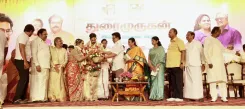
CM Fadnavis: Naxalism's roots broken in Maharashtra under Modi
Synopsis
On Ekta Diwas 2026, Maharashtra CM Devendra Fadnavis declared that Naxalism's roots have been broken in the state under PM Modi's leadership, citing Gadchiroli's shift from a Maoist conflict zone to a development-focused Aspirational District.
Key Takeaways
CM Devendra Fadnavis made the declaration on 1 November 2026 , coinciding with Ekta Diwas (National Unity Day).
Gadchiroli , Maharashtra's longest-running LWE flashpoint, was cited as evidence of the transformation under PM Modi's guidance.
The SAMADHAN doctrine , launched by the Ministry of Home Affairs in 2017 , combined security operations with development and rehabilitation measures across the Red Corridor.
Gadchiroli was designated under the Aspirational Districts Programme in 2018 , targeting focused infrastructure and welfare delivery in LWE-affected areas.
Official data over the past decade show a steady decline in LWE-related incidents across Chhattisgarh, Jharkhand, Odisha and Maharashtra.
Tribal communities in Gadchiroli — historically the primary victims of the conflict — stand to benefit most from improved road, telecom and health infrastructure.
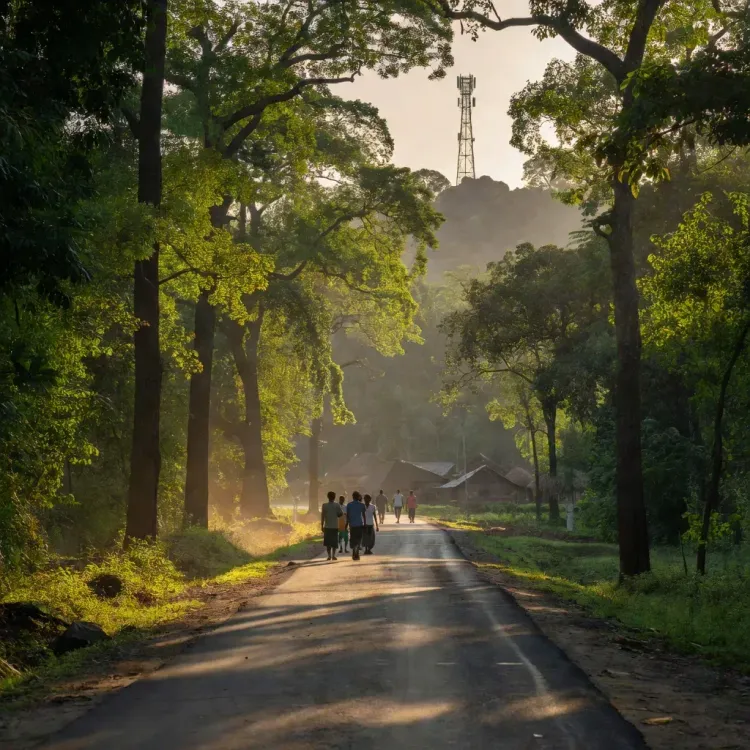
Once synonymous with ambushes, displacement, and fear, Gadchiroli — Maharashtra's easternmost district and the state's most persistent Left-Wing Extremism (LWE) flashpoint — is now being held up as a symbol of a turning tide. On Ekta Diwas, 1 November 2026, Maharashtra Chief Minister Devendra Fadnavis declared that Naxalism's roots in the state have been broken under Prime Minister Narendra Modi's leadership, and that Gadchiroli has begun to flow in the current of development.
Posting on the occasion of National Unity Day — observed every 31 October to mark the birth anniversary of Sardar Vallabhbhai Patel — Fadnavis wrote in Hindi: 'प्रधानमंत्री मा. नरेंद्र मोदी जी के मार्गदर्शन में महाराष्ट्र में भी नक्सलवाद की जडें टूट चुकीं हैं और नक्सलवाद से प्रभावित हमारा गढचिरौली भी अब विकास की धारा में बहने लगा है।' ('Under the guidance of PM Modi, the roots of Naxalism have been broken in Maharashtra too, and our Gadchiroli — affected by Naxalism — has now begun to flow in the stream of development.')Gadchiroli: From Red Corridor to Aspirational District
For decades, Gadchiroli carried the grim distinction of being one of India's most active Maoist conflict zones. Its dense forests and tribal hinterland made it a stronghold for Naxal cadres operating across the Chhattisgarh-Maharashtra border. Security forces and civilians paid a heavy price in near-annual cycles of ambushes and counter-operations.
The strategic shift began taking institutional shape in 2017, when the Ministry of Home Affairs introduced the SAMADHAN doctrine — a multi-pronged framework combining security operations, smart leadership, aggressive strategy, motivation and training, dashboard-based key performance indicators, harnessing technology, action plans for each theatre, and no access to financing for Maoists. The approach was designed to break the Naxal movement's three pillars simultaneously: armed cadres, mass support structures, and financial networks.
Gadchiroli was simultaneously designated under the Aspirational Districts Programme in 2018, channelling focused central investment into roads, telecom connectivity, health infrastructure, and welfare delivery in areas where the state's reach had historically been thin. The logic: deny Maoists the grievance vacuum that had allowed them to recruit and operate.
A Decade of Declining Violence — and What It Means for Tribal Communities
Across the broader Red Corridor — spanning Chhattisgarh, Jharkhand, Odisha and Maharashtra — official data over the last decade have shown a consistent decline in LWE-related incidents. Kinetic pressure from state police, the C-60 commando unit (Maharashtra's specialised counter-Naxal force), and central paramilitary forces ground down active cadres. Parallel surrender-and-rehabilitation schemes brought a portion of fighters back into civilian life.
For the tribal communities of Gadchiroli — who were simultaneously the Maoist movement's claimed constituency and its most frequent victims — the stakes in this transformation are visceral. Road connectivity, mobile networks, and functional public health centres are not abstract policy metrics; they are the difference between delivery in a local health post and a two-day journey to Nagpur for medical care.
Fadnavis's post, timed to Ekta Diwas, frames Gadchiroli's journey explicitly within a national-unity narrative: the district's integration into the development mainstream as the fulfilment of Patel's idea of one, undivided India. The symbolism is deliberate and pointed.
What Comes Next for Gadchiroli
The test of any anti-LWE claim is durability, not a moment of declaration. Watchers will track the Ministry of Home Affairs' next annual report on LWE violence, the pace of infrastructure completion under pending central schemes, and whether surrender-rehabilitation pipelines in Gadchiroli continue to function and deliver outcomes for former cadres. Development dollars and security gains can both reverse if sustained attention lapses.
On the day India remembers the architect of its integration, Maharashtra's chief minister is betting that Gadchiroli's story is no longer one of resistance — but of return.
Point of View
Linking the BJP's internal-security narrative directly to the Patel legacy of national integration. By naming Gadchiroli specifically, he is converting a long-running policy process — the SAMADHAN doctrine, Aspirational Districts, C-60 operations — into a political achievement claim ahead of any forthcoming state or national electoral cycle. The framing also serves a federal purpose: it positions Maharashtra's government as an active partner in a central security priority, not merely a beneficiary. The durability of the gains, however, will be tested by the next MHA annual report and whether rehabilitation infrastructure in Gadchiroli holds without sustained attention.
NationPress
1 Nov 2026
Frequently Asked Questions
What did CM Devendra Fadnavis say about Naxalism in Maharashtra?
On 1 November 2026 , CM Fadnavis declared that the roots of Naxalism have been broken in Maharashtra under PM Modi's leadership, and that Gadchiroli — the state's worst-affected district — has now entered the mainstream of development.
What is the current Naxal situation in Gadchiroli?
Gadchiroli was long India's most active Maoist zone in Maharashtra. Under the SAMADHAN doctrine and the Aspirational Districts Programme , combined security and development pressure has significantly reduced LWE-related violence over the past decade, though specific post-2023 statistics remain to be verified in official reports.
What is the SAMADHAN doctrine?
The SAMADHAN doctrine was introduced by the Ministry of Home Affairs in 2017 . It is a comprehensive strategy that combines smart leadership, aggressive kinetic operations, motivation and training for security forces, technology-driven surveillance, and cutting off financial access for Naxal groups.
Why was Gadchiroli made an Aspirational District?
Gadchiroli was designated under the Aspirational Districts Programme in 2018 because of its status as an LWE-affected, underdeveloped tribal district. The programme channels focused central investment in roads, health, telecom, and welfare to close the governance gap that extremist groups exploit.
What is Ekta Diwas and why is it observed?
Ekta Diwas , or National Unity Day, is observed every 31 October to mark the birth anniversary of Sardar Vallabhbhai Patel, the Iron Man of India credited with integrating the princely states into the Indian Union after independence.