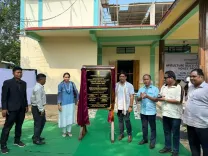
CM Fadnavis Launches Tasar Silk Project in Gadchiroli
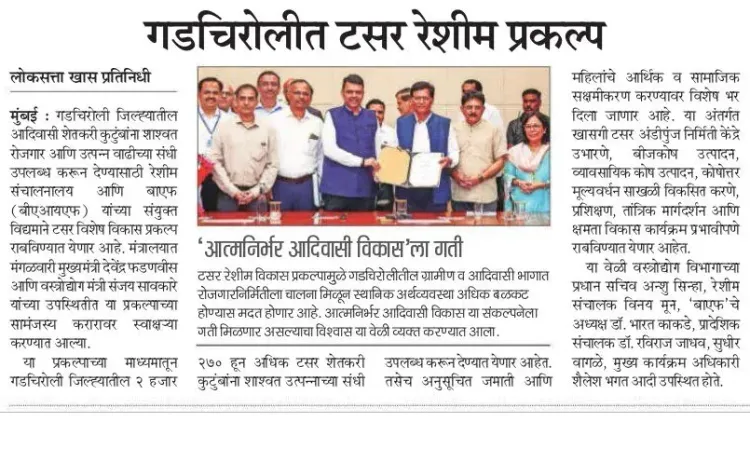
Synopsis
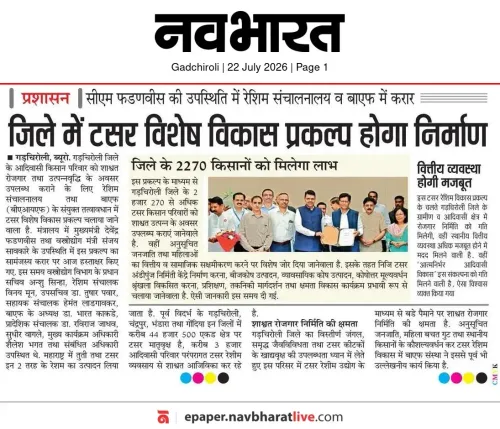
The Chief Minister's Office of Maharashtra on 22 July 2026 spotlighted a Tasar Silk Project in Gadchiroli, backing wild silk rearing as a livelihood option for tribal households in one of the state's most forested and historically underserved districts.
Key Takeaways
The CMO Maharashtra announced a Tasar Silk Project in Gadchiroli on 22 July 2026 .
Gadchiroli is eastern Maharashtra's most forested district with a large tribal population and a history of development challenges.
Tasar silk is a non-mulberry wild silk that requires minimal land, making it suitable for tribal forest-edge communities.
Maharashtra has run sericulture schemes in tribal districts since the 1990s in partnership with the Central Silk Board .
The project aligns with CM Devendra Fadnavis 's stated focus on tribal welfare and rural livelihood diversification in eastern Maharashtra.
Downstream rearing centres and reeling units could extend employment beyond farm-level silk production.
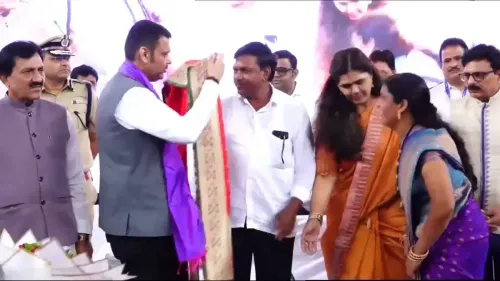
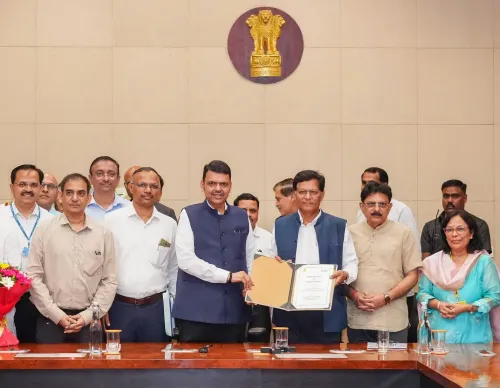
The Chief Minister's Office of Maharashtra on Wednesday, 22 July 2026 highlighted a Tasar Silk Project (Tasar Reshim Prakalp) in Gadchiroli, flagging the initiative as part of Chief Minister Devendra Fadnavis's outreach to the district's tribal communities.
Context
The post, shared from the official CMO Maharashtra account, references the Gadchiroli Tasar Reshim Prakalp — a state-backed sericulture initiative aimed at promoting wild silk rearing among tribal households in eastern Maharashtra. Gadchiroli, one of the state's most forested and tribal-dominated districts, has long been a focus of economic diversification efforts by successive state administrations.
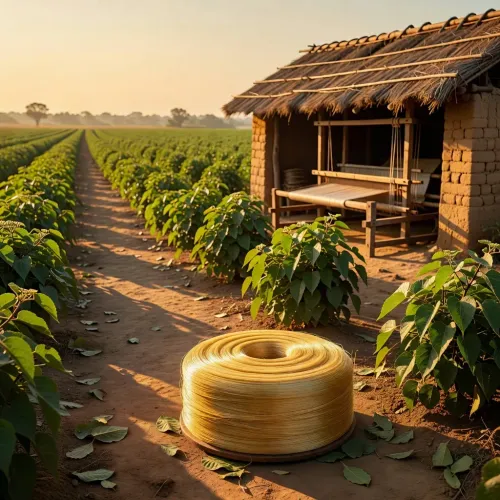
Tasar silk, a variety of non-mulberry wild silk, is reared on forest trees and requires minimal land investment, making it a practical livelihood option for communities whose lives are intertwined with the forest economy.
Policy Backdrop
Maharashtra has supported district-level sericulture schemes since the 1990s, operating under the state's Department of Textiles and in coordination with the Central Silk Board. The Board's national policy explicitly treats sericulture — including tasar and other vanya (wild) silks — as a tool for rural employment generation and reduced dependence on forest extraction.
Successive Maharashtra governments have linked tasar and allied silk projects to broader economic diversification drives in Gadchiroli and neighbouring eastern districts. The approach positions sericulture as an agro-forestry activity that supplements household income without displacing existing land use patterns.
Chief Minister Fadnavis, in earlier terms as well as in his current tenure, has emphasised tribal welfare and rural livelihoods in Gadchiroli — a district that has historically faced development challenges linked to Left-Wing Extremism. Sericulture projects form part of a wider state strategy to bring sustainable economic activity to remote tribal belts.
Stakeholders and Impact
The primary beneficiaries of the Tasar Silk Project are tribal farming households in Gadchiroli engaged in or transitioning to sericulture. Rearing tasar silkworms on Terminalia and Asan host trees found in local forests requires low capital outlay, meaning even marginal households can participate with state support for seed cocoons and technical training.
Downstream, the project is expected to support reeling and weaving units, creating value-chain employment beyond the farm. State and Central Silk Board schemes typically provide infrastructure support for rearing centres, reeling units, and market linkages — components that will determine the project's scale and reach in Gadchiroli.
What's Next
Observers will watch for formal budget allocations, tender notices for rearing centres, and reeling unit contracts in Gadchiroli as indicators of the project's operational scope. Integration with centrally sponsored silk development programmes under the Central Silk Board could unlock additional funding and technical support.
If the initiative scales as signalled, it could serve as a template for similar tasar silk interventions in other tribal districts of Maharashtra and the broader central Indian tribal belt.
Point of View
Visible action in Gadchiroli carries both welfare and political weight — the district is a litmus test for state governance in tribal Maharashtra. The sericulture push also dovetails with Central Silk Board priorities, potentially unlocking central funds and legitimising the initiative as more than symbolic. Whether this translates into durable income gains will depend on market linkages and post-rearing infrastructure, which remain the perennial weak links in such schemes.
NationPress
20 Oct 2026
Frequently Asked Questions
What is the Tasar Silk Project in Gadchiroli?
The Tasar Silk Project in Gadchiroli is a state-supported sericulture initiative that promotes wild silk rearing among tribal households in the district, providing a low-capital livelihood option tied to the local forest economy.
Who announced the Gadchiroli tasar silk project?
The Chief Minister's Office of Maharashtra highlighted the project on 22 July 2026, associating it with Chief Minister Devendra Fadnavis.
What is tasar silk and why is it suitable for Gadchiroli?
Tasar is a non-mulberry wild silk reared on forest trees. It suits Gadchiroli because the district has extensive forest cover and a tribal population already familiar with forest-based livelihoods, and the activity requires minimal land or capital investment.
How does Maharashtra support sericulture in tribal districts?
Maharashtra has run district-level sericulture schemes since the 1990s in coordination with the Central Silk Board, providing seed cocoons, technical training, rearing centres, and market linkages to tribal farmers.
What should we watch for next regarding this project?
Key indicators will include state budget allocations, tender notices for rearing and reeling centres in Gadchiroli, and potential integration with centrally sponsored silk development programmes under the Central Silk Board.