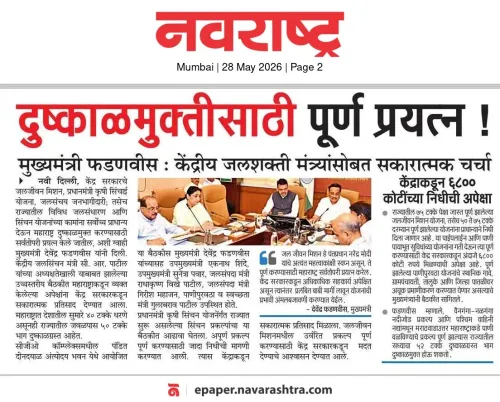
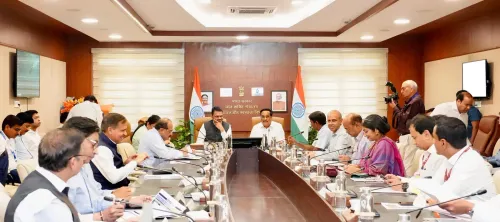
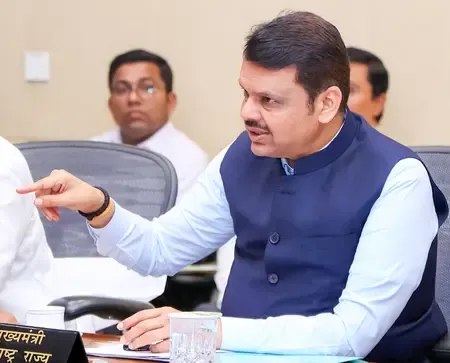
CM Fadnavis Vows to Make Maharashtra Fully Drought-Free
Synopsis
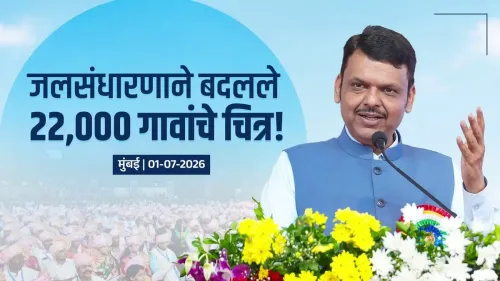
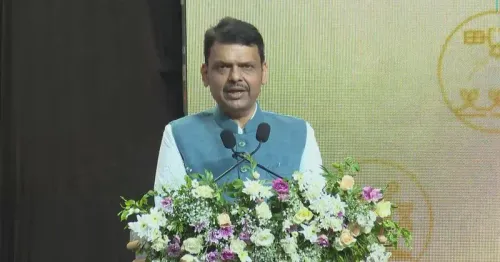
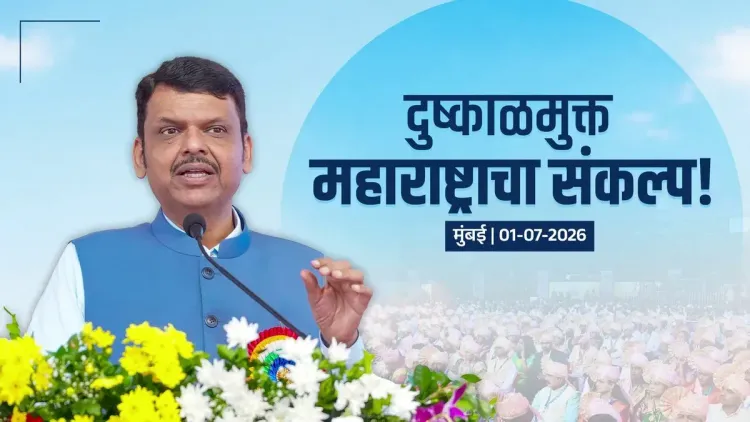
Maharashtra Chief Minister Devendra Fadnavis, speaking at the Agricultural Honor and Award Distribution Ceremony 2026 in Mumbai on 1 July, vowed to make the state completely drought-free through a range of measures, renewing the state's long-standing commitment to water security for farmers in drought-prone Marathwada and Vidarbha.
Key Takeaways
Devendra Fadnavis pledged on 1 July 2026 to make Maharashtra fully drought-free through multiple measures.
The announcement was made at the Agricultural Honor and Award Distribution Ceremony 2026 in Mumbai .
The pledge was delivered in both Marathi and Hindi , reflecting the state's linguistic diversity.
Maharashtra's Marathwada and Vidarbha regions face recurrent drought due to monsoon variability.
Earlier efforts include the Jalyukt Shivar Abhiyan (2015) targeting 25,000 villages and the Pradhan Mantri Krishi Sinchayee Yojana for micro-irrigation.
Budget allocations and district-level progress in 2026-27 will be key indicators of implementation.
Maharashtra Chief Minister Devendra Fadnavis on Wednesday, 1 July 2026, pledged to make the state completely drought-free through a range of measures, speaking at the Agricultural Honor and Award Distribution Ceremony 2026 held in Mumbai. The announcement signals a renewed state-level commitment to water security for farming communities across drought-prone regions.
Context
Addressing farmers and agricultural stakeholders at the ceremony, Fadnavis declared — in both Marathi and Hindi — 'विविध उपाययोजनांच्या माध्यमातून महाराष्ट्र पूर्णपणे दुष्काळमुक्त करणार!' ('Through various measures, Maharashtra will be made completely drought-free!'). The event, a state-level function recognising farmer achievements, served as the platform for this policy commitment. The bilingual declaration underscored the government's intent to communicate the pledge across the state's linguistic communities.
Policy Backdrop
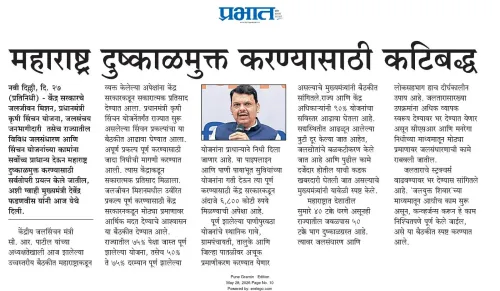
Maharashtra has grappled with recurrent drought for decades, particularly in the Marathwada and Vidarbha regions, where monsoon variability regularly devastates rain-fed agriculture. The state has previously attempted large-scale water conservation through the Jalyukt Shivar Abhiyan, launched in 2015 under Fadnavis's first term as Chief Minister, which aimed to deepen streams, construct check dams, and render 25,000 villages drought-free by 2019. The Pradhan Mantri Krishi Sinchayee Yojana (PMKSY), integrated in the same year, further targeted micro-irrigation and watershed development across the state.
Successive Maharashtra governments have run watershed management and minor irrigation programmes for decades, yet structural water scarcity linked to climate variability has persisted. The 1 July 2026 statement continues this long-standing policy emphasis, with the Chief Minister signalling an intent to accelerate and complete pending water conservation works.
Stakeholders and Impact
The most direct beneficiaries of any drought-proofing drive would be Maharashtra's drought-prone farming communities — smallholder and marginal farmers in Marathwada and Vidarbha who bear the heaviest burden of crop failure during deficient monsoon years. Rural agricultural communities in these belts have historically faced severe distress, including farm-income collapse and forced migration, when water conservation infrastructure falls short. A credible drought-free programme could stabilise farm incomes and reduce the state's recurring expenditure on drought relief.
The Agricultural Honor and Award Distribution Ceremony itself recognised farmer achievements, reflecting the government's effort to position the agricultural sector as a priority even as broader water-security challenges remain unresolved.
What's Next
Attention will now turn to the 2026-27 budget allocations and the physical progress of new drought-proofing works ahead of and during the ongoing monsoon season. District-level implementation reports following the awards event will be a key indicator of whether the pledge translates into on-ground action. Independent assessments of watershed and irrigation project completion rates in Marathwada and Vidarbha will serve as the primary benchmark for holding the commitment to account.
Point of View
A common feature of such platform announcements. The bilingual delivery in Marathi and Hindi signals an intent to reach both regional and national audiences simultaneously. How quickly the government moves from declaration to district-level targets will determine whether this represents a policy reset or a continuation of existing programmes under renewed political momentum.
NationPress
1 Jul 2026
Frequently Asked Questions
What did CM Devendra Fadnavis announce on 1 July 2026?
Fadnavis announced at the Agricultural Honor and Award Distribution Ceremony 2026 in Mumbai that Maharashtra would be made completely drought-free through various policy measures.
Which regions of Maharashtra are most affected by drought?
The Marathwada and Vidarbha regions of Maharashtra face the most severe and recurrent drought, primarily due to monsoon variability and dependence on rain-fed agriculture.
What is the Jalyukt Shivar Abhiyan?
Jalyukt Shivar Abhiyan was a Maharashtra government scheme launched in 2015 under Devendra Fadnavis's first term as Chief Minister, aimed at deepening streams, building check dams, and making 25,000 villages drought-free by 2019.
What is the Pradhan Mantri Krishi Sinchayee Yojana and how does it relate to Maharashtra?
The Pradhan Mantri Krishi Sinchayee Yojana (PMKSY) is a central government scheme integrated in 2015 for micro-irrigation and watershed development; Maharashtra adopted it as part of its broader drought-mitigation strategy.
What should we watch for after Fadnavis's drought-free Maharashtra pledge?
Key indicators to watch include the 2026-27 budget allocations for water conservation, physical progress of drought-proofing works during the monsoon season, and district-level implementation reports from Marathwada and Vidarbha.