CM Gujarat Launches iRCMS e-Filing, REVA, Signs GIS MoU
Synopsis
Gujarat's Chief Minister on 2 July 2026 launched iRCMS e-filing, the REVA QR feedback system, and new iORA portal services, amended the 1947 fragmentation law, inaugurated sub-registrar offices in Banaskantha and Patan, and signed a GIS MoU with Survey of India to modernise the state's revenue administration.
Key Takeaways
iRCMS e-filing now allows citizens to file revenue cases digitally, reducing the need for in-person visits to tehsil offices.
The REVA (Revenue Voice and Assistance) QR-based feedback system enables real-time citizen feedback on government revenue services.
A historic amendment to the Bombay Prevention of Fragmentation and Consolidation of Holdings Act, 1947 was announced, updating a decades-old agricultural land law.
New citizen-centric services were launched on the iORA portal , expanding digital access to revenue administration.
New sub-registrar offices were inaugurated at Vadgam (Banaskantha) and Siddhpur (Patan) , and new residential quarters at Navsari .
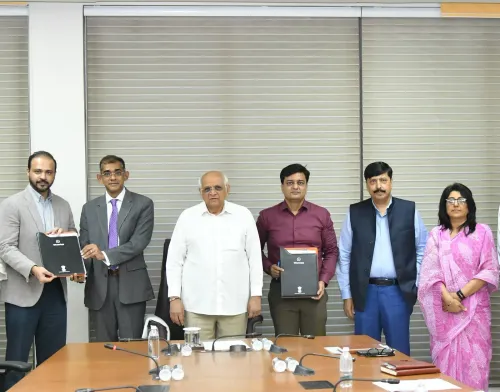
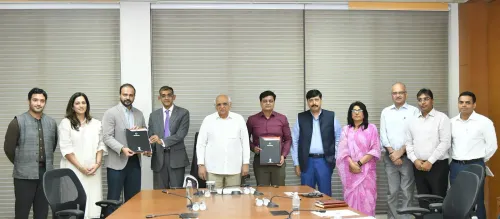
An MoU with Survey of India was signed to digitise city survey maps into GIS format , creating a precision land database for Gujarat.
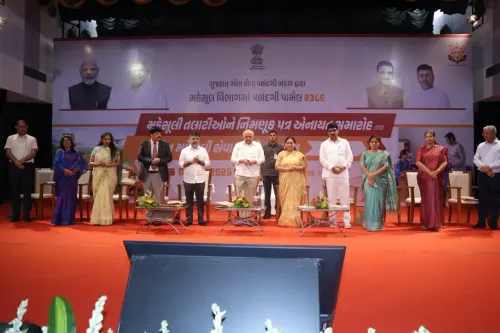
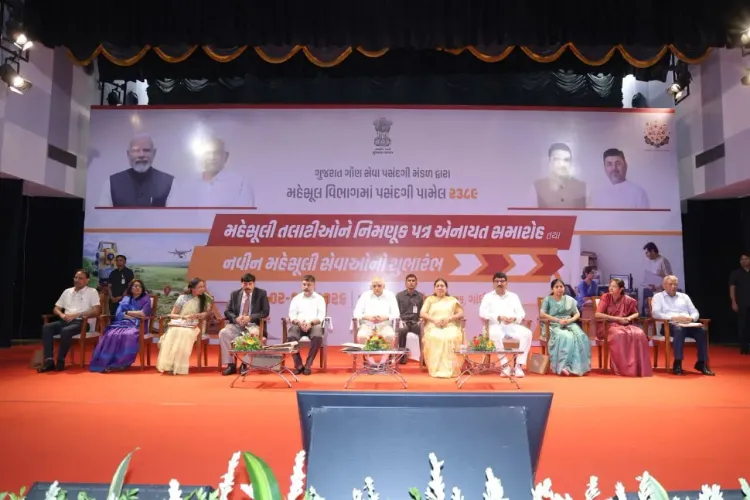
The Chief Minister's Office of Gujarat announced on 2 July 2026 that the Chief Minister launched a clutch of revenue-administration reforms, including e-filing of revenue cases on the iRCMS (Integrated Revenue Case Management System) portal, a QR-based feedback mechanism called REVA (Revenue Voice and Assistance), historic amendments to the Bombay Prevention of Fragmentation and Consolidation of Holdings Act, 1947, and new citizen-centric services on the iORA portal. The event also saw the inauguration of new sub-registrar offices in Vadgam (Banaskantha district) and Siddhpur (Patan district), as well as newly constructed residential quarters for the Additional Collector at Navsari.
Context
The post, shared by the official CMO Gujarat account, states in Gujarati that the Chief Minister 'નાગરિकોने वधु सरळ, ઝડपी अने सुगम रीते सरकारी सेवाओ उपलब्ध करावावाना हेतुथी' ('with the aim of making government services available to citizens in a simpler, faster and more accessible manner') launched the suite of digital and physical infrastructure upgrades. A significant MoU between the Gujarat Government and the Survey of India was also signed at the event to digitise city survey maps and convert them into a GIS (Geographic Information System) format, creating a precision land-data database.
The announcement bundles four distinct governance deliverables — digital filing, citizen feedback, legislative reform, and geospatial mapping — under a single revenue-department event, signalling a coordinated push rather than incremental upgrades.
Policy Backdrop
Gujarat's revenue computerisation drive traces back to the early 2000s, when the state began digitising records-of-rights to reduce disputes and cut trips to tehsil offices. That effort built on the Centre's National Land Records Modernization Programme (NLRMP), launched in 2008, which pushed states to computerise land records and integrate them with spatial data.
The amendment to the Bombay Prevention of Fragmentation and Consolidation of Holdings Act, 1947 — a legislation originally enacted for the former Bombay Presidency to prevent the subdivision of agricultural plots below viable thresholds — marks a notable legislative step. The CMO described it as a 'historic amendment', suggesting the state has updated the decades-old framework to reflect contemporary land-use and agricultural realities, though the precise provisions of the amendment have not been detailed in the post.
The GIS integration effort aligns with national digital public infrastructure goals, with the Survey of India — the country's apex mapping agency under the Ministry of Science and Technology — lending technical authority to the database-building exercise.
Stakeholders and Impact
The primary beneficiaries are citizens filing revenue cases, who can now initiate proceedings digitally through iRCMS rather than visiting tehsil offices in person. The REVA QR-based feedback system is designed to capture real-time service quality data, giving the revenue administration a direct channel for grievance signals.
Farmers with fragmented land holdings in agrarian districts such as Banaskantha stand to benefit from both the amended fragmentation law and the GIS-enabled land database, which promises greater accuracy in ownership and boundary records. Revenue officials in Vadgam, Siddhpur, and Navsari will operate from newly built infrastructure, potentially reducing administrative bottlenecks in those sub-divisions.
What's Next
The practical test for these initiatives will lie in rollout metrics: how quickly iRCMS e-filing scales beyond pilot districts, how many citizens engage with REVA feedback codes, and whether the GIS database is made publicly queryable. The MoU with Survey of India is a framework agreement; follow-up work orders and timelines for map digitisation will determine delivery speed.
Legislative operationalisation of the 1947 Act amendments — including any rules or notifications needed to give them effect — will be closely watched by land-law practitioners and farming communities across the state. Gujarat's revenue reforms, if they deliver measurable reductions in case pendency, could serve as a template for other states pursuing similar digital-governance upgrades under the Centre's broader land-records modernisation framework.
Point of View
Bundling digital filing, real-time feedback, legislative reform, and geospatial infrastructure under one umbrella — a deliberate optics choice that projects administrative momentum. The MoU with Survey of India is particularly significant: GIS-linked land records reduce title disputes and ease credit access for farmers, directly addressing a structural vulnerability in agrarian districts like Banaskantha. The amendment to the 1947 fragmentation law signals that the state is willing to revisit colonial-era statutes, though the absence of specific provisions in the public announcement leaves room for scrutiny once the gazette notification is published. Taken together, the reforms position Gujarat's revenue department as a benchmark for digital public infrastructure in land administration, reinforcing the state's long-running governance-as-brand narrative.
NationPress
2 Jul 2026
Frequently Asked Questions
What is iRCMS and how does it help Gujarat citizens?
iRCMS stands for Integrated Revenue Case Management System. It is a Gujarat government portal that now allows citizens to file revenue cases online through an e-filing facility, removing the need for physical visits to tehsil or revenue offices.
What is REVA in Gujarat revenue department?
REVA stands for Revenue Voice and Assistance. It is a QR code-based feedback system launched by the Gujarat government to collect real-time citizen feedback on revenue services, helping the administration identify and address grievances quickly.
What changes were made to the Bombay Fragmentation Act 1947 in Gujarat?
The Chief Minister's Office announced a 'historic amendment' to the Bombay Prevention of Fragmentation and Consolidation of Holdings Act, 1947, which governs the subdivision of agricultural land. The specific provisions of the amendment were not detailed in the official announcement.
What is the Gujarat government MoU with Survey of India about?
The MoU signed between the Gujarat government and Survey of India aims to digitise city survey maps and convert them into GIS (Geographic Information System) format, creating an accurate and precision land-data database for the state.
Which new sub-registrar offices were inaugurated in Gujarat in July 2026?
New sub-registrar offices were inaugurated at Vadgam in Banaskantha district and Siddhpur in Patan district. New residential quarters for the Additional Collector were also inaugurated at Navsari.