CM Rekha Gupta Pitches DEVI Buses for Delhi's Last Mile
Synopsis
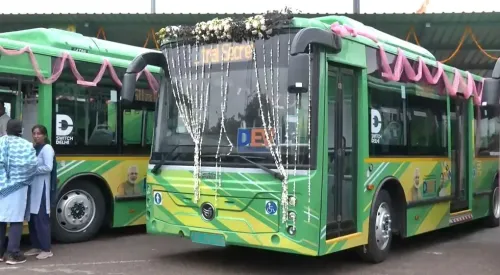
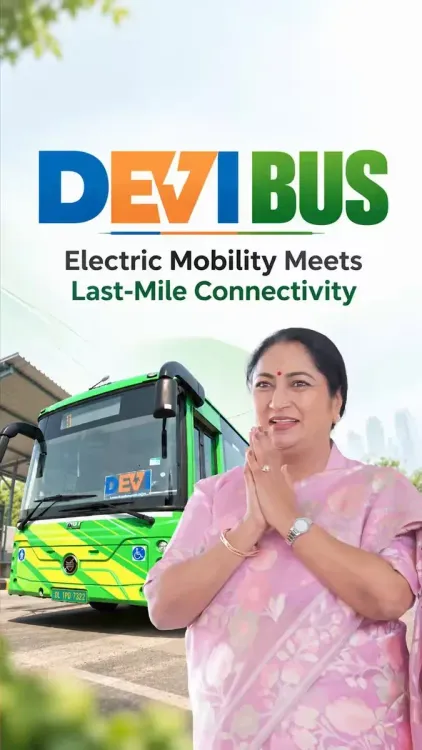
Delhi Chief Minister Rekha Gupta has highlighted DEVI Buses, a scheme designed to extend clean, accessible public transport into underserved neighbourhoods of the capital, framing it as a core commitment of her administration's Seva Sankalp Abhiyan campaign.
Key Takeaways
DEVI Buses are designed to bridge the last-mile connectivity gap in Delhi's underserved neighbourhoods.
CM Rekha Gupta tied the scheme to her government's Seva Sankalp Abhiyan on 27 September 2026 .
The initiative emphasises cleaner and more accessible transport, aligned with Delhi's ongoing fleet modernisation.
Delhi Transport Corporation has been expanding its CNG and electric bus fleet since phased procurements begun around 2018–2020 .
The scheme fits a broader national push for feeder-bus and electric-mobility solutions to complement metro networks.
Key metrics to watch include new route rollouts , DTC integration, and state budget allocations for fleet expansion.
Delhi's last-mile problem — the stubborn gap between a metro station or bus stop and the front door of a neighbourhood — has long been the city's quiet urban failure. On Sunday, 27 September 2026, Delhi Chief Minister Rekha Gupta put the spotlight firmly on a scheme designed to close that gap: DEVI Buses, a dedicated service aimed at carrying commuters into underserved pockets of the capital that mainstream transit has historically bypassed.
Posting on X under the hashtag #SevaSankalpAbhiyan ('Service-Commitment Campaign'), CM Gupta framed the initiative as a dual promise: 'Seva in action, Sankalp towards a better-connected Delhi.' The message was deliberate — positioning DEVI Buses not merely as an addition to the fleet but as a statement of governance philosophy tied to the ongoing Seva Sankalp Abhiyan, the current administration's campaign around service-oriented delivery.What DEVI Buses Are Meant to Fix
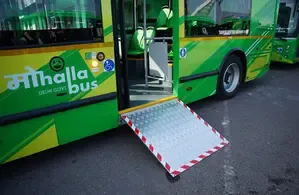
Delhi operates one of Asia's largest metro networks, yet millions of residents in outlying colonies, resettlement clusters, and dense inner-city lanes remain poorly served by feeder connectivity. The 'last mile' — often a kilometre or two that forces commuters onto auto-rickshaws, e-rickshaws, or simply their feet — drives up costs, time, and pollution. DEVI Buses are positioned as a cleaner, more accessible bridge: smaller or re-routed services threading into exactly those neighbourhoods that the trunk network skips. The push aligns with a broader national pattern. Indian cities have increasingly leaned on feeder-bus models and electric mobility to complement metro infrastructure and chip away at private vehicle dominance. Delhi Transport Corporation began phased fleet modernisation — prioritising CNG and electric buses — in procurement cycles starting around 2018–2020, laying some groundwork for the current expansion. The National Clean Air Programme framework has also kept pressure on state governments to demonstrate measurable shifts away from polluting modes.The Seva Sankalp Framing
The hashtag choice is not incidental. Seva Sankalp Abhiyan functions as a branding umbrella for the Gupta administration's public-service outreach, and tying a transit scheme to it signals that the government wants urban mobility to read as a welfare issue, not just an infrastructure one. Reaching the neighbourhoods that 'need it most' — the CM's own phrasing — is a political as much as a logistical claim: it asserts that this government is turning its attention to commuters who felt invisible to earlier regimes. For Delhi commuters and neighbourhood residents in underconnected areas, the immediate question is routes and frequency. Exact operational details — how many buses, which corridors, what the rollout timeline looks like — remain to be confirmed as the scheme scales. What to watch next: route-expansion metrics, integration with existing DTC and metro services, and whether the next state budget earmarks dedicated funds for fleet growth. If DEVI Buses deliver on the connectivity promise, they could redefine daily mobility for hundreds of thousands of Delhiites who today pay a premium — in time and money — just to reach a mainstream transit node. That is the real test of the sankalp.Point of View
The administration is building a political narrative around mobility equity ahead of any future electoral cycle. The real policy test, however, lies in operational execution: whether route coverage, fleet size, and integration with the metro genuinely reach residents who are currently underserved, or whether the scheme remains a well-branded pilot. If scaled credibly, it also positions Delhi as a model for other Indian cities still struggling to solve the last-mile problem.
NationPress
27 Sept 2026
Frequently Asked Questions
What are DEVI Buses in Delhi?
DEVI Buses are a Delhi government public transport initiative designed to improve last-mile connectivity in underserved neighbourhoods, offering cleaner and more accessible travel options that complement the metro and existing DTC services.
What is the Seva Sankalp Abhiyan launched by Rekha Gupta?
Seva Sankalp Abhiyan is a campaign by Delhi Chief Minister Rekha Gupta's administration promoting service-oriented governance and highlighting policy commitments across sectors, including public transport.
What is the last-mile connectivity problem in Delhi?
Last-mile connectivity refers to the difficulty commuters face travelling the short distance between a major transit hub — like a metro station — and their home or destination, often forcing them onto costly or polluting informal transport options.
How does Delhi plan to expand its bus fleet?
Delhi has been modernising its fleet through phased CNG and electric bus procurements since around 2018–2020 under the Delhi Transport Corporation, with the DEVI Buses scheme forming part of the current administration's effort to extend coverage to underserved areas.
How do DEVI Buses fit into India's clean air goals?
By emphasising cleaner transport options and targeting areas with high dependence on polluting informal modes, DEVI Buses align with the National Clean Air Programme framework that pushes Indian cities to reduce vehicular emissions.