CM Hemant Soren: Every Jharkhandi Hides an Artist Within
Synopsis
Chief Minister Hemant Soren declared that every common person in Jharkhand carries an artist within them, in a statement shared by the state's Chief Minister's Office on 22 July 2026. The remark reflects the Soren government's sustained emphasis on tribal culture and folk heritage as central to Jharkhand's identity.
Key Takeaways
The Chief Minister's Office of Jharkhand quoted CM Hemant Soren on 22 July 2026 saying every ordinary citizen of the state has an artist hidden within them.
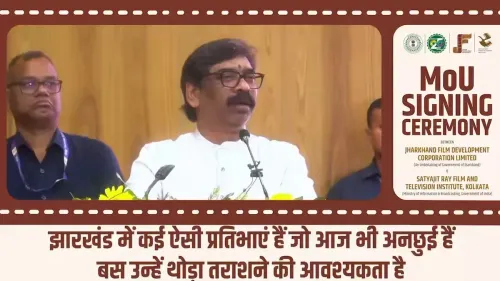
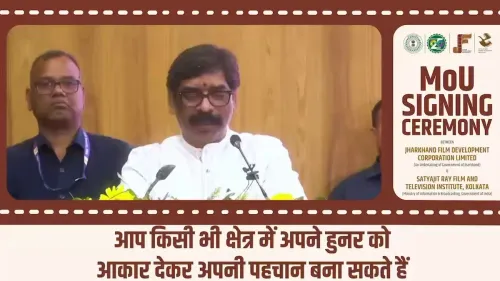
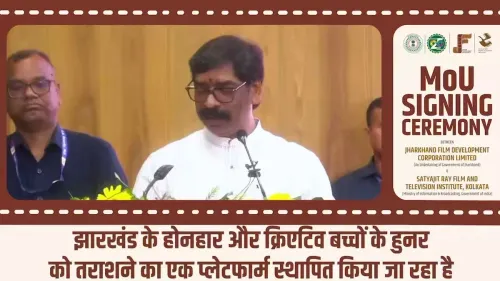
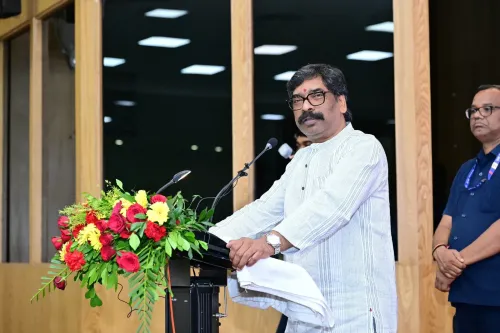
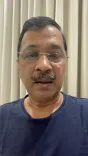
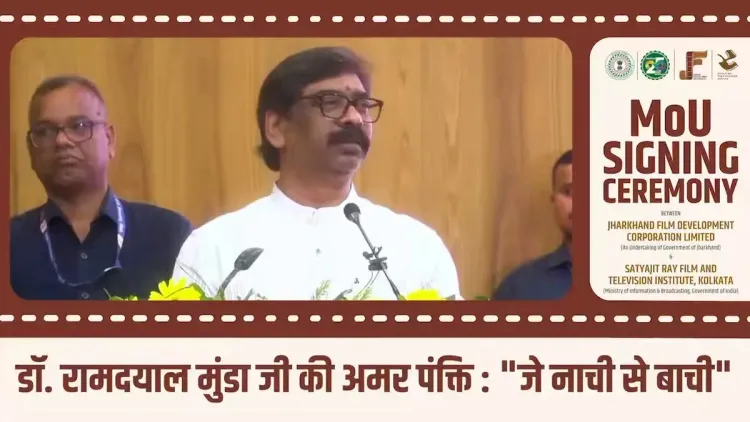
The statement was shared in Hindi and accompanied by a video , indicating it was drawn from a public address.
Jharkhand is home to distinctive indigenous art forms including Chhau dance , Sohrai paintings , and Paitkar scroll art .
The Soren government has since 2019 maintained commitments to preserving indigenous languages and performing arts under the state's cultural policy framework.
Such statements historically precede policy measures such as artist pensions , district festivals , and craft cluster support in Jharkhand.
The Chief Minister's Office of Jharkhand shared a statement on Wednesday, 22 July 2026, quoting Chief Minister Hemant Soren celebrating the innate artistic spirit of the state's ordinary citizens. The remark underscores the Soren government's recurring emphasis on cultural identity as a pillar of Jharkhand's public life.
Context
The Chief Minister's Office posted the quote in Hindi: 'इस राज्य के आम लोगों के अंदर कोई न कोई कलाकार छुपा हुआ है' — translated as 'Within the common people of this state, there is an artist hidden inside each one of them.' The statement was accompanied by a video, suggesting it was drawn from a public address or event, though the specific occasion has not been confirmed.
Hemant Soren, leader of the Jharkhand Mukti Morcha (JMM), has served multiple terms as Chief Minister and has consistently positioned tribal culture and folk heritage at the centre of his government's identity. Such public affirmations of grassroots artistic talent are a recurring feature of his communication style.
Policy Backdrop
Jharkhand, formed on 15 November 2000, is home to one of India's largest tribal populations and a rich tradition of indigenous art forms — including Chhau dance, Sohrai paintings, and Paitkar scroll art. These traditions have long been recognised as both cultural assets and potential drivers of heritage tourism.
After returning to office in 2019, the Soren government reiterated commitments under the state's cultural policy framework to preserve indigenous languages and performing arts. State administrations have historically paired mineral-based industrial messaging with parallel outreach on safeguarding tribal heritage, including artist pensions, district-level festivals, and craft cluster support.
Stakeholders and Impact
The remark speaks directly to folk artists and tribal communities across Jharkhand's 24 districts, many of whom practise art forms passed down through generations but rarely receive formal institutional recognition. For these communities, acknowledgement from the Chief Minister's office carries symbolic weight and can precede policy action.
Indian state governments routinely invoke the cultural talents of ordinary citizens to build political connect and promote soft-power tourism. Statements of this nature often precede or accompany modest budget outlays for artist welfare schemes, regional festivals, or craft promotion initiatives.
What's Next
Observers of Jharkhand's cultural policy will watch for follow-through in the form of state budget allocations or cultural-department circulars announcing new artist welfare measures. Annual celebrations such as the Chhau festival and Sarhul are established platforms through which the government typically channels such commitments into public programming.
If the statement was made at a specific cultural event or policy launch, further details from the Chief Minister's Office are expected to clarify the occasion and any accompanying announcements. For now, the remark reinforces a long-standing government narrative: that Jharkhand's true wealth lies not only in its mineral reserves but in the creative spirit of its people.
Point of View
Where tribal communities form a decisive vote bloc and folk traditions are deeply intertwined with political identity, such affirmations carry real resonance beyond rhetoric. The key test will be whether this statement translates into measurable policy action — artist welfare allocations, festival funding, or institutional recognition — in the next budget cycle.
NationPress
23 Jul 2026
Frequently Asked Questions
What did Hemant Soren say about artists in Jharkhand?
Chief Minister Hemant Soren said that within every common person of Jharkhand, there is an artist hidden inside them, according to a statement shared by the Chief Minister's Office on 22 July 2026.
What are the famous folk art forms of Jharkhand?
Jharkhand is known for several indigenous art forms including Chhau dance, Sohrai paintings — a wall-art tradition practised by tribal communities — and Paitkar scroll paintings, one of India's oldest scroll-art traditions.
What is Jharkhand government's cultural policy?
The Soren government, after returning to office in 2019, reiterated commitments under the state's cultural policy framework to preserve indigenous languages and performing arts, including support for artist pensions, district-level festivals, and craft clusters.
Who is Hemant Soren?
Hemant Soren is the Chief Minister of Jharkhand and the leader of the Jharkhand Mukti Morcha (JMM). He has served multiple terms as Chief Minister and is known for his focus on tribal welfare and the preservation of Jharkhand's cultural heritage.
Why does Jharkhand emphasise tribal culture in government messaging?
Tribal communities form a large and politically significant portion of Jharkhand's population. The state government consistently pairs its industrial and development messaging with outreach on cultural preservation to build political connect and promote heritage tourism.