CM Hemant Soren Urges Jharkhand to Plant Trees on Van Mahotsav
Synopsis
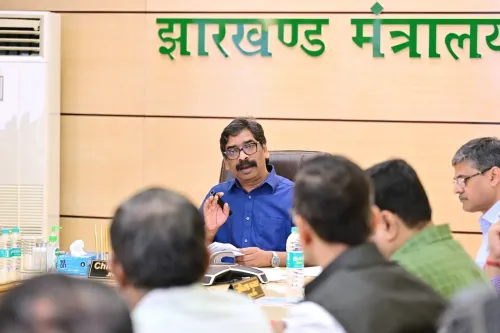
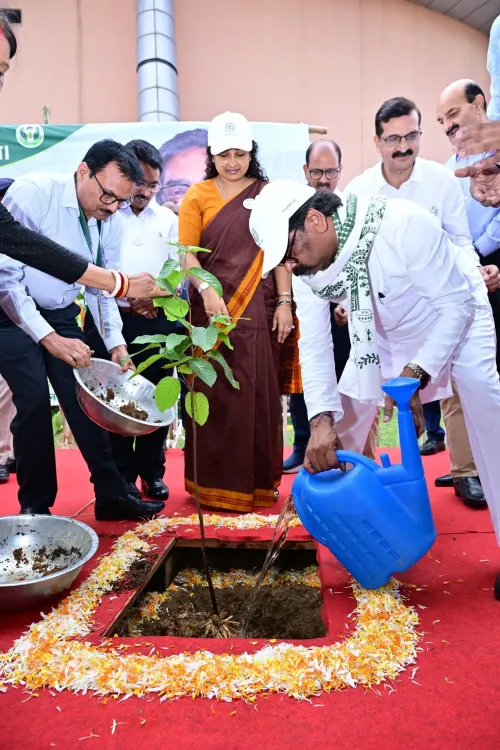
On Van Mahotsav, Jharkhand Chief Minister Hemant Soren called on citizens to plant fruit-bearing saplings at home, mark the date on each plant, and promised to visit the trees personally — a pledge he tied to no condition of political office.
Key Takeaways
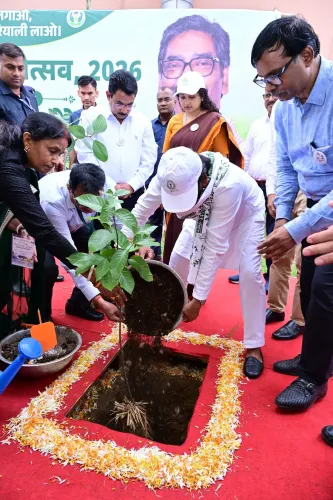
CM Hemant Soren made a public call on Van Mahotsav (7 August 2026) for every Jharkhand resident to plant a fruit-bearing sapling in their home compound.
He urged citizens to inscribe the date of planting on each sapling as a personal record of participation.
Soren pledged to visit the trees himself, regardless of whether he remains Chief Minister — a rare personal accountability statement.
Van Mahotsav is a national tree-planting festival launched in 1950 by Union Minister K.M.
Munshi to promote afforestation during the monsoon season.
The specific call for faldaar paudhe (fruit-bearing plants) reflects the practical needs of Jharkhand 's forest-dependent tribal communities.
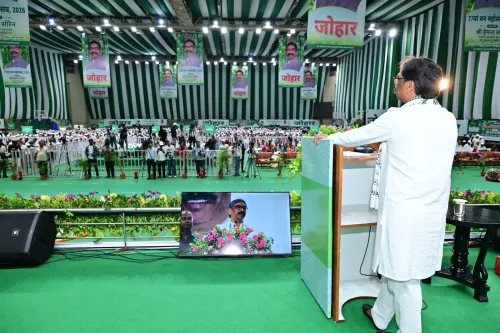
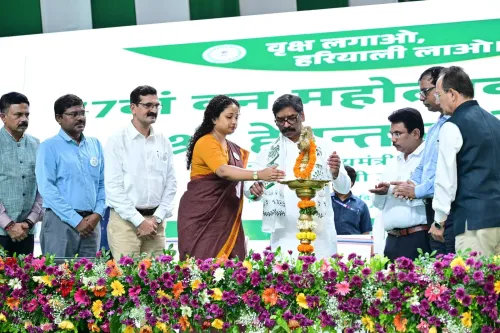
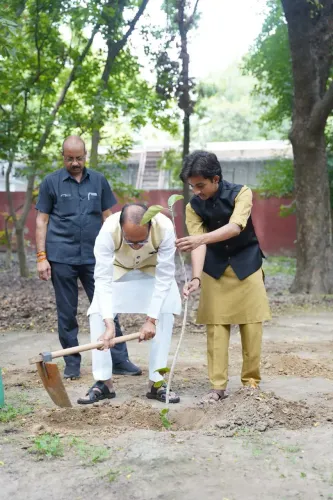
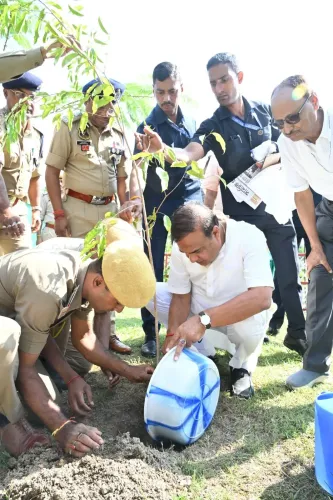
A personal pledge from the top — and a challenge to every household. On Van Mahotsav, Chief Minister Hemant Soren of Jharkhand stepped beyond the ceremonial and made it intimate: plant a fruit-bearing sapling in your own compound, mark today's date on it, and know that he intends to come see it grow — whether or not he remains in power.
Addressing those gathered at the event on Friday, 7 August 2026, Soren said: 'Everyone present here should plant a fruit-bearing sapling in the campus of their home. Plant it, and make sure you write today's date on it — that on this day of Van Mahotsav, I planted this sapling. Whether I remain in power or not, I will definitely come to see that tree.' The words, stripped of political armour, landed as something closer to a personal vow than a government directive.
A 76-Year-Old Festival, Still Finding New Urgency
Van Mahotsav is not a new idea. Launched in 1950 by then Union Agriculture Minister K.M. Munshi, the annual festival was designed to mobilise citizens across India in a collective act of afforestation during the monsoon months of July and August — the season when saplings have the best chance of survival. Over seven decades, it has become a fixture on the political calendar: chief ministers plant saplings, photographs are taken, targets are announced.
What Soren added on Friday was accountability made personal. By asking citizens to inscribe the date on each plant, he converted a mass drive into thousands of individual records — a quiet audit trail that outlasts any press release.
Why Jharkhand's Forests Make This More Than Symbolism
Jharkhand is one of India's most forested states, and its forests are inseparable from the lives of its large tribal population. For communities whose livelihoods, culture, and food security are threaded through the forest, every sapling that survives is not an environmental statistic — it is a resource. The Chief Minister's specific call for faldaar paudhe (fruit-bearing plants) rather than ornamental trees carries a practical logic: food and shade, not just green cover on a government chart.
Indian states have repeatedly struggled with the gap between saplings planted and trees that actually survive. The emphasis on marking the date is a small but pointed nudge toward that problem — if you know when you planted it, you are more likely to tend it.
Whether the sentiment translates into measurable canopy is a question Jharkhand's forest department will eventually have to answer. For now, the Chief Minister has made the bet visible — and unusually, staked something personal on it.
Point of View
He is attempting to convert a ceremonial moment into a durable civic compact. For a Chief Minister whose political identity is closely linked to tribal welfare and forest rights, the choice of fruit-bearing trees over ornamental ones signals that the environmental pitch is also a livelihood pitch. Whether the state follows through with survival-rate monitoring will determine if this becomes a genuine policy moment or a well-framed gesture.
NationPress
7 Aug 2026
Frequently Asked Questions
What did Hemant Soren say on Van Mahotsav 2026?
Chief Minister Hemant Soren urged all Jharkhand residents to plant a fruit-bearing sapling in their home compound on Van Mahotsav, mark the date of planting on each plant, and promised to personally visit the trees regardless of whether he remains in power.
What is Van Mahotsav and when is it celebrated?
Van Mahotsav is India's annual national tree-planting festival, launched in 1950 by Union Minister K.M. Munshi. It is observed primarily during July and August to encourage afforestation during the monsoon season when saplings have the best chance of survival.
Why did Soren ask people to write the date on saplings?
By asking citizens to inscribe the planting date on each sapling, Soren aimed to create a personal record of participation — encouraging long-term care and accountability rather than one-time planting with no follow-through.
Why did Hemant Soren specifically call for fruit-bearing plants?
Soren's call for fruit-bearing saplings rather than ornamental trees reflects the practical needs of Jharkhand's large tribal population, whose livelihoods and food security are closely tied to forest produce.
What is Hemant Soren's party and political background?
Hemant Soren is the Chief Minister of Jharkhand and a leader of the Jharkhand Mukti Morcha (JMM), a party with deep roots in tribal welfare and the rights of forest-dependent communities in the state.