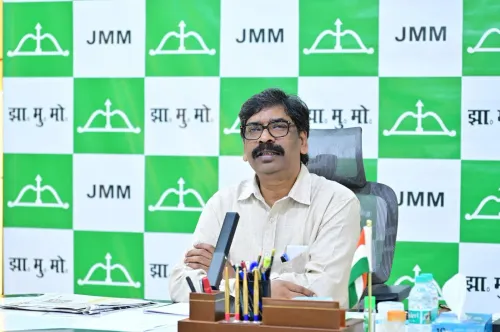
CM Hemant Soren Writes to President Over Mining Bill
Synopsis
Jharkhand Chief Minister Hemant Soren has written to President Draupadi Murmu seeking constitutional review of the Mines and Minerals Amendment Bill 2026, arguing it threatens state financial autonomy, federal structure, and Adivasi rights in mineral-producing states.
Key Takeaways
Hemant Soren wrote to President Draupadi Murmu on 13 August 2026 over the Mines and Minerals (Development and Regulation) Amendment Bill, 2026 .
Soren argues the bill is not merely a revenue issue but threatens states' legislative and financial autonomy and the federal structure.
He specifically flags the impact on Adivasi communities and mining-affected regions, invoking Fifth Schedule protections.
The Chief Minister urged the President to consider 'all constitutional options' before the bill proceeds — language pointing toward a potential presidential reference or return of the bill.
Jharkhand is one of India's most mineral-rich states; the MMDR framework was last significantly amended in 2015 via mandatory auctions for mineral concessions.
The appeal mirrors a broader pattern of centre-state friction over natural resource revenue across mineral-producing states.
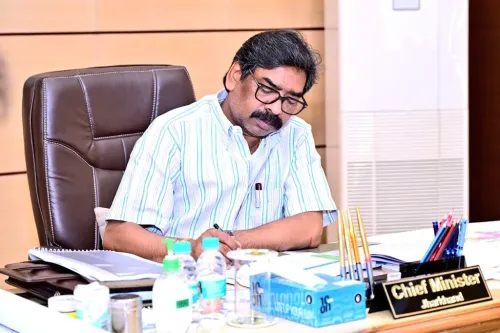
A letter addressed to the highest constitutional office in India — that is how Jharkhand Chief Minister Hemant Soren chose to escalate his state's fight against the Mines and Minerals (Development and Regulation) Amendment Bill, 2026 on Thursday, 13 August 2026. The move signals that Jharkhand's objections have moved well beyond the floor of Parliament and into the realm of constitutional appeal.
Writing to President Draupadi Murmu, Soren argued that the proposed central legislation is not merely a revenue matter — it strikes at the heart of states' legislative and financial autonomy, the federal structure, and the rights of tribal communities and mining-affected regions. In his own words, the amendment raises a question that is 'connected to the rights of Adivasi communities and mining-affected areas' (aadivasi samudayon aur khanan prabhavit kshetron ke adhikaaron se juda prashna). He urged the President to consider all constitutional options available before allowing the bill to proceed.
Why Jharkhand Sits at the Eye of This Storm
Jharkhand is one of India's most mineral-rich states, holding substantial reserves of coal, iron ore, copper, and other critical minerals. Mining revenues are not a peripheral concern here — they underpin the state's finances and the livelihoods of a large tribal population concentrated in areas designated under the Fifth Schedule of the Constitution, which carries special protections for Adivasi land and governance rights.
The existing Mines and Minerals (Development and Regulation) Act was last significantly amended in 2015, when mandatory auctions for mineral concessions were introduced following Supreme Court rulings on illegal mining. Each subsequent amendment has sharpened the question of who controls the resource agenda in mineral states — the Centre or the state legislature.
A Federal Fault Line, Not Just a Jharkhand Problem
Soren's letter is pointed but its implications are wider. Centre-state friction over natural resource revenue is a recurring fault line in Indian federalism, and Jharkhand is rarely alone in this fight. Other mineral-producing states have periodically raised similar objections about legislative competence and financial autonomy whenever the central government moves to revise the MMDR framework.
The choice of recipient is itself a constitutional statement. President Murmu is the first person from a tribal community to hold the office — a fact that lends particular weight to Soren's appeal on behalf of Adivasi rights. By routing his concern through Rashtrapati Bhavan rather than stopping at a press conference, the Chief Minister is invoking the President's constitutional role as a potential check on legislation that he argues could harm tribal and federal interests.
What Soren Is Asking For
The Chief Minister has not demanded that the bill be rejected outright. His request is more precisely framed: that the President give 'serious consideration to the constitutional, federal, financial and social implications' of the amendment and explore 'all options available under the Constitution' — language that stops short of a veto demand but leaves the door open to a presidential reference or a return of the bill for reconsideration.
The next critical markers will be any formal response from Rashtrapati Bhavan and the bill's progress through Parliament, as well as whether other mineral-rich states formally align with Jharkhand's position.
One mineral-rich state, one constitutional letter, one tribal president — the geometry of this appeal is not accidental, and its reverberations will be felt well beyond Ranchi.
Point of View
Making her the most symbolically potent audience for an argument centred on Adivasi rights. This move fits a wider pattern of opposition-governed mineral states using federal and constitutional channels to resist central encroachment on resource revenues, a tension that has intensified since the 2015 MMDR amendments shifted power toward the Centre. How Rashtrapati Bhavan responds — or declines to respond — will set a precedent for how far constitutional appeal can travel in centre-state resource disputes.
NationPress
13 Aug 2026
Frequently Asked Questions
What is the Mines and Minerals Amendment Bill 2026?
The Mines and Minerals (Development and Regulation) Amendment Bill, 2026 is a proposed central law amending the existing MMDR framework governing mining leases, revenues, and regulation in India. Jharkhand CM Hemant Soren has raised constitutional, federal, and tribal-rights objections to the bill in a letter to President Draupadi Murmu.
Why did Hemant Soren write to the President about the mining bill?
Soren wrote to President Murmu to flag Jharkhand's concerns that the amendment threatens state legislative and financial autonomy, the federal structure, and the rights of Adivasi communities. He urged the President to explore all constitutional options before the bill proceeds.
How does the MMDR Amendment Bill affect tribal communities?
Soren argues the bill affects the rights of Adivasi communities and mining-affected areas, particularly in Fifth Schedule regions where the Constitution provides special protections for tribal land and governance. Changes to mining revenue flows and regulatory control could directly impact these communities.
What constitutional options does the President have on a bill?
Under the Indian Constitution, the President can give assent to a bill, withhold assent, or return it to Parliament for reconsideration — though the last option is not available for money bills. Soren's letter asks the President to consider all such options in light of the bill's federal and social implications.
Which other states have opposed changes to the MMDR framework?
Other mineral-rich states have periodically raised similar objections to MMDR amendments, citing concerns about legislative competence and loss of financial autonomy. The centre-state friction over natural resource revenues is a recurring pattern in Indian federalism, not unique to Jharkhand.