CM Himanta: Agri Stack Reaches 12.8 Lakh Assam Farmers
Synopsis
Assam Chief Minister Himanta Biswa Sarma says Agri Stack is now enabling timely fertiliser access and hassle-free MSP payments for 12.8 lakh farmers, while dedicated exception pathways bring in tenant farmers, tea growers, and remote villagers previously left out of digital benefit systems.
Key Takeaways
12.8 lakh farmers in Assam are now covered under the Agri Stack digital agriculture platform.
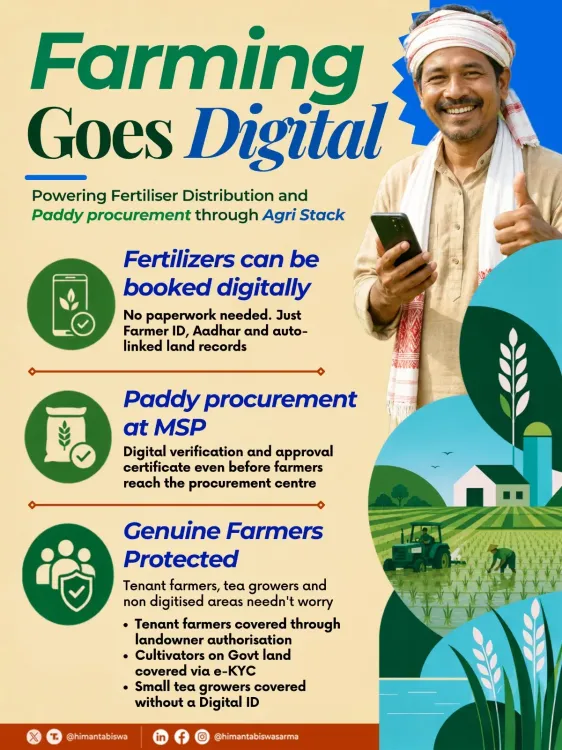
The platform is delivering two specific benefits: timely fertiliser access and hassle-free MSP payments .
Exception pathways have been built for digitally excluded groups including tenant farmers , tea growers , and residents of remote villages .
Agri Stack is a national digital agriculture ecosystem launched under the Union Government's Digital Agriculture Mission (2021) .
Assam's integration addresses structural barriers unique to the northeast, including informal tenancy and the large tea estate workforce.
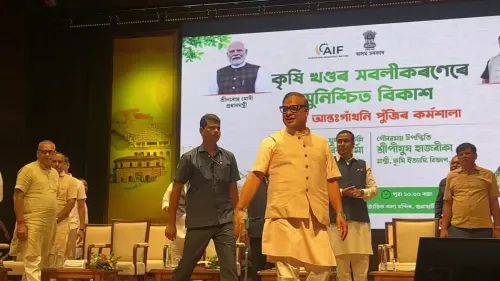
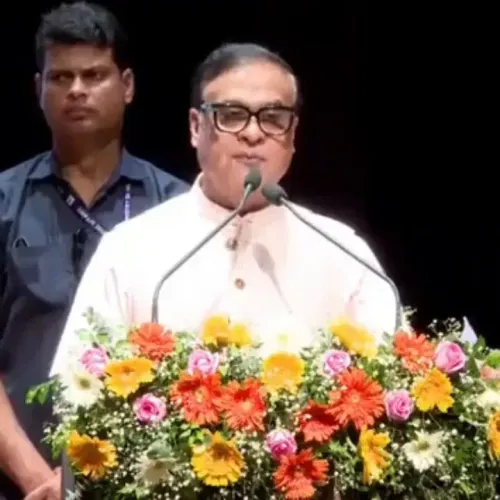
Assam Chief Minister Himanta Biswa Sarma on Sunday, June 7, 2026, highlighted the state's progress under the Agri Stack digital agriculture initiative, stating that the platform is now delivering two critical benefits — timely fertiliser access and hassle-free MSP (Minimum Support Price) payments — to 12.8 lakh farmers across Assam.
Context
In his post, CM Sarma outlined that Agri Stack is enabling two specific outcomes for the state's farming community: fertiliser delivered on time and MSP payments processed without bureaucratic friction. Crucially, he also pointed to the construction of 'exception pathways' for farmers not yet digitally connected — including tenant farmers, tea growers, and those in remote villages — so that they are not excluded from scheme benefits.
The announcement underscores a deliberate effort to address the last-mile challenge that has historically plagued agricultural welfare delivery in India's northeastern states, where terrain, tenancy arrangements, and connectivity gaps create structural barriers.
Policy Backdrop
The Agri Stack framework is a national digital agriculture ecosystem developed under the Union Ministry of Agriculture, designed to build a unified farmer registry and crop sown area database. The Digital Agriculture Mission, approved by the Union Government in 2021, laid the foundation for these components, aiming to enable targeted delivery of inputs and direct benefit transfers while reducing leakages.
Multiple states have been progressively linking their state agriculture portals to the national Agri Stack infrastructure for direct fertiliser subsidy disbursement and MSP procurement operations. Assam's integration represents a significant step for the northeastern region, where the agricultural landscape is complicated by the large presence of tea estates and informal tenancy.
CM Sarma, who has consistently positioned Assam as a front-runner in digital governance since assuming office in 2021, has tied this initiative into a broader state agenda of reducing intermediary dependence in welfare delivery.
Stakeholders and Impact
The primary beneficiaries cited are the 12.8 lakh farmers of Assam now covered under the platform. Beyond this group, the explicit mention of tenant farmers, tea growers, and residents of remote villages signals recognition that conventional digital registration processes systematically exclude cultivators who do not hold formal land titles.
Tea growers represent a particularly significant demographic in Assam, where the tea industry employs lakhs of workers across the Brahmaputra and Barak valleys. Tenant farmers, who till land without ownership documentation, have historically been ineligible for schemes tied to land records. The 'exception pathways' referenced by CM Sarma are intended to bridge this gap through alternative verification or manual onboarding routes.
What's Next
The effectiveness of these exception pathways — and the actual scale of their reach among tea garden workers, tenant cultivators, and remote communities — will be a key metric to watch in forthcoming state agriculture department reports and budget sessions. Expansion of the model to cover a larger share of Assam's estimated agricultural workforce could serve as a template for other northeastern states under the North-East Democratic Alliance (NEDA), which CM Sarma convenes.
As Agri Stack matures nationally, state-level integration depth and grievance redressal mechanisms for digitally excluded farmers will determine whether the platform delivers on its promise of universal agricultural welfare coverage.
Point of View
And pre-empting criticism about exclusion by explicitly naming tenant farmers and tea growers as covered groups. The acknowledgement of 'exception pathways' is politically significant — it signals awareness that a purely tech-first approach risks alienating a large, informal farming constituency that is also electorally consequential in Assam. Within the broader national Agri Stack rollout, Assam's framing of inclusion-by-design rather than inclusion-by-default could set a useful precedent for other states grappling with similar last-mile challenges. Whether the exception pathways are operationally robust or remain aspirational will ultimately determine the political and policy dividend of this announcement.
NationPress
23 Oct 2026
Frequently Asked Questions
What is Agri Stack and how does it help farmers in Assam?
Agri Stack is a national digital agriculture ecosystem built by the Union Government to create a unified farmer database, enabling targeted delivery of fertiliser subsidies and MSP payments. In Assam, CM Himanta Biswa Sarma says it is now benefiting 12.8 lakh farmers with timely fertiliser and hassle-free MSP payments.
What are exception pathways in Assam's Agri Stack implementation?
Exception pathways are alternative onboarding or verification routes designed for farmers who are not yet digitally connected, such as tenant farmers, tea growers, and those in remote villages, so they can still access Agri Stack benefits despite lacking standard digital registration.
How many farmers in Assam are covered under Agri Stack?
According to CM Himanta Biswa Sarma, 12.8 lakh farmers in Assam are currently covered under the Agri Stack platform.
What benefits does Agri Stack provide to Assam farmers?
Agri Stack is providing two key benefits to Assam farmers: timely delivery of fertiliser and hassle-free Minimum Support Price (MSP) payments, reducing delays and bureaucratic hurdles in agricultural welfare delivery.
Are tea garden workers in Assam covered under Agri Stack?
CM Sarma has stated that exception pathways have been specifically built for tea growers, tenant farmers, and remote villagers who are not yet digitally connected, with the aim of extending Agri Stack benefits to them as well.