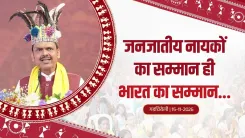
CM Himanta attends 3rd Convocation of Sanskrit University
Synopsis
Assam Chief Minister Himanta Biswa Sarma attended the 3rd Convocation of Kumar Bhaskar Varma Sanskrit and Ancient Studies University in Nalbari, celebrating graduates advancing classical Indian scholarship in the Northeast.
Key Takeaways
Assam CM Himanta Biswa Sarma attended the 3rd Convocation of Kumar Bhaskar Varma Sanskrit and Ancient Studies University on 15 November 2026 .
The university is located in Nalbari, Assam , and was established through legislation in 2011 to promote Sanskrit, Vedic studies, and ancient Indian knowledge systems.
It is one of the few dedicated classical-studies universities in Northeast India .
Sarma's attendance reflects the BJP-led Assam government's dual focus on modern higher education and preservation of classical Indian learning since 2016.
Future developments to watch include new research centres, postgraduate programmes, and state budget allocations for Sanskrit studies.
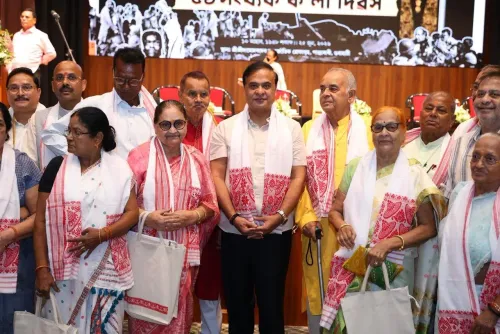
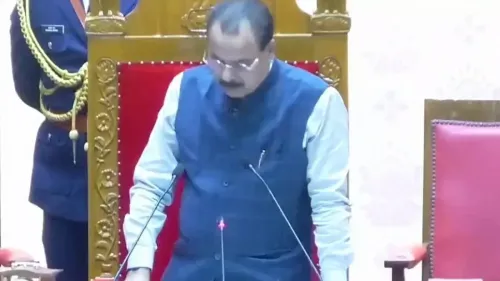
At a ceremony honouring the graduating class of one of Assam's most distinctive universities, Assam Chief Minister Himanta Biswa Sarma attended the 3rd Convocation of Kumar Bhaskar Varma Sanskrit and Ancient Studies University on Sunday, 15 November 2026, celebrating the achievements of students who have dedicated their academic journeys to Sanskrit language, Vedic scholarship, and classical Indian knowledge systems.
A university born from a legislative vision for ancient learning
Kumar Bhaskar Varma Sanskrit and Ancient Studies University, located in Nalbari, Assam, was established through legislation enacted in 2011 with an explicit mandate: to revive and sustain the study of Sanskrit and ancient Indian texts in the Northeast. Named after a celebrated medieval ruler of the Kamarupa kingdom, the university stands as one of the rare dedicated classical-studies institutions in an Indian state historically underrepresented in Sanskrit scholarship. A convocation here is not a routine degree ceremony — it marks another cohort carrying a living tradition forward.
Assam's twin-track higher education push
Sarma's presence at the convocation fits a deliberate pattern. Under the BJP-led Assam government — in power since 2016 and with Sarma at the helm since 2021 — the state has pursued parallel tracks: expanding modern higher-education infrastructure while simultaneously nurturing dedicated institutions for classical Indian knowledge. The convocation moment crystallises that balance — graduates in Sanskrit and ancient studies receiving the same ceremonial recognition as alumni of engineering or medicine colleges.
That framing matters beyond the symbolic. Assam's investment in classical-knowledge institutions signals to students, scholars, and the broader Northeast that careers rooted in Sanskrit and ancient studies carry institutional backing, not just cultural sentimentality.
What the graduating class inherits
For the students crossing the stage at Nalbari, the degree represents access to a niche but growing scholarly ecosystem — research opportunities in Vedic studies, manuscriptology, and classical philosophy, as well as teaching roles in a region where such expertise remains rare. As the university matures toward its fourth convocation cycle, the questions worth watching are whether new research centres or postgraduate programmes will be announced, and how the state's budget allocations for Sanskrit and ancient studies evolve in coming fiscal cycles.
A tradition rebuilt, one graduating class at a time — that is the quiet, durable story the Nalbari campus keeps writing.
Point of View
Backing Sanskrit studies in the Northeast serves a dual purpose: cultural-heritage signalling and differentiation from previous Congress-era education priorities. The university's maturation through three graduating cohorts suggests the 2011 legislative vision is gaining real institutional traction. The next indicator will be whether resource allocations in the state budget reflect that rhetoric with hard numbers.
NationPress
15 Nov 2026
Frequently Asked Questions
What is Kumar Bhaskar Varma Sanskrit and Ancient Studies University?
It is a state university in Nalbari, Assam, established by legislation in 2011 to promote Sanskrit language, Vedic studies, and ancient Indian knowledge systems — one of the few such dedicated institutions in Northeast India.
Where is Kumar Bhaskar Varma Sanskrit University located?
The university is located in Nalbari, in the Nalbari district of Assam.
Why did CM Himanta Biswa Sarma attend the convocation?
Chief Minister Himanta Biswa Sarma attended to celebrate the graduating students of the university's 3rd Convocation, reflecting the Assam government's emphasis on classical Indian knowledge systems alongside modern higher education.
When was the 3rd Convocation of Kumar Bhaskar Varma Sanskrit University held?
The 3rd Convocation was held on Sunday, 15 November 2026.
What courses does Kumar Bhaskar Varma Sanskrit University offer?
The university focuses on Sanskrit language, Vedic studies, and ancient Indian knowledge systems; specific course details beyond this mandate are not confirmed from available information.