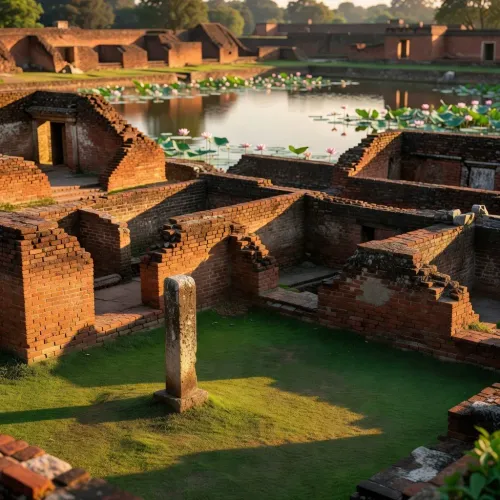
Anand Mahindra: Bihar is sitting on a tourism gold mine
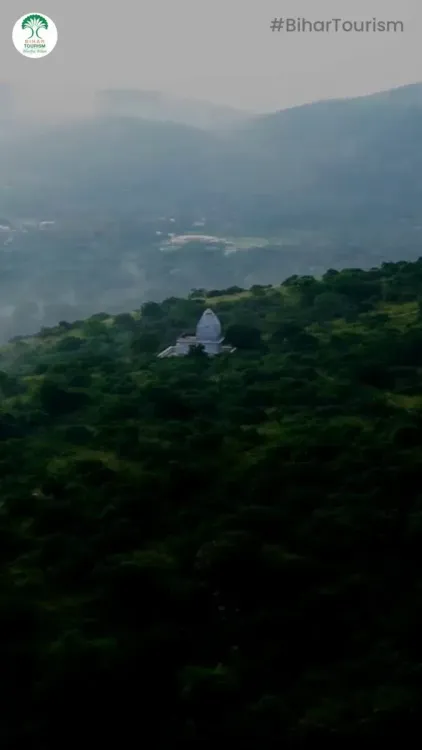
Synopsis
Mahindra Group chairman Anand Mahindra sparked a conversation about Bihar's underrated tourism potential on 15 November 2026, calling the state — home to Rajgir, Bodh Gaya, Nalanda, Vaishali, and Pataliputra — a 'tourism gold mine' that deserves far wider recognition beyond its pilgrimage circuits.
Key Takeaways
Anand Mahindra described Bihar as a 'tourism gold mine' in an X post on 15 November 2026 , prompted by a video of Rajgir .
Rajgir was the capital of the Magadha kingdom over 2,500 years ago and was visited by both the Buddha and Mahavira; its ancient stone wall runs almost 40 kilometres and was built without mortar.
Bihar is home to Bodh Gaya (site of the Buddha's enlightenment), Nalanda (ancient world-class university), Vaishali (early republic), and Pataliputra (Mauryan Empire capital).
Mahindra noted that Bihar receives 'relatively little attention as a tourist destination' outside its established pilgrimage routes.
The post highlights a structural gap between Bihar's extraordinary heritage density and its current tourism profile compared to other Indian states.
A single video of an ancient hilltop city stopped one of India's most prominent industrialists mid-scroll — and what followed was a reflection that cuts to the heart of a question Bihar's tourism planners have struggled with for decades. Mahindra Group chairman Anand Mahindra took to X on Sunday, 15 November 2026, to share his spontaneous deep-dive into Rajgir, Bihar, calling the state an 'incredible concentration of history and heritage' that remains startlingly underappreciated as a travel destination.
What stopped Mahindra in his tracks: Rajgir's remarkable forgotten story
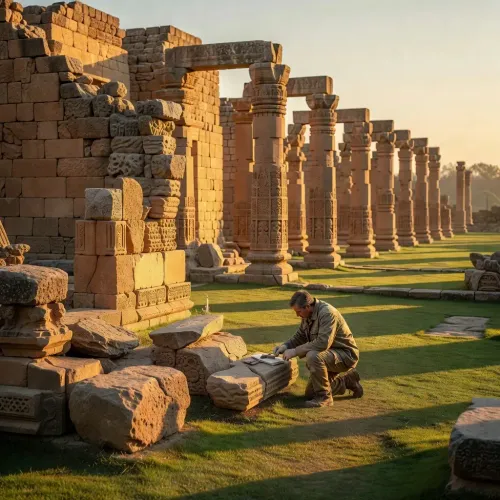
Mahindra wrote that he 'vaguely knew of Rajgir' before the video landed in his feed — an admission that is itself telling. Rajgir served as the capital of the Magadha kingdom over 2,500 years ago. Both the Buddha and Mahavira, founders of two of the world's major philosophical traditions, spent significant time within its boundaries. The city was once enclosed by a stone fortification wall stretching almost 40 kilometres, constructed without a drop of mortar — an engineering feat that still stands, largely unsung, in the Bihar hills.
Today, Rajgir pairs that ancient drama with modern infrastructure: a glass skywalk, ropeways, forested ridges, and excavated monuments. The contrast — millennia-old mortarless ramparts alongside a 21st-century glass walkway — is exactly the kind of layered story that draws international heritage tourists to sites in Greece, Jordan, or Peru. Bihar has it too. Few outside the state know it.
The wider Bihar paradox: world-class heritage, niche tourist footfall
Rajgir was only the beginning of Mahindra's reading. He quickly found himself cataloguing a list that would make any heritage curator pause. Bodh Gaya, where the Buddha attained enlightenment under the Bodhi tree — arguably the single most consequential moment in Asian spiritual history. Nalanda, whose ancient university drew scholars from across Asia centuries before Oxford was founded. Vaishali, tied to one of the earliest documented republican systems of governance in human history. And Pataliputra — modern Patna — capital of Emperor Ashoka's Mauryan Empire, which at its peak stretched from Afghanistan to Bangladesh.
'An incredible concentration of history and heritage in one state,' Mahindra wrote. The assessment is not hyperbole. Few regions on Earth pack this density of civilisational firsts into a single administrative boundary.
And yet, as Mahindra observed, Bihar's tourism profile outside its pilgrimage circuits — Buddhist and Jain routes that do draw international visitors — remains thin. The state has historically received far less sustained marketing and infrastructure attention for leisure and educational travel than comparable heritage destinations elsewhere in India. The gap between what Bihar holds and how widely it is known is, by any measure, enormous.
'A reminder of how much there still is to explore in our own country'
Mahindra closed his post with a characteristic widening of lens, tagging the reflection #SundayWanderer and calling it 'a reminder of how much there still is to explore in our own country.' That framing matters coming from a business leader of his reach: it nudges the conversation about Bihar's heritage from academic appreciation toward something more action-oriented — the idea that the gap between Bihar's assets and its tourist arrivals is not an inevitability but an opportunity.
Bihar's tourism authorities now have an unsolicited but high-visibility endorsement from one of India's most-followed corporate voices. Whether state-level planners move to build thematic circuits that connect Rajgir, Nalanda, Bodh Gaya, Vaishali, and Pataliputra into a single compelling travel narrative — rather than leaving each site to compete for attention separately — will determine how much of that gold mine actually gets mined.
Point of View
High-reach signal in a conversation that Bihar's tourism sector has struggled to generate on its own — the kind of unsolicited endorsement that marketing budgets cannot easily buy. For India's heritage tourism industry, this reflects a broader pattern: states with deep archaeological and spiritual assets but weaker destination branding consistently lose leisure tourists to better-packaged rivals. The commercial opportunity is real — Buddhist circuit tourism already draws significant international spending — but the prize grows substantially if Rajgir, Nalanda, and Vaishali can be bundled into a coherent, non-pilgrimage itinerary with matching infrastructure. Mahindra's framing of Bihar as an undervalued asset mirrors the investment thesis of discovering overlooked value — a language the corporate world understands instinctively.
NationPress
15 Nov 2026
Frequently Asked Questions
What did Anand Mahindra say about Bihar tourism?
Mahindra Group chairman Anand Mahindra said Bihar is 'sitting on a tourism gold mine,' citing the ancient city of Rajgir and other heritage sites including Bodh Gaya, Nalanda, Vaishali, and Pataliputra, while noting the state receives little attention as a tourist destination outside its pilgrimage circuits.
Why is Rajgir famous in India?
Rajgir was the capital of the Magadha kingdom over 2,500 years ago and is associated with both the Buddha and Mahavira. It features a nearly 40-kilometre mortarless stone wall, ancient monuments, and modern attractions including a glass skywalk and ropeways.
What are the top heritage sites in Bihar?
Bihar's major heritage sites include Bodh Gaya (where the Buddha attained enlightenment), Nalanda (site of one of the ancient world's greatest universities), Vaishali (linked to early republican governance), Rajgir (ancient Magadha capital), and Pataliputra, the capital of Ashoka's Mauryan Empire.
Is Rajgir worth visiting as a tourist destination?
Yes — Rajgir combines a 2,500-year-old heritage with modern infrastructure including a glass skywalk, ropeways, and forested hills, making it suitable for history, nature, and spiritual travellers. Its connections to the Buddha, Mahavira, and the Magadha kingdom give it global cultural significance.
Why does Bihar not get more tourists despite its history?
Bihar's tourism has historically been concentrated on pilgrimage circuits rather than broader leisure or educational travel. Marketing and infrastructure investment for non-pilgrimage heritage tourism has lagged behind comparable destinations in other Indian states, contributing to lower overall visitor numbers despite the state's exceptional heritage density.