CM Himanta Connects Assam's Last Unelectrified Hamlet
Synopsis
Assam Chief Minister Himanta Biswa Sarma announced on 7 July 2026 that Bihmari Bongaon in Behali — one of the state's last hamlets without domestic power — has been connected to the grid, citing the Antyodaya principle that 100% saturation, not near-total coverage, is the only acceptable standard.
Key Takeaways
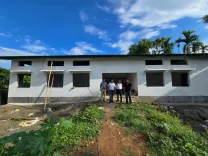
Bihmari Bongaon in Behali, Biswanath district has been connected to the domestic electricity grid, announced on 7 July 2026 .
CM Himanta Biswa Sarma stated that nothing short of 100% saturation in public services is acceptable, invoking the Antyodaya philosophy.
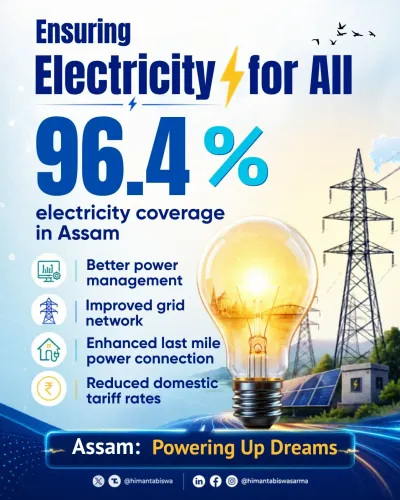
The connection closes one of the last remaining gaps in Assam 's domestic electrification coverage.
The drive builds on two central schemes: DDUGJY (2015) and Saubhagya (2017) , which funded last-mile rural power infrastructure.
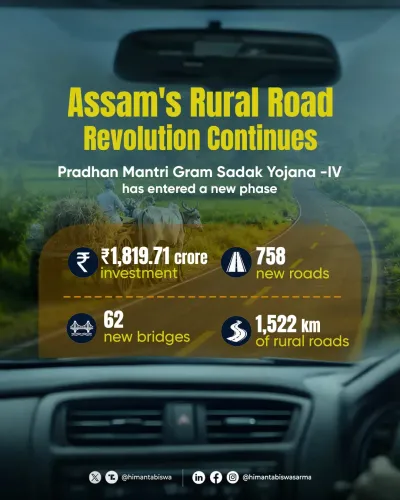
Further saturation drives for piped water and all-weather roads in similar remote habitations are anticipated.
Assam 's model of pursuing total saturation across service verticals is being positioned as replicable across NEDA member states.
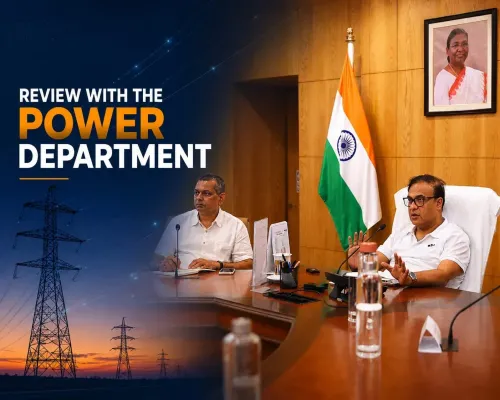
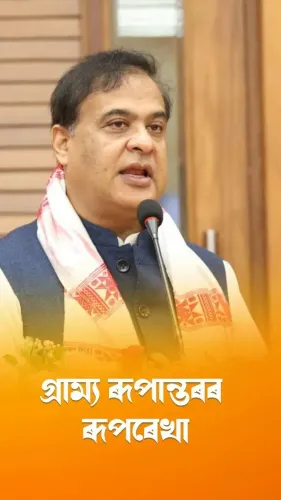
Assam Chief Minister Himanta Biswa Sarma on Tuesday, 7 July 2026, announced that Bihmari Bongaon, a remote hamlet in Behali identified as one of the last habitations outside the domestic power grid in the state, has been connected to the electricity network — underscoring his government's push for total saturation in public service delivery.
Context
In his post, Sarma framed the milestone in unambiguous terms: 'Nothing short of 100% saturation in public services will do.' He invoked the Antyodaya [last person first] philosophy, noting that even a coverage figure of 99.99% is insufficient if a single household or hamlet remains unserved. The connection of Bihmari Bongaon in the Behali region of Biswanath district represents, by his account, the closing of one of the final gaps in Assam's domestic electrification map.
The Antyodaya principle — originally articulated as a welfare philosophy by Pandit Deendayal Upadhyaya — has been a recurring rhetorical and policy anchor for BJP-led governments at both the Centre and in states, emphasising that the measure of a programme's success is its reach to the most marginalised, not its aggregate numbers.
Policy Backdrop
The electrification drive in Assam draws on two central government schemes. The Deen Dayal Upadhyaya Gram Jyoti Yojana (DDUGJY), launched in July 2015, was designed to strengthen rural power distribution infrastructure across states, including the Northeast. It was followed by the Pradhan Mantri Sahaj Bijli Har Ghar Yojana, better known as Saubhagya, launched in September 2017, which specifically targeted last-mile household connections for unelectrified families.
Together, these schemes provided the financial and infrastructure backbone for states like Assam to extend the grid into geographically challenging and sparsely populated pockets. Behali, an assembly constituency in Biswanath district, has several such habitations — forested, flood-prone, or otherwise difficult to reach — that have historically lagged behind in basic infrastructure access.
Stakeholders and Impact
For the households of Bihmari Bongaon, grid connectivity means access to lighting, mobile charging, and eventually appliances — services that urban and semi-urban India has taken for granted for decades. In remote Northeastern hamlets, electrification also unlocks access to digital services, health monitoring equipment, and improved study conditions for children.
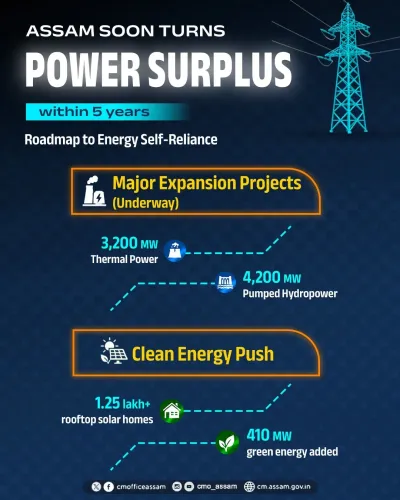
The broader pattern under Sarma's administration since May 2021 has been to declare saturation targets across multiple service verticals — power, water, roads, and welfare scheme enrolment — and pursue them to the final beneficiary. The North-East Democratic Alliance (NEDA), which Sarma convenes, has positioned this model as replicable across the eight Northeastern states.
What's Next
The state government is expected to follow up with similar saturation announcements for piped drinking water and all-weather road connectivity in habitations that share the geographic profile of Bihmari Bongaon. District-level declarations of full electrification — certifying zero unconnected households — may also be forthcoming from Biswanath and neighbouring districts.
The milestone sets a political benchmark: having claimed closure on domestic power coverage, the Assam government will now face scrutiny on whether the grid connection translates into reliable, uninterrupted power supply — a distinction that matters as much as the connection itself for households at the last mile.
Point of View
Not a success. By invoking Antyodaya, Sarma ties a local infrastructure milestone to a BJP ideological lineage stretching back to Deendayal Upadhyaya, lending it moral weight beyond the administrative. The move also pre-empts criticism on coverage gaps — by publicly naming the last unconnected hamlet, the government signals it is aware of and actively closing every remaining pocket. The harder test ahead is service quality: grid connection without reliable supply is a half-measure, and that gap is where opposition scrutiny is likely to focus next.
NationPress
7 Jul 2026
Frequently Asked Questions
Which hamlet in Assam was recently connected to the power grid?
Bihmari Bongaon in the Behali area of Biswanath district , Assam, was connected to the domestic electricity grid and was described by CM Himanta Biswa Sarma as one of the last remaining hamlets outside the power grid in the state.
What is the Antyodaya principle that Himanta Biswa Sarma referred to?
Antyodaya means 'rise of the last person' and is a welfare philosophy associated with Pandit Deendayal Upadhyaya . In policy terms, it means that a programme is only considered successful when it reaches the very last uncovered beneficiary, not when it achieves high aggregate coverage.
Which central government schemes funded rural electrification in Assam?
Two schemes drove last-mile electrification in Assam : the Deen Dayal Upadhyaya Gram Jyoti Yojana (DDUGJY) , launched in July 2015 to strengthen rural distribution infrastructure, and Saubhagya , launched in September 2017 to provide household-level connections to unelectrified families.
When did Himanta Biswa Sarma become Chief Minister of Assam?
Himanta Biswa Sarma became Chief Minister of Assam in May 2021 after the BJP -led alliance won the state assembly elections. He also serves as convenor of the North-East Democratic Alliance (NEDA) .
What is the significance of 100% electrification in remote Assam hamlets?
For households in remote hamlets like Bihmari Bongaon , grid connectivity provides lighting, mobile charging, and access to digital and health services. It also sets a measurable benchmark for the state government's broader saturation drive across power, water, and road connectivity.