CM Himanta Eyes National, Global Push for Assam Organic Products
Synopsis
Assam Chief Minister Himanta Biswa Sarma has announced plans to take the state's organic products to every major Indian and international market and establish authentic Assamese cuisine outlets in every state capital, signalling a major push to monetise the Northeast's agricultural and culinary heritage.
Key Takeaways
CM Himanta Biswa Sarma announced on 11 July 2026 that Assam's organic products will soon reach every major market in India and abroad.
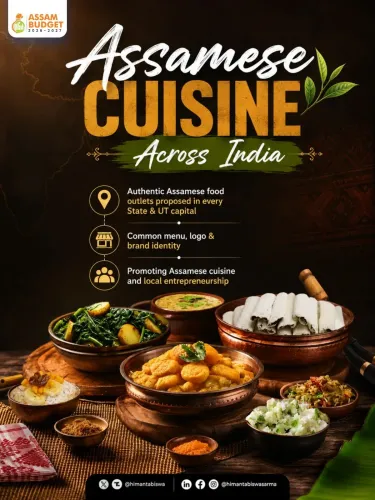
The plan also includes setting up authentic Assamese cuisine outlets in every state capital across India.
The push aligns with the federal Mission Organic Value Chain Development for North Eastern Region (MOVCDNER) , launched in 2015 .
The initiative fits within the Atmanirbhar Bharat and Act East policy frameworks targeting certified organic exports from the Northeast.
Key beneficiaries include organic farmers and food exporters in Assam seeking better price realisation and wider market access.
Specific timelines, retail agreements, and certification targets are yet to be formally announced.
Assam Chief Minister Himanta Biswa Sarma on Saturday, 11 July 2026, signalled an ambitious expansion plan to take organic products from Assam to every major market across India and overseas, while also pitching for authentic Assamese cuisine outlets in every state capital.
Posting on X with the Assamese phrase 'Oti Xunkale' (meaning 'very soon'), CM Sarma outlined a two-pronged vision: a wide distribution push for certified organic produce from the state, and a cultural-culinary footprint through dedicated Assamese food outlets in state capitals nationwide.
Context
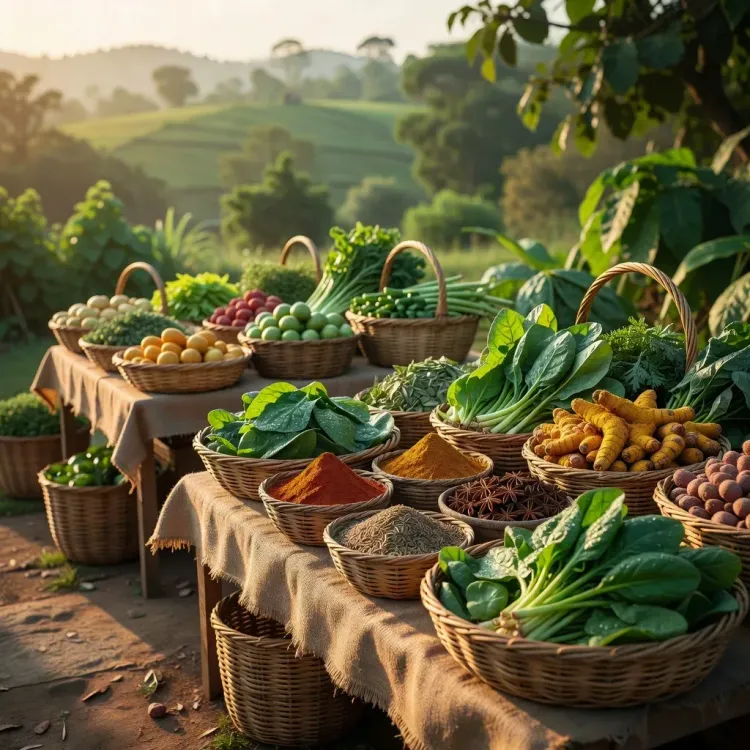
Assam's agrarian economy rests heavily on tea, rice, and horticulture — sectors that have been progressively shifting toward certified organic production over the past decade. The state is home to some of India's most recognised agricultural produce, including Joha rice, Assam tea, and a range of indigenous fruits and vegetables that carry strong potential for Geographical Indication (GI) tagging and premium organic branding.
The Chief Minister's announcement builds on a growing momentum within the state government to convert that agricultural richness into economic opportunity — both for farmers and for food entrepreneurs — by connecting Assam's produce and cuisine to consumers far beyond the Northeast.
Policy Backdrop
The federal government launched the Mission Organic Value Chain Development for North Eastern Region (MOVCDNER) in 2015 to develop certified organic clusters and integrated value chains across all eight northeastern states. Assam has been a key participant, with clusters covering crops such as large cardamom, ginger, turmeric, and aromatic rice.
CM Sarma's push aligns with the broader Atmanirbhar Bharat and Act East policy frameworks, which seek to expand GI-tagged and certified organic exports from the Northeast into national retail networks and international markets. Sikkim — India's first fully organic state — has served as a regional benchmark, and several northeastern states including Assam are now seeking similar national retail and export footholds for their organic output.
On the cuisine front, the idea of establishing authentic regional food outlets in state capitals echoes efforts by other states to promote culinary tourism and cultural diplomacy through government-backed or government-facilitated food outlets — a model that has found traction in promoting regional identity alongside economic returns for food entrepreneurs.
Stakeholders and Impact
Organic farmers across Assam stand to benefit most directly if the distribution networks and market linkages the Chief Minister envisions are formalised through agreements with retail chains, e-commerce platforms, or export agencies. Expanded market access could translate into better price realisation for produce that currently struggles to move beyond local and regional mandis.
Food exporters and small food businesses operating in the Assamese cuisine space would gain from any state-facilitated push to establish outlets in other state capitals — potentially through partnerships with state tourism departments or hospitality bodies. For consumers nationally and internationally, the plan promises greater access to certified organic products and authentic northeastern flavours.
What's Next
The announcement, framed as a forward-looking commitment rather than a specific scheme launch, raises key questions around implementation: whether formal agreements with retail chains or export bodies are imminent, what organic certification targets the state has set, and how cuisine outlets in state capitals will be structured — whether as government-run ventures, franchise models, or private-sector partnerships facilitated by the state.
Progress on organic certification infrastructure and any formal memoranda of understanding with retail or hospitality partners will be the clearest indicators of how quickly CM Sarma's 'very soon' vision translates into on-ground action.
Point of View
He is weaving together two distinct strands — agricultural modernisation and soft cultural power — into a single brand-building exercise for Assam. This mirrors a wider pattern among BJP-governed northeastern states seeking to leverage the Centre's Act East and Atmanirbhar Bharat frameworks for visible economic wins ahead of electoral cycles. The absence of specific timelines or scheme details, however, means the announcement will be judged by the speed and scale of institutional follow-through rather than the ambition of the vision itself.
NationPress
11 Jul 2026
Frequently Asked Questions
What did Assam CM Himanta Biswa Sarma announce about organic products?
CM Himanta Biswa Sarma announced on 11 July 2026 that Assam's organic products will very soon reach every major market in India and abroad, alongside a plan to open authentic Assamese cuisine outlets in every state capital.
What is MOVCDNER and how does it relate to Assam's organic push?
MOVCDNER, or the Mission Organic Value Chain Development for North Eastern Region, was launched by the central government in 2015 to build certified organic clusters and value chains across northeastern states including Assam. CM Sarma's expansion plan builds on this existing federal framework.
Which Assam products could benefit from the organic market expansion?
Assam's key organic produce includes Joha rice, Assam tea, ginger, turmeric, large cardamom, and indigenous fruits and vegetables, many of which carry potential for GI tagging and premium organic branding in national and international markets.
Will there be Assamese food outlets in other Indian states?
CM Sarma has indicated plans for authentic Assamese cuisine outlets in every state capital, though specific details on whether these will be government-run, franchise-based, or privately facilitated ventures have not yet been announced.
How does Assam's organic push compare to Sikkim's organic model?
Sikkim became India's first fully organic state and has served as a regional benchmark. Assam and other northeastern states are now pursuing similar goals of achieving national retail and export footholds for their certified organic produce, supported by central government schemes.