CM Himanta Flags Assam Women Leading Semiconductor Skilling Push

Synopsis
Assam CM Himanta Biswa Sarma spotlights women in the state moving from novice learners to semiconductor trainers, framing Assam as a confident entrant into India's chip-era workforce under the national India Semiconductor Mission.
Key Takeaways
Assam CM Himanta Biswa Sarma posted on 2 November 2026 about women in Assam taking on pioneering roles in semiconductor skill development.
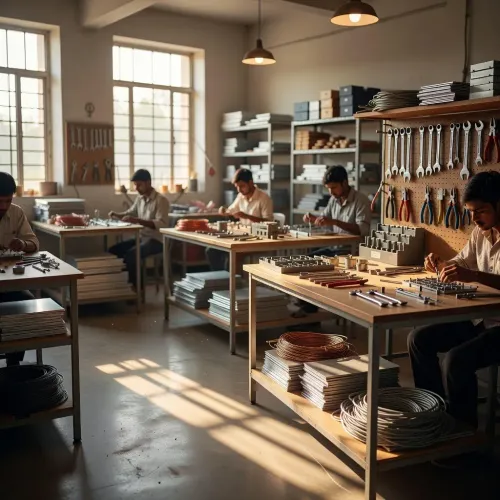
Women participants are progressing from first-time learners to skilled professionals who will train subsequent batches — a train-the-trainer model.
The initiative aligns with the India Semiconductor Mission , approved by the central government in 2021 under the Ministry of Electronics and IT.
Northeastern states, including Assam, have been included in national electronics and IT training drives to diversify India's high-tech talent base beyond traditional hubs.
The emphasis on women participants reflects wider central and state efforts to increase female representation in STEM and high-tech manufacturing.
Possible next steps include state-level semiconductor training centres, certifications, and MoUs with chip-design or packaging firms.
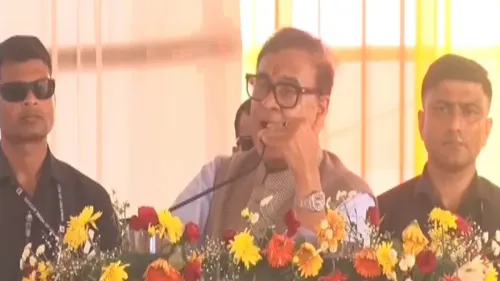
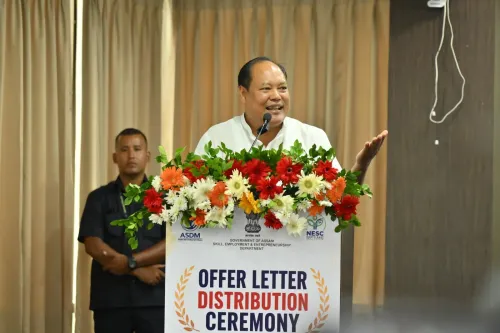
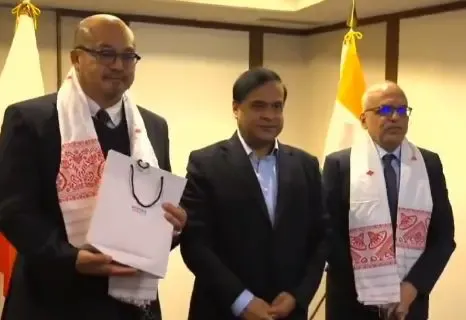
From first-time learners to future trainers — the women of Assam are moving through a semiconductor skilling pipeline that Assam Chief Minister Himanta Biswa Sarma is now holding up as a model for the state's high-tech ambitions. In a post on Monday, 2 November 2026, Sarma declared that Assam is 'stepping into this future with confidence,' with women playing a 'pioneering role' in the journey.
Women at the Centre of Assam's Chip-Era Workforce
Sarma's framing is pointed: this is not a peripheral skilling drive but a structural shift. Women participants are described as moving along a full arc — arriving with no prior exposure and graduating into professionals capable of training the next cohort. That train-the-trainer model, if implemented at scale, compounds the impact of every rupee invested in the programme.
The emphasis on women aligns with a wider push — both at the Centre and in northeastern states — to pull female talent into STEM and high-tech manufacturing pipelines that have historically skewed male. For Assam, a state not traditionally associated with electronics manufacturing, positioning women as the vanguard is also a reputational statement.
How India's Semiconductor Mission Reaches the Northeast
The backdrop is the India Semiconductor Mission, approved under the Ministry of Electronics and IT in 2021 as part of the Atmanirbhar Bharat drive for chip self-reliance. The central scheme combines incentives for fabrication and packaging units with a mandate to build skilled manpower — and northeastern states have been drawn into the talent-development arc precisely to widen the pool beyond legacy tech hubs like Bengaluru and Hyderabad.
Assam has been pursuing semiconductor-linked skill development as a strand of its broader state industrial policy under Sarma's administration, which took office in May 2021. The state's inclusion in this national mission signals an intent to move up the value chain, rather than remain a supplier of raw materials or low-skill labour.
What the Next Phase Looks Like
The momentum now points toward concrete infrastructure: dedicated semiconductor training centres, certification frameworks, and potential state-level agreements with chip-design or packaging firms. The women who complete this first wave of training are the proof-of-concept Assam needs to attract those partnerships. If the pipeline holds, a state on India's northeastern frontier could quietly become one of the country's more credible semiconductor talent addresses.
Point of View
He signals both social progress and industrial intent in a single frame. This fits a pattern across BJP-governed northeastern states of using central scheme funding to leapfrog traditional skill hierarchies and establish credibility in sunrise sectors. The train-the-trainer arc suggests Assam is not pursuing a one-shot training camp but a self-sustaining talent ecosystem — which, if it materialises, could attract private-sector chip firms scouting for affordable, trained labour outside saturated southern metros. The proof will be in the public rollout of training infrastructure and partnership announcements.
NationPress
2 Nov 2026
Frequently Asked Questions
What semiconductor initiative is Assam pursuing for women?
Assam is running a semiconductor skill development programme where women progress from first-time learners to trained professionals capable of training future batches, as highlighted by Chief Minister Himanta Biswa Sarma in November 2026.
What is the India Semiconductor Mission?
The India Semiconductor Mission is a central government scheme approved in 2021 under the Ministry of Electronics and IT to build semiconductor design, fabrication and packaging capacity in India, including incentives for investment and skilled manpower development.
Why is Assam focusing on semiconductors?
Assam is leveraging the India Semiconductor Mission and Atmanirbhar Bharat push to diversify its economy into high-tech manufacturing and skilling, positioning the state as a new talent hub beyond traditional electronics centres.
How does this relate to women in STEM in India's northeast?
Both central and state governments have been expanding electronics and IT training to northeastern states with a deliberate emphasis on women participants, aiming to broaden female representation in high-tech industries.
Who is Himanta Biswa Sarma?
Himanta Biswa Sarma is the Chief Minister of Assam since May 2021 and a senior BJP leader who also serves as convenor of the North-East Democratic Alliance (NEDA).