CM Himanta Greets Assam's Tai Khamti on Poi Pee Mau Tai
Synopsis
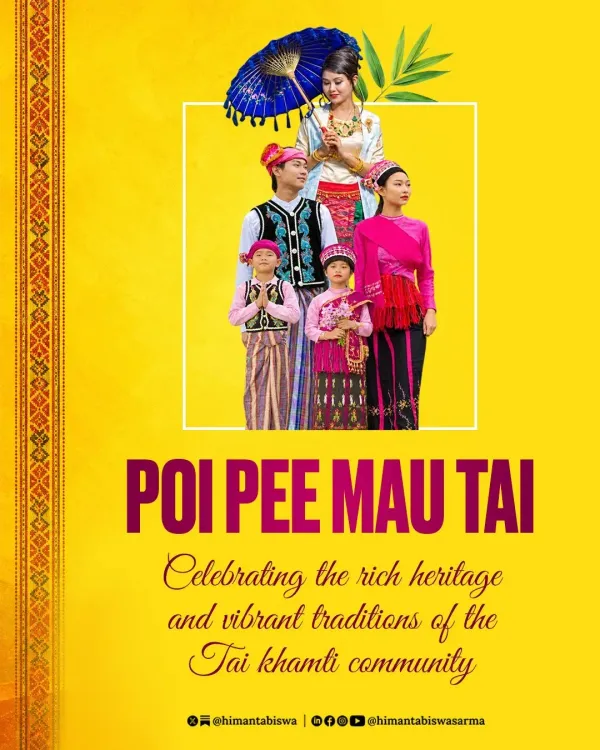
Assam Chief Minister Himanta Biswa Sarma on Saturday greeted the Tai Khamti community on Poi Pee Mau Tai, their traditional New Year, calling it a celebration of heritage and togetherness, and wishing cultural prosperity to every home.
Key Takeaways
Assam Chief Minister Himanta Biswa Sarma extended greetings on Poi Pee Mau Tai , the Tai Khamti New Year , on Saturday, 21 November 2026 .
He described the festival as a 'celebration of heritage, traditions and togetherness.' The Tai Khamti are an indigenous Tai-speaking community settled primarily in Assam and Arunachal Pradesh , with roots tracing to present-day Myanmar .
Sarma also serves as convenor of the North-East Democratic Alliance (NEDA) , making cultural outreach across the region a consistent feature of his leadership.
Assam hosts dozens of ethnic communities, and official greetings on indigenous festivals are a long-standing practice of state governments.
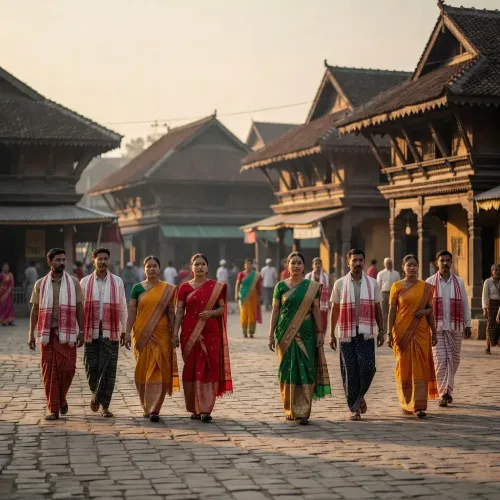
The spirit of a centuries-old tradition found fresh voice on Saturday as Assam Chief Minister Himanta Biswa Sarma extended warm greetings to the Tai Khamti community on the occasion of Poi Pee Mau Tai — the Tai Khamti New Year — wishing every home happiness, peace, and prosperity.
In his message, CM Sarma described the festival as 'a celebration of heritage, traditions and togetherness,' and expressed hope that 'the beautiful cultural legacy of the Tai Khamti community continue to flourish.' The greeting reflects a consistent practice among Assam's political leadership of formally acknowledging the state's remarkable ethnic mosaic.
Who are the Tai Khamti and what is Poi Pee Mau Tai?
The Tai Khamti are one of several Tai-speaking indigenous groups settled in Assam and Arunachal Pradesh, believed to have migrated from the Khamti region of present-day Myanmar over several centuries. They maintain a distinct cultural identity — marked by their language, Theravada Buddhist traditions, and vibrant festivals. Poi Pee Mau Tai is their New Year celebration, an annual occasion of communal gathering, ritual observance, and the renewal of cultural bonds across generations.Assam's tradition of honouring its many communities
Assam is home to dozens of ethnic and linguistic groups, each carrying its own festival calendar. Successive state governments have made it a point to issue official greetings on indigenous observances — a symbolic but meaningful gesture that keeps minority communities visible in mainstream public discourse. Chief Minister Sarma, who also serves as convenor of the North-East Democratic Alliance (NEDA), has regularly extended such greetings across the region's diverse communities, reinforcing both cultural respect and political outreach in a state where identity remains deeply intertwined with governance. For the Tai Khamti, an official acknowledgement from the Chief Minister carries weight beyond ceremony — it signals that their heritage holds a recognised place in the broader story of Assam.Point of View
Sarma has a structural incentive to keep tribal and sub-tribal communities within the BJP's broad coalition across the North-East. The acknowledgement of smaller communities like the Tai Khamti also signals that the state's governance narrative is not limited to its dominant groups. Watched over time, these greetings trace the contours of which communities the administration considers politically and culturally significant.
NationPress
21 Nov 2026
Frequently Asked Questions
What is Poi Pee Mau Tai?
Poi Pee Mau Tai is the traditional New Year festival of the Tai Khamti community, celebrated annually as an occasion for communal gathering, ritual observance, and the renewal of cultural traditions.
Who are the Tai Khamti people?
The Tai Khamti are an indigenous Tai-speaking group settled in Assam and Arunachal Pradesh, believed to have migrated from the Khamti region of present-day Myanmar. They follow Theravada Buddhist traditions and have a distinct cultural identity.
Why did Assam CM Himanta Biswa Sarma greet the Tai Khamti community?
CM Sarma extended greetings on Poi Pee Mau Tai, the Tai Khamti New Year, wishing the community happiness, peace, prosperity, and the continued flourishing of their cultural legacy — a practice common among Assam's state leaders on indigenous occasions.
What is NEDA and what role does Himanta Biswa Sarma play in it?
NEDA stands for the North-East Democratic Alliance, a political grouping of BJP-aligned regional parties across India's north-eastern states. Himanta Biswa Sarma serves as its convenor alongside being Chief Minister of Assam.
Does the Assam government officially recognise Tai Khamti festivals?
Successive Assam governments have issued official greetings on indigenous observances including those of the Tai Khamti community, acknowledging the state's diverse cultural fabric, though specific state-funded programmes tied to individual festivals require separate verification.