CM Himanta Monitors Rescue Ops via Ministerial Team on Ground

Synopsis
Assam Chief Minister Himanta Biswa Sarma announced on 20 July 2026 that rescue efforts are underway and a dedicated Ministerial Team has been deployed on the ground to ensure swift relief, reflecting the state's established disaster response protocols under the Disaster Management Act, 2005.
Key Takeaways
CM Himanta Biswa Sarma confirmed on 20 July 2026 that rescue operations are actively underway in Assam.
A dedicated Ministerial Team has been entrusted to remain on the ground and monitor relief efforts in real time.
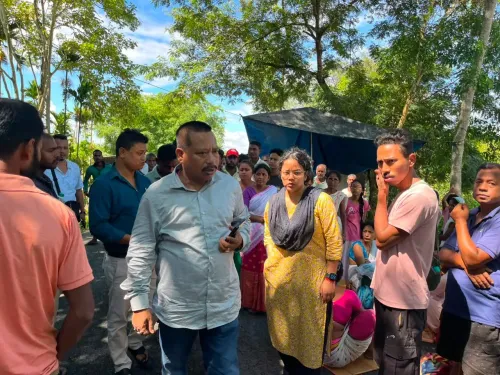
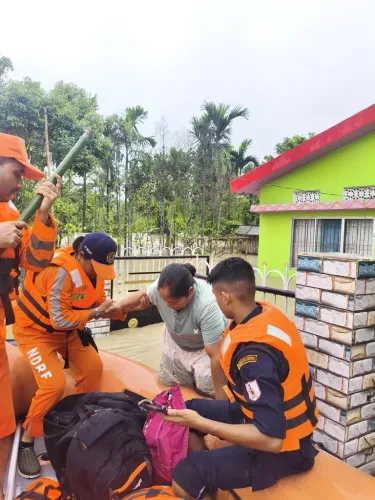
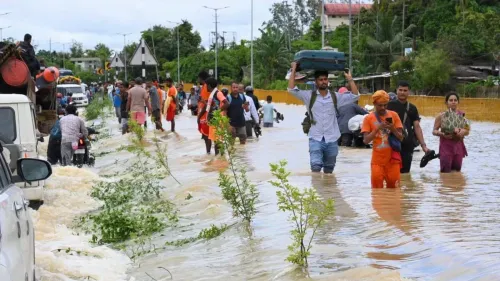
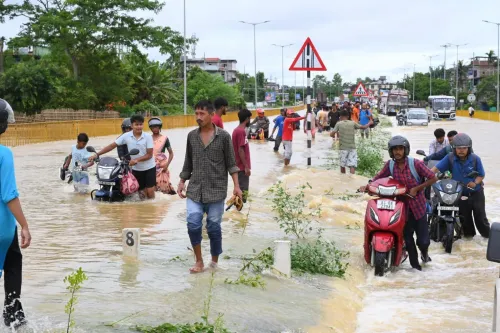
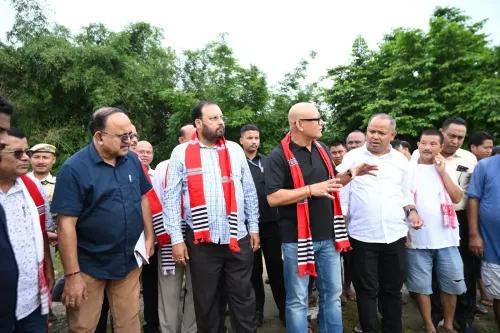
The post was accompanied by four images indicating active field-level operations.
The response is consistent with Assam's established protocols under the Disaster Management Act, 2005 .
Coordination between the Assam government and central agencies such as the NDRF is expected to be a key focus going forward.
Assam Chief Minister Himanta Biswa Sarma on Monday, 20 July 2026, confirmed that rescue operations are actively underway and are being closely monitored by a dedicated Ministerial Team deployed on the ground to ensure swift relief efforts reach those in need.
Context
In a post on X (formerly Twitter), CM Sarma stated: 'Rescue efforts are underway on ground and being monitored by our Ministerial Team who have been entrusted to be on ground to ensure swift relief efforts.' The post was accompanied by four images, indicating active field operations. The statement signals a high-alert posture by the Assam state government, with senior ministers personally overseeing relief coordination rather than delegating solely to administrative machinery.
Policy Backdrop
Under the Disaster Management Act, 2005, state governments are empowered to constitute State Disaster Management Authorities and coordinate rescue and relief operations within their jurisdictions. Assam, situated in one of India's most flood-vulnerable regions, has developed established protocols for activating ministerial-level monitoring during monsoon emergencies. This practice reflects the federal division of disaster management responsibilities between state governments and national bodies such as the National Disaster Response Force (NDRF).
The deployment of a dedicated ministerial team — rather than relying solely on district-level officials — signals the severity of the situation and the state leadership's intent to maintain direct accountability over relief delivery. Such mechanisms have historically been used in Assam during large-scale flood events that affect multiple districts simultaneously.
Stakeholders and Impact
The most immediate stakeholders are affected residents in the impacted areas, who depend on timely rescue and relief operations for safety, food, shelter, and medical assistance. The Assam state administration, including district collectors, NDRF units, State Disaster Response Force (SDRF) personnel, and local civil defence volunteers, forms the operational backbone of the response effort. The Ministerial Team's on-ground presence is intended to cut through bureaucratic delays and ensure that resources are directed where they are most urgently needed.
CM Sarma's public communication also serves a transparency function — reassuring citizens and civil society that the highest levels of the state government are engaged and accountable.
What's Next
Attention will now focus on coordination updates between the Assam government and central agencies regarding the scale of relief operations and any additional resource deployment. The composition and specific mandate of the Ministerial Team, as well as the areas they are covering, are expected to be detailed in subsequent official communications. As monsoon conditions persist across the North-East, the effectiveness of this ministerial monitoring mechanism will be closely watched as a model for state-level disaster response governance in the region.
Point of View
Where disaster response is a perennial governance test, visible ministerial deployment has become a benchmark of administrative seriousness. This fits a broader pattern in Indian state politics where chief ministers increasingly use real-time social media updates to demonstrate responsiveness during crises. The durability of this approach will depend on the outcomes on the ground and the speed with which affected communities receive tangible relief.
NationPress
21 Jul 2026
Frequently Asked Questions
What is Himanta Biswa Sarma doing about the rescue operations in Assam?
CM Himanta Biswa Sarma has deployed a dedicated Ministerial Team on the ground to monitor and ensure swift rescue and relief efforts, as announced on 20 July 2026 .
Which team is monitoring relief efforts in Assam?
A Ministerial Team specifically entrusted by CM Sarma is on the ground overseeing rescue operations to ensure timely and effective relief delivery.
What law governs disaster response in Assam?
The Disaster Management Act, 2005 governs disaster response in Assam, empowering the state to constitute disaster management authorities and coordinate rescue and relief operations.
What is the role of NDRF in Assam disaster relief?
The National Disaster Response Force (NDRF) works alongside state agencies during major disaster events in Assam , providing specialised rescue capabilities as part of India's federal disaster management framework.
Why does Assam face frequent disaster situations?
Assam is one of India's most flood-vulnerable states due to its geography in the North-East , with the Brahmaputra and its tributaries regularly causing large-scale flooding during the monsoon season.