CM Himanta plans Ejar tree corridor on Guwahati Ring Road
Synopsis
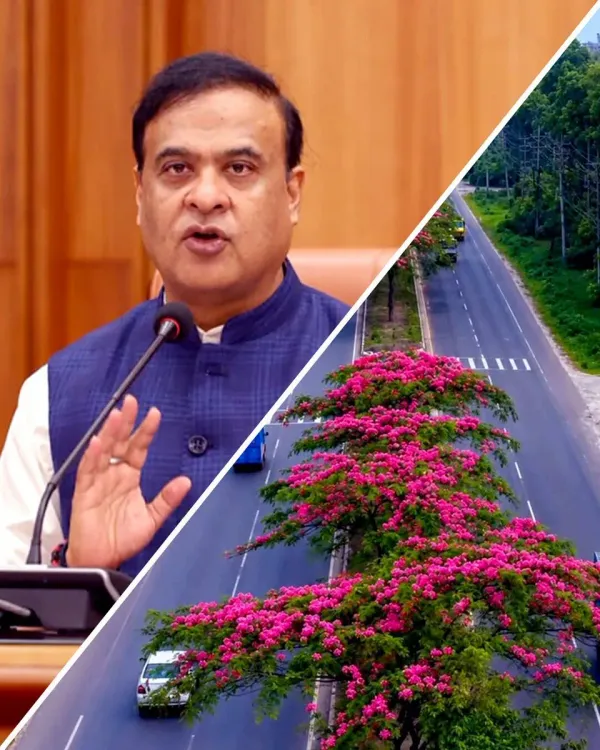
Assam Chief Minister Himanta Biswa Sarma has announced a plan to line the Jalukbari–Khanapara stretch of the Guwahati Ring Road with native Ejar trees, creating a green arrival corridor that reflects Assam's identity as the Gateway to Southeast Asia.
Key Takeaways
CM Himanta Biswa Sarma announced on 16 July 2026 that the Jalukbari–Khanapara stretch of the Guwahati Ring Road will be lined with Ejar trees .
The initiative is framed as creating a 'green, picturesque corridor' for commuters and visitors entering Guwahati .
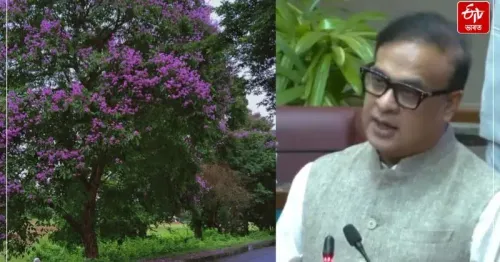
The Ejar tree ( Lagerstroemia speciosa ), native to South and Southeast Asia, is known for its vibrant pink-purple blossoms and ecological suitability.
The announcement aligns with Assam's positioning as the 'Gateway to Southeast Asia' under India's Act East Policy .
No budget, timeline, or executing agency has been officially specified as yet.
Assam Chief Minister Himanta Biswa Sarma on Thursday, 16 July 2026, announced plans to line the entire Jalukbari–Khanapara stretch of the Guwahati Ring Road with Ejar trees, positioning the green corridor as a signature arrival experience befitting Assam's role as the 'Gateway to Southeast Asia.'
Context
In his post, CM Sarma framed the initiative in aspirational terms, stating: 'As the Gateway to Southeast Asia, Assam deserves an arrival experience that reflects its natural beauty.' The Jalukbari–Khanapara corridor is one of the busiest arterial stretches in Guwahati, serving as the primary road link for travellers entering the city from the west — including those arriving from Lokpriya Gopinath Bordoloi International Airport.
The Ejar tree (Lagerstroemia speciosa), commonly known as the Pride of India or Giant Crape Myrtle, is native to South and Southeast Asia and is prized for its vivid pink-purple blossoms. Its use along a major urban corridor would create a seasonally dramatic and ecologically appropriate landscape feature.
Policy Backdrop
Guwahati has seen significant infrastructure investment over the past several years, with the Ring Road project aimed at decongesting the city's core. Urban greening along highway and ring-road corridors has become a visible policy priority for several state governments across India, blending beautification with environmental goals such as urban heat island mitigation and air quality improvement.
Assam's geographic position makes it the natural land gateway to India's Northeast and, by extension, to Southeast Asia under the Union government's Act East Policy. CM Sarma has consistently invoked this positioning to attract investment and upgrade civic infrastructure in Guwahati as a regional hub city.
Stakeholders and Impact
Daily commuters on the Jalukbari–Khanapara stretch — estimated to number in the tens of thousands — stand to benefit from the shade, air quality improvement, and aesthetic uplift that a mature tree-lined corridor provides. Tourists and business visitors arriving by road from the airport would encounter the green boulevard as their first impression of the city.
Urban planners and horticulture departments of the Assam government will be central to execution, requiring coordinated planting, irrigation, and long-term maintenance plans. Environmental groups are likely to welcome the choice of a native species over ornamental exotics, which can disrupt local ecosystems.
What's Next
No implementation timeline, budget outlay, or executing agency was specified in the announcement. The state government is expected to follow up with a detailed project order involving the Public Works Department or the Guwahati Metropolitan Development Authority. The success of the corridor will ultimately depend on post-planting maintenance commitments — a challenge that has historically undermined urban greening drives across Indian cities.
If executed as envisioned, the Ejar corridor could become a model for ecologically sensitive urban beautification in Northeast India, reinforcing Guwahati's credentials as a modern, green gateway city on India's eastern frontier.
Point of View
Lending it national resonance. Choosing a native species like the Ejar tree rather than imported ornamentals signals environmental awareness, though the real test will be whether maintenance commitments outlast the announcement cycle. Urban greening projects in India have a mixed track record, and the corridor's success will be a litmus test for Guwahati's municipal execution capacity.
NationPress
15 Oct 2026
Frequently Asked Questions
What is the Ejar tree and why is it being planted on the Guwahati Ring Road?
The Ejar tree ( Lagerstroemia speciosa ), also called the Pride of India, is a native South and Southeast Asian species known for its vivid pink-purple flowers. CM Himanta Biswa Sarma has chosen it to create a green, scenic corridor along the Jalukbari–Khanapara stretch of the Guwahati Ring Road that reflects Assam's natural beauty.
Which stretch of Guwahati Ring Road will have the Ejar tree corridor?
The entire Jalukbari–Khanapara stretch of the Guwahati Ring Road is earmarked for the Ejar tree plantation, as announced by Assam Chief Minister Himanta Biswa Sarma on 16 July 2026 .
What is Assam's connection to the 'Gateway to Southeast Asia' tag?
Assam and Guwahati serve as the primary land and air gateway to India's Northeast and onward to Southeast Asia, a positioning reinforced by the Union government's Act East Policy . CM Sarma regularly uses this framing to justify infrastructure and civic upgrades in Guwahati .
When will the Guwahati Ring Road Ejar tree corridor be completed?
No official timeline or completion date has been announced. CM Sarma's post on 16 July 2026 outlined the vision; implementation details including schedule, budget, and executing agency are yet to be formally notified.
How does this project benefit Guwahati commuters?
A mature Ejar tree corridor along the Jalukbari–Khanapara stretch would provide shade, improve local air quality, reduce the urban heat island effect, and create a visually appealing route for the tens of thousands of daily commuters and visitors using the Guwahati Ring Road .