CM Himanta Visits Rescued Red Panda at Assam Zoo

Synopsis
Assam Chief Minister Himanta Biswa Sarma visited a trafficked red panda now recovering at Guwahati's Assam Zoo, spotlighting the illegal wildlife trade threatening one of the Eastern Himalayas' most protected and endangered species.
Key Takeaways
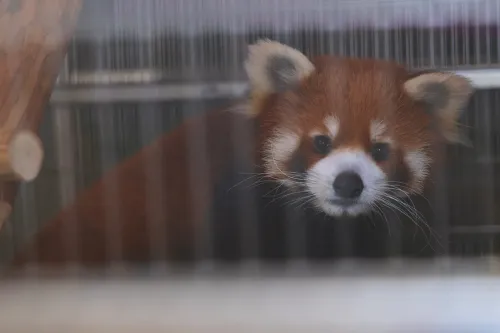
Assam CM Himanta Biswa Sarma visited a rescued red panda at Assam State Zoo, Guwahati on 13 July 2026 .
The animal was recovered from wildlife traffickers and is receiving specialised veterinary care at the zoo.
The red panda is listed under Schedule I of the Wildlife (Protection) Act, 1972 , giving it the highest legal protection in India.
Northeast India's Eastern Himalayan Biodiversity Hotspot is a key habitat for red pandas, which face threats from habitat loss and the illegal exotic trade.
India's obligations under CITES prohibit international commercial trade in red pandas.
The Chief Minister's visit signals political emphasis on wildlife enforcement alongside infrastructure development in the region.
Assam Chief Minister Himanta Biswa Sarma on Monday, 13 July 2026, paid a personal visit to a rescued red panda now under specialised care at Assam State Zoo in Guwahati, drawing attention to the ongoing threat of wildlife trafficking faced by one of the Eastern Himalayas' most endangered mammals.
Context
Sarma shared the visit on social media, noting that the animal — rescued from traffickers — was 'now safe at Assam Zoo and receiving specialised care.' He wrote: 'Red Pandas may be a hero in Kung Fu Panda and lend its name to a popular browser but wildlife traffickers see it very differently.' The post, accompanied by a video, was widely circulated and underscored the gap between the species' cultural popularity and its grim reality in the illegal wildlife trade.
The red panda (Ailurus fulgens) is listed under Schedule I of the Wildlife (Protection) Act, 1972, the highest tier of legal protection available under Indian law. Despite this, the species continues to be targeted by traffickers operating across the Eastern Himalayan corridor.
Policy Backdrop
Northeast India sits within the Eastern Himalayan Biodiversity Hotspot, a globally recognised zone of exceptional ecological richness and vulnerability. Red pandas in this region face a dual threat: shrinking forest cover due to development pressures and persistent demand in the illegal exotic-pet and fur trade.
The Assam Forest Department has conducted anti-poaching and wildlife rescue operations since the early 2000s as part of the state's broader biodiversity strategy, working in alignment with national action plans for endangered mammals. Assam State Zoo in Guwahati functions as a key facility in this ecosystem, receiving and rehabilitating rare and trafficked animals. India is also a signatory to CITES (the Convention on International Trade in Endangered Species), which prohibits commercial trade in red pandas internationally.
Stakeholders and Impact
Zoo veterinarians and wildlife rehabilitators bear the immediate responsibility of nursing trafficked animals back to health, a process that can take months and requires specialised dietary and environmental conditions. Forest communities living along wildlife corridors play a dual role — as potential informants who help detect trafficking networks, and as stakeholders whose livelihoods must be balanced against conservation imperatives.
Chief ministers' direct, public engagement with individual rescue cases carries symbolic weight beyond the single animal. It signals to enforcement agencies, local communities, and poaching networks alike that the political leadership regards wildlife crime as a priority — not merely an administrative matter delegated to forest officers.
What's Next
Conservation advocates and forest officials in the region will be watching for possible follow-through: expanded red panda rehabilitation infrastructure at Assam Zoo, joint enforcement drives with neighbouring Himalayan states such as Sikkim, Arunachal Pradesh, and West Bengal, or fresh legislative or budgetary commitments to anti-trafficking operations. The Chief Minister's visit, while personal in tone, may serve as a prelude to broader state-level announcements on wildlife protection in the months ahead.
Point of View
And public chief-ministerial engagement raises the political cost of inaction for forest officials and local administrators. This fits a broader pattern in which BJP-governed Himalayan and northeastern states have sought to project environmental stewardship alongside their development credentials. Whether the visit translates into measurable policy — expanded rehabilitation infrastructure or coordinated inter-state enforcement — will determine its lasting significance.
NationPress
13 Jul 2026
Frequently Asked Questions
Why is the red panda endangered in India?
The red panda is endangered primarily due to habitat loss from deforestation and agricultural expansion in the Eastern Himalayas, compounded by illegal trafficking for the exotic-pet and fur trade. It is listed under Schedule I of India's Wildlife (Protection) Act, 1972, giving it the country's highest legal protection.
What is Assam Zoo's role in wildlife rescue?
Assam State Zoo in Guwahati serves as a key rehabilitation centre for rescued and trafficked wildlife in the region, providing specialised veterinary care and safe housing for rare species including red pandas recovered by the Assam Forest Department.
What did CM Himanta Biswa Sarma say about the red panda?
CM Sarma noted that while red pandas are celebrated in popular culture — as a character in the film 'Kung Fu Panda' and as the namesake of a well-known web browser — wildlife traffickers exploit the species. He visited the rescued animal at Assam Zoo and said he was 'glad to see he's doing well.'
Is red panda trafficking illegal in India?
Yes. The red panda is protected under Schedule I of the Wildlife (Protection) Act, 1972, making its capture, trade, or possession a serious criminal offence in India. India is also a signatory to CITES, which bans international commercial trade in the species.
Which states in India have red panda habitats?
Red pandas are found in the Eastern Himalayan states of Sikkim, Arunachal Pradesh, parts of West Bengal (Darjeeling hills), and occasionally in Assam's highland fringes. These states share a biodiversity corridor that is a global hotspot for endangered species.