CM Himanta's 5-Year Drug War: 27,000 Arrested in Assam
Synopsis
Assam Chief Minister Himanta Biswa Sarma has marked five years of his government's anti-narcotics drive with a sweeping tally: nearly 27,000 arrests and massive seizures of heroin, ganja, and methamphetamine tablets, framing enforcement as the cornerstone of his administration's governance record.
Key Takeaways
Assam CM Himanta Biswa Sarma announced a five-year anti-drug crackdown scorecard on 30 September 2026 .
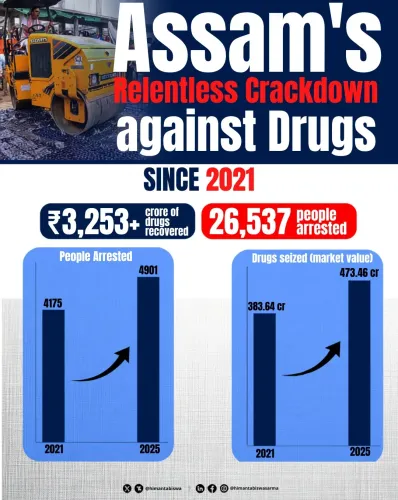
Nearly 27,000 people have been arrested under the drive since May 2021 .
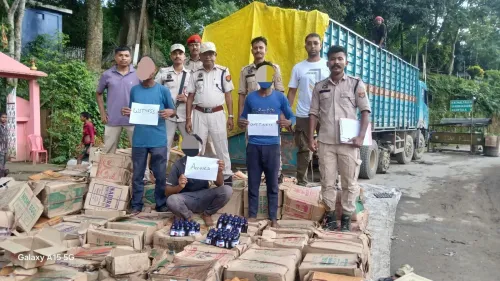
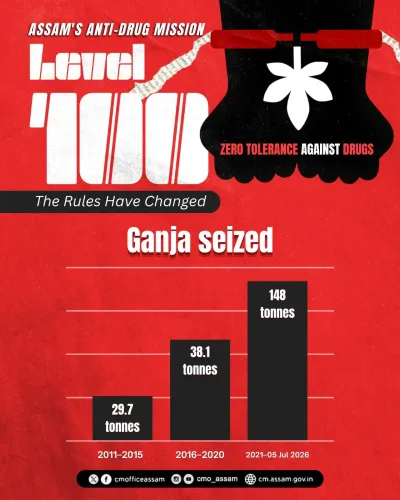
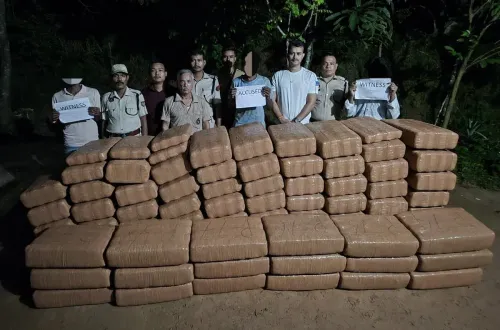
Seizures include 715 kg of heroin , 1,51,833 kg of ganja , and 2.13 crore methamphetamine tablets .
Assam serves as a key transit corridor for narcotics entering India from Myanmar's Golden Triangle .
Operations were conducted under the Narcotic Drugs and Psychotropic Substances (NDPS) Act .
The announcement coincides with the five-year mark of the BJP-led Assam government , framing enforcement as a core governance deliverable.
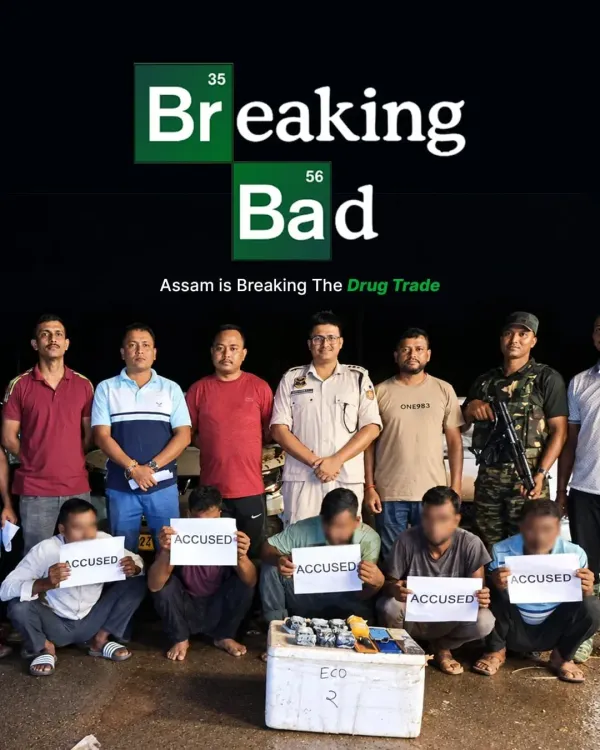
Five seasons of Breaking Bad gave the world Heisenberg. Five years of Assam Chief Minister Himanta Biswa Sarma's anti-narcotics crackdown have produced a very different kind of chemistry — one aimed squarely at dismantling the drug networks that have long used the state as a transit corridor from Myanmar's Golden Triangle.
The Numbers Behind the Crackdown
Invoking the fictional drug kingpin as a rhetorical foil, Sarma posted a stark five-year scorecard on 30 September 2026: nearly 27,000 arrests, 715 kg of heroin, 1,51,833 kg of ganja, and 2.13 crore methamphetamine tablets seized across the state. The scale is striking. Heroin, ganja, and meth represent three distinct supply chains — each requiring separate networks, mules, and financing — suggesting the operations have been broad rather than narrowly targeted.
'For me, the formula is simple: break the drug networks, protect Assam's future,' Sarma wrote, casting enforcement as the foundational governance promise of his administration, which took office in May 2021.
Why Assam Sits at the Centre of India's Drug Map
Assam is not a narcotics origin point — it is a chokepoint. The state shares a porous frontier geography with Myanmar, the epicentre of the Golden Triangle, the world's most prolific heroin and synthetic-drug production zone. Contraband that enters the Northeast often fans out westward toward the rest of India, making interdiction in Assam a national-level concern, not merely a state one.
When the BJP-led government assumed office in 2021, it flagged anti-narcotics enforcement as a signature priority. Operations under the Narcotic Drugs and Psychotropic Substances (NDPS) Act were intensified, with state police conducting drives that targeted smuggling networks at the border, in transit, and at street-distribution level. The meth-tablet figure is particularly telling: synthetic drugs from Myanmar have surged across the region in recent years, and 2.13 crore tablets represents a volume that points to industrial-scale interdiction effort.
Governance Milestone or Accountability Moment?
The post arrives at a politically significant juncture — the five-year mark of the current Assam government, a natural moment for both stock-taking and signalling ahead of future electoral cycles. Framing enforcement numbers as a governance deliverable is a deliberate move: it ties law-and-order outcomes directly to the administration's identity.
What the numbers do not yet tell is the rehabilitation side of the ledger. Arrests and seizures measure supply disruption; they say less about demand reduction, treatment infrastructure, or the long-term impact on Assam's youth — the constituency Sarma explicitly invokes when he speaks of 'protecting Assam's future.' Whether the state's drug-rehabilitation capacity has kept pace with the enforcement surge is the question that will define the second chapter of this story.
Point of View
Anchoring five years of policing in a cultural reference that travels instantly on social media. The sheer volume across three drug categories (heroin, ganja, meth) signals that Assam's interdiction net has been cast wide, reflecting the state's unique geography as a Golden Triangle transit hub. However, posting arrest and seizure figures as the headline metric of success is a classic supply-side narrative; it sidesteps the harder question of whether demand-side infrastructure — rehabilitation centres, de-addiction programmes, community support — has scaled proportionally. As Assam enters its next political cycle, the administration's ability to show outcomes beyond arrests will determine whether this crackdown becomes a durable governance legacy or a recurring law-and-order talking point.
NationPress
1 Oct 2026
Frequently Asked Questions
How many people have been arrested in Assam's anti-drug crackdown?
According to Assam Chief Minister Himanta Biswa Sarma, nearly 27,000 people have been arrested over the five-year anti-narcotics drive that began when the BJP-led government took office in May 2021.
What drugs were seized in Assam's five-year crackdown?
Assam's five-year crackdown resulted in the seizure of 715 kg of heroin, 1,51,833 kg of ganja, and 2.13 crore methamphetamine tablets, according to CM Himanta Biswa Sarma's announcement.
Why is Assam a major drug transit route in India?
Assam shares porous borders with Myanmar, the heart of the Golden Triangle — one of the world's largest heroin and synthetic-drug production zones. Contraband entering the Northeast often passes through Assam before reaching other parts of India.
What law governs anti-drug operations in Assam?
Anti-narcotics operations in Assam are primarily conducted under the Narcotic Drugs and Psychotropic Substances (NDPS) Act, the central legislation governing drug offences in India.
When did Himanta Biswa Sarma become Chief Minister of Assam?
Himanta Biswa Sarma became Chief Minister of Assam in May 2021, after the BJP-led alliance won the state assembly elections.