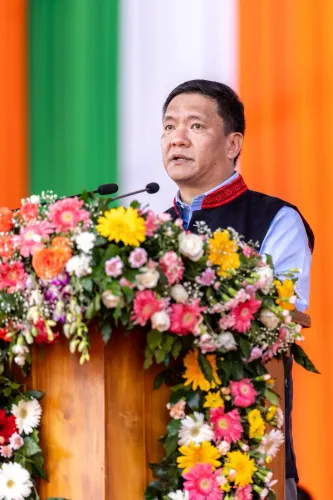
CM Pema Khandu backs Jaishankar on India's responsible arms exports
Synopsis
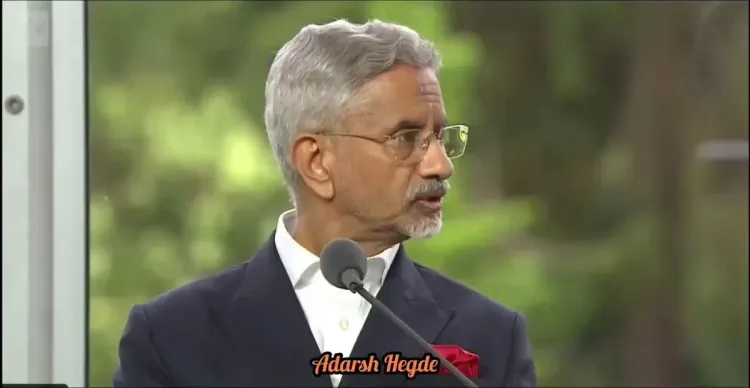
Arunachal Pradesh CM Pema Khandu on June 12, 2026 endorsed EAM S. Jaishankar's assertion that no European country has been attacked using Indian weapons, framing the statement as evidence of a more confident, self-assured India asserting its responsible arms-export record.
Key Takeaways
CM Pema Khandu amplified EAM S.
Jaishankar's statement on June 12, 2026 affirming no European nation has been attacked with Indian weapons.
The remark is a direct rebuttal to Western criticism of India's continued engagement with Russia during the Russia-Ukraine war .
India's Atmanirbhar Bharat initiative, launched in 2020 , underpins the country's growing ambition as a responsible defence exporter.
India's 'multi-alignment' doctrine allows New Delhi to maintain defence ties with Russia , the United States , and France simultaneously.
Senior BJP leaders rallying behind Jaishankar's foreign policy messaging signals a unified ruling coalition stance on strategic autonomy.
Future multilateral forums on arms export controls will be a key arena to watch for India's formal policy elaboration.
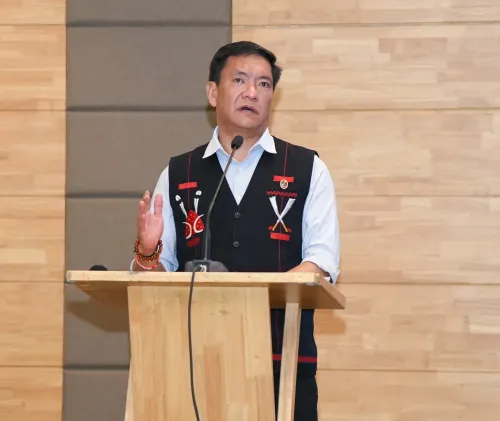
Arunachal Pradesh Chief Minister Pema Khandu on Friday, June 12, 2026, amplified a pointed statement by External Affairs Minister S. Jaishankar, endorsing India's record of not supplying weapons that have been used in attacks on European nations. Khandu framed the assertion as a reflection of a 'stronger, more self-assured India,' lending political weight to the foreign policy position articulated by the minister.
Context
Quoting Jaishankar directly, Khandu shared the statement: 'No attack has been made on any European country with Indian weapons... so keep this in mind.' The remark is widely read as a rebuttal to Western criticism of India's continued defence and energy engagements with Russia during the ongoing Russia-Ukraine war. By amplifying the quote, Khandu — a senior BJP leader — signals that the ruling party's rank and file stands firmly behind the government's foreign policy line.
India has walked a careful path since the conflict in Europe escalated, abstaining on several United Nations resolutions while maintaining dialogue with all sides. New Delhi has consistently argued that its partnerships do not translate into material support for offensive military operations against third countries.
Policy Backdrop
India's defence export ambitions have grown sharply under the Atmanirbhar Bharat initiative launched in 2020, which seeks to transform the country from one of the world's largest arms importers into a competitive exporter. The government has set successive targets for defence exports, with the sector expanding to supply partners across Southeast Asia, the Middle East, and parts of Africa.
Central to this push is the principle of responsible transfer — that Indian-origin equipment will not be re-exported or deployed in ways that destabilise third-party nations. Jaishankar has repeatedly invoked this principle in multilateral settings, positioning India as a disciplined participant in the global arms trade rather than an opportunistic supplier.
India's strategic autonomy doctrine, sometimes described as 'multi-alignment,' allows New Delhi to maintain defence ties with Russia, purchase advanced platforms from the United States and France, and export to a diverse client base — all without formally aligning with any single bloc.
Stakeholders and Impact
The statement carries significance for Indian defence manufacturers and public-sector undertakings seeking to expand their export footprint. A clear government narrative that Indian weapons are not conflict-escalatory strengthens the country's credibility as a supplier to nations wary of geopolitical blowback.
For the diplomatic community, the remark reinforces that India will not accept framing that equates its strategic partnerships with complicity in European conflicts. It also signals to Western capitals that pressure campaigns questioning India's neutrality are unlikely to shift New Delhi's posture.
Domestically, endorsements from senior state leaders like Khandu help consolidate a bipartisan-within-the-coalition consensus around the External Affairs Minister's assertive communication style, which has become a hallmark of India's post-2019 diplomatic identity.
What's Next
Attention will now turn to whether the Ministry of External Affairs follows up with a formal elaboration of India's arms-export responsibility framework at upcoming multilateral forums on arms control and export regulation. Any structured policy statement could give the position greater institutional weight beyond social media commentary.
As India's defence export volumes continue to rise, the government's ability to sustain the 'responsible supplier' narrative will be tested each time Indian-origin equipment appears in contested theatres — making proactive messaging of the kind amplified by Khandu an increasingly important tool of diplomatic signalling.
Point of View
And having state-level leaders echo it broadens its domestic legitimacy. This pattern — where chief ministers reinforce central government foreign policy positions on social media — reflects a coordinated messaging discipline that has become a structural feature of the current ruling dispensation. Over time, such layered amplification shapes domestic public opinion in favour of strategic autonomy as a non-negotiable national posture.
NationPress
29 Jul 2026
Frequently Asked Questions
What did Pema Khandu say about Indian weapons and Europe?
CM Pema Khandu shared and endorsed a statement by EAM S. Jaishankar asserting that no European country has been attacked using Indian weapons, calling it a sign of a stronger, more self-assured India.
Why is Jaishankar's statement about Indian weapons significant?
The statement is widely seen as a response to Western criticism of India's ties with Russia during the Russia-Ukraine war, positioning India as a responsible arms exporter that does not fuel conflicts in Europe.
What is India's Atmanirbhar Bharat defence policy?
Launched in 2020, Atmanirbhar Bharat is India's initiative to boost indigenous defence manufacturing and transition the country from a major arms importer to a competitive, responsible exporter.
What is India's strategic autonomy doctrine in foreign policy?
India's strategic autonomy, sometimes called multi-alignment, allows New Delhi to maintain defence and diplomatic ties with multiple global powers — including Russia, the United States, and France — without formally aligning with any single bloc.
How does India's defence export record relate to the Russia-Ukraine conflict?
India has faced criticism for not condemning Russia and for maintaining energy and defence ties with Moscow. New Delhi counters this by pointing out that Indian-supplied weapons have not been used in attacks on European nations, underlining its responsible transfer principles.