CM Pema Khandu Meets NITI Aayog, NDMA on Arunachal Disaster Plan
Synopsis
Arunachal Pradesh CM Pema Khandu on 16 July 2026 held talks with a NITI Aayog and NDMA delegation led by Dr. Joram Aniya to push for terrain-specific disaster management policies, citing the state's recent floods and unique geographic vulnerabilities.
Key Takeaways
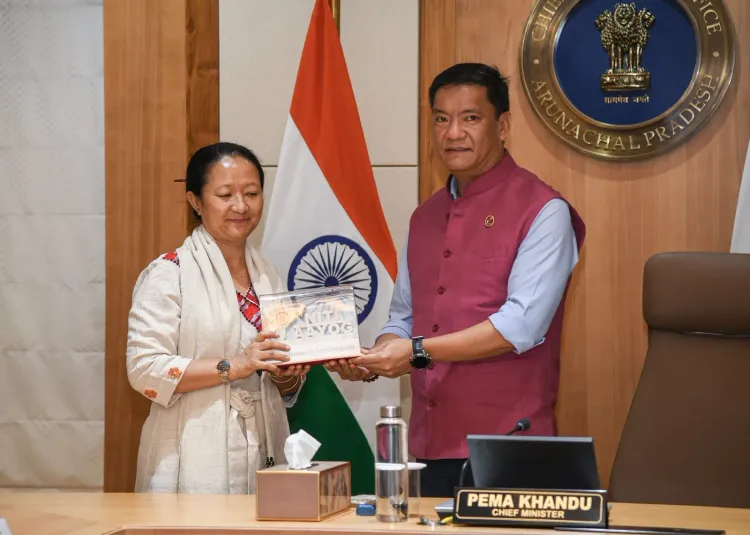
CM Pema Khandu met a central delegation from NITI Aayog , NDMA , and the Central Water Commission on 16 July 2026 in Itanagar.
The delegation was led by Dr.
Joram Aniya , Member of NITI Aayog, and included Ms.
Rita Missal , Member of NDMA.
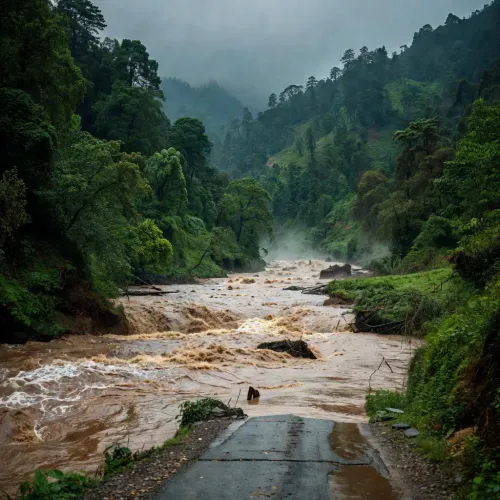
Discussions centred on disaster resilience and development priorities, with recent floods in Arunachal Pradesh as a key backdrop.
Khandu called for policies tailored to the state's terrain and climate, rejecting 'one-size-fits-all' approaches.
The visit is aimed at informing central policy and support mechanisms specific to Arunachal Pradesh's unique needs.
Follow-up action plans or central funding allocations are being watched as potential outcomes of the assessment.
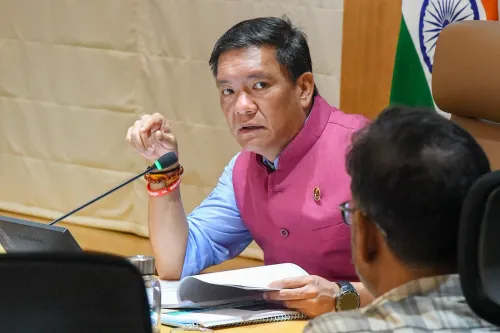
Arunachal Pradesh Chief Minister Pema Khandu on Thursday, 16 July 2026, received a high-level delegation from NITI Aayog and the National Disaster Management Authority (NDMA) in Itanagar for wide-ranging discussions on strengthening disaster resilience and advancing the state's development priorities, with a particular focus on the challenges posed by recent floods.
Context
The delegation was led by Dr. Joram Aniya, Member of NITI Aayog, and included Ms. Rita Missal, Member of the National Disaster Management Authority, along with senior officials from NITI Aayog, NDMA, and the Central Water Commission. CM Khandu described the visit as an opportunity for central agencies to gain 'first-hand insights into the challenges faced by our people, particularly in the wake of the recent floods.'
Khandu underscored that disaster management frameworks for Arunachal Pradesh must be 'shaped by the realities of our terrain, climate and people, not by one-size-fits-all policies' — a pointed call for region-specific planning over uniform national templates.
Policy Backdrop
The National Disaster Management Act, 2005 established NDMA as India's apex statutory body for disaster management and mandated state-level authorities with the scope to devise region-specific plans. NITI Aayog, constituted in 2015 to promote cooperative federalism, has conducted state visits to the Northeast to align central schemes with local terrain and development challenges.
Central agencies have increasingly moved toward tailored disaster resilience measures for ecologically fragile Himalayan and northeastern states, integrating inputs from technical bodies such as the Central Water Commission to address recurring floods and climate risks. Arunachal Pradesh, with its rugged Himalayan terrain, is among India's most disaster-prone states, facing annual threats from floods, landslides, and glacial events.
Stakeholders and Impact
Flood-affected communities across Arunachal Pradesh stand to benefit most directly from any policy recalibration arising from the delegation's on-ground assessment. The state's State Disaster Management Authority is expected to be a key institutional link in translating central discussions into actionable local plans.
The presence of the Central Water Commission alongside NDMA and NITI Aayog signals a multi-agency approach that spans flood forecasting, infrastructure planning, and long-term climate adaptation — a combination that advocates for Himalayan states have long sought from the central government.
What's Next
The immediate outcome of the meeting is an on-ground assessment that CM Khandu described as 'vital for shaping policies and support mechanisms that truly address the state's unique needs.' Observers will watch for follow-up state action plans or central funding allocations that translate the delegation's findings into concrete support.
If the visit leads to a customised disaster resilience framework or enhanced central assistance for Arunachal Pradesh, it could set a precedent for how other ecologically sensitive northeastern states engage with NITI Aayog and NDMA on climate-linked vulnerabilities.
Point of View
Positioning Arunachal Pradesh as an active co-author of its own disaster governance rather than a passive recipient of central directives. The multi-agency composition of the delegation — spanning NITI Aayog, NDMA, and the Central Water Commission — suggests the Centre is treating the Northeast's climate vulnerability with a seriousness that goes beyond routine coordination. This engagement fits a broader pattern of northeastern chief ministers leveraging cooperative federalism forums to extract customised policy commitments, particularly on climate and infrastructure. The real test will be whether the on-ground assessment translates into ring-fenced funding or a state-specific disaster management framework, or remains a goodwill visit.
NationPress
15 Oct 2026
Frequently Asked Questions
Why did NITI Aayog visit Arunachal Pradesh in July 2026?
The NITI Aayog delegation, led by Member Dr. Joram Aniya, visited Arunachal Pradesh on 16 July 2026 to gain first-hand insights into the state's disaster management challenges, particularly following recent floods, and to discuss region-specific resilience and development policies with CM Pema Khandu.
What is the National Disaster Management Authority (NDMA)?
The National Disaster Management Authority is India's apex statutory body for disaster management, constituted under the National Disaster Management Act, 2005. It sets national policies and guidelines for disaster preparedness, response, and mitigation.
What did CM Pema Khandu say about disaster management in Arunachal Pradesh?
CM Khandu stated that disaster management in Arunachal Pradesh must be 'shaped by the realities of our terrain, climate and people, not by one-size-fits-all policies,' calling for customised frameworks rather than uniform national templates.
What role does the Central Water Commission play in Arunachal Pradesh floods?
The Central Water Commission is a technical body involved in flood forecasting and water resource management. Its participation in the 16 July 2026 delegation signals a multi-agency approach to addressing recurring flood risks in Arunachal Pradesh's Himalayan river systems.
What are the expected outcomes of the NITI Aayog-NDMA meeting with CM Khandu?
The immediate outcome is an on-ground assessment of Arunachal Pradesh's disaster challenges. Potential follow-up outcomes include state-specific action plans, customised disaster resilience frameworks, or enhanced central funding allocations for the flood-prone northeastern state.