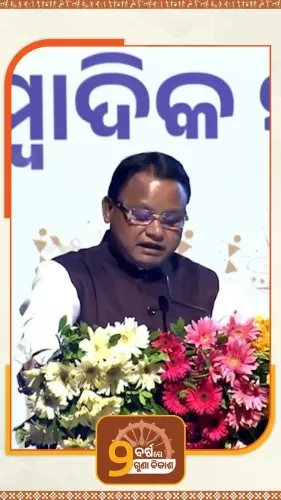
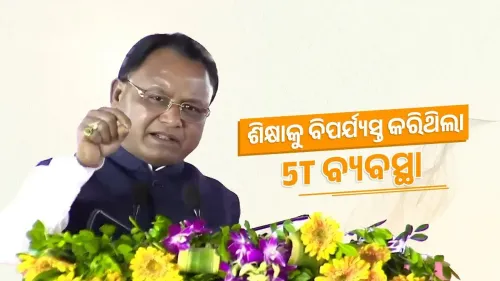
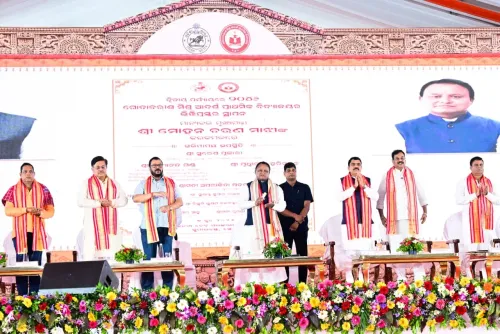
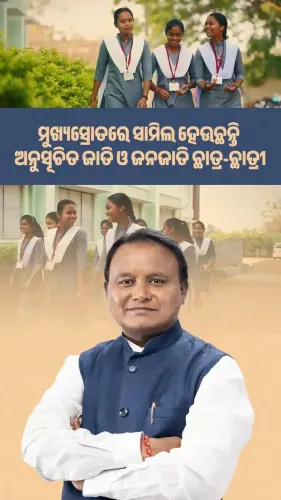
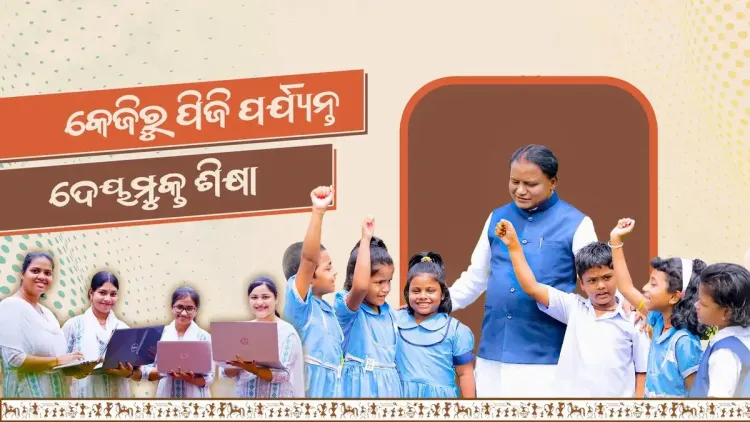
CM Majhi announces free KG-to-PG education in Odisha govt institutions
Synopsis
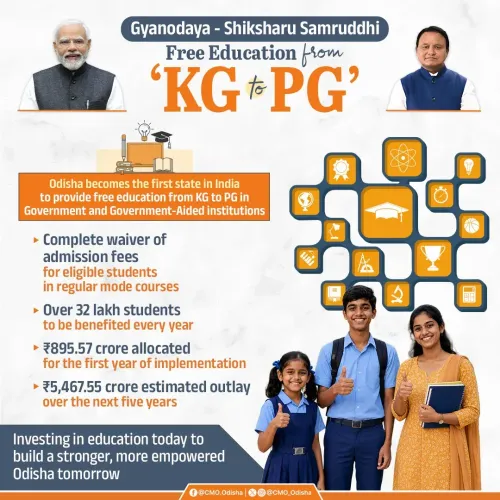
Odisha Chief Minister Mohan Charan Majhi announced on 1 July 2026 that the state cabinet has approved free education across all government institutions from kindergarten to postgraduate level, invoking the BJP's Antyodaya principle to eliminate financial barriers for every student in the state.
Key Takeaways
The Odisha state cabinet approved a policy making education free in all government institutions from KG to postgraduate level.
CM Mohan Charan Majhi announced the decision on 1 July 2026 , framing it as a 'revolutionary education reform.' The policy is anchored in the Antyodaya principle, targeting upliftment of the most economically marginalised students.
The reform eliminates tuition and fee requirements across the entire public education pipeline in Odisha .
The announcement tagged @PMOIndia , indicating potential coordination with the central government for implementation support.
The move aligns with the National Education Policy 2020 goal of expanding access and reducing financial barriers to higher education.
Odisha Chief Minister Mohan Charan Majhi announced on Wednesday, 1 July 2026 that the state cabinet has approved a landmark policy making education free in all government institutions from kindergarten through postgraduate level — a move he described as a 'revolutionary education reform' rooted in the Antyodaya principle of uplifting the most marginalised.
Context
Posting in Odia on X, CM Majhi said the cabinet decision would make education 'completely universal and fee-free' — from primary school to university postgraduate programmes — across all state-run institutions. He framed the move as eliminating 'every financial barrier in the field of higher education' and creating 'equal opportunity for every student.' The policy is being referred to as the 'KG to PG' free education scheme and carries the hashtag #KGtoPGFreeEducation.
In his post, the Chief Minister stated that this reform would take Odisha's self-respect, progress, and human resource development 'to a new peak,' and tagged the Prime Minister's Office, signalling coordination with the central government.
Policy Backdrop
The decision builds on a long arc of legislative and policy action at the national level. The Right of Children to Free and Compulsory Education Act, 2009 had already mandated free elementary schooling across India, but higher education remained largely fee-based in public institutions. The National Education Policy 2020 set explicit targets for expanding access to higher education and reducing financial barriers, creating a policy runway for state-level extensions like this one.
The Antyodaya philosophy — a core welfare principle of the BJP centred on the upliftment of the last person in the social order — is invoked by CM Majhi as the ideological anchor of the scheme. Odisha has been under BJP governance since June 2024, when Majhi took charge as Chief Minister, and the party has prioritised education-driven human capital development as a central plank of its state agenda.
Stakeholders and Impact
The most direct beneficiaries are students from low-income households in Odisha, for whom tuition and fee costs at public colleges and universities have historically been a significant deterrent to higher enrolment. By removing fees across the entire public education pipeline, the policy could meaningfully raise gross enrolment ratios, particularly among Scheduled Caste, Scheduled Tribe, and Other Backward Class communities who are disproportionately represented in government institutions.
Comparable zero-fee frameworks already operate in states such as Tamil Nadu and have been attempted in Delhi, suggesting a broader national trend toward fee abolition in public higher education. Odisha's move, if fully implemented, would place it among the more ambitious adopters of this model in eastern India, a region that has historically lagged in higher education access metrics.
What's Next
The critical test will be in the budget allocations and phased implementation timelines that follow the cabinet approval. Expanding fee-free access to university-level education requires sustained fiscal commitment, infrastructure investment, and faculty capacity — all of which will need to be detailed in subsequent government orders and budget sessions.
Potential coordination with central schemes for infrastructure support, as implied by the tagging of @PMOIndia in the Chief Minister's post, may shape the pace and scale of rollout. Observers will watch for a formal government order, a dedicated budget line, and an implementation calendar in the weeks ahead.
Point of View
Borrowing a frame more commonly associated with Left-leaning state governments. By invoking Antyodaya and tagging the PMO, CM Majhi is weaving the decision into the BJP's national human capital narrative ahead of future electoral cycles. The real measure of ambition, however, will be fiscal: sustaining fee-free public higher education demands multi-year budget commitments that Odisha, with its dependence on central transfers and mineral revenues, will need to demonstrate concretely. If implementation follows through, it could set a benchmark for eastern Indian states still lagging on higher education enrolment.
NationPress
1 Jul 2026
Frequently Asked Questions
What is the KG to PG free education scheme in Odisha?
The KG to PG free education scheme is a policy approved by the Odisha state cabinet that makes education completely free in all government institutions from kindergarten through postgraduate university level, removing all tuition and fee barriers for students.
Who announced the free education policy in Odisha?
Odisha Chief Minister Mohan Charan Majhi announced the policy on 1 July 2026 via a post on X, confirming that the state cabinet had formally approved the decision.
Which students will benefit from Odisha's free education policy?
All students enrolled in state government institutions — from primary schools to state universities — will benefit, with the policy particularly aimed at students from low-income and marginalised households who face financial barriers to higher education.
What is the Antyodaya principle mentioned in CM Majhi's announcement?
Antyodaya is a core welfare philosophy promoted by the BJP that focuses on uplifting the poorest and most marginalised sections of society. CM Majhi cited it as the ideological foundation of the free education decision.
Does any other Indian state offer free education from school to postgraduate level?
Yes, comparable zero-fee frameworks in government institutions exist in states such as Tamil Nadu, and similar measures have been attempted in Delhi. Odisha's policy, if fully implemented, would be among the more comprehensive versions of this model in eastern India.