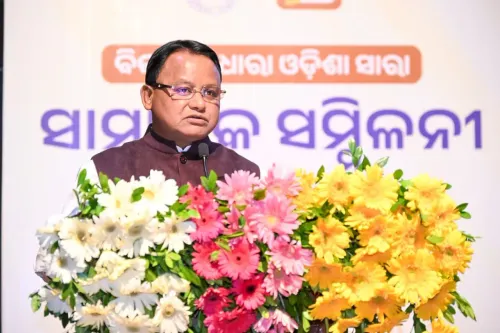
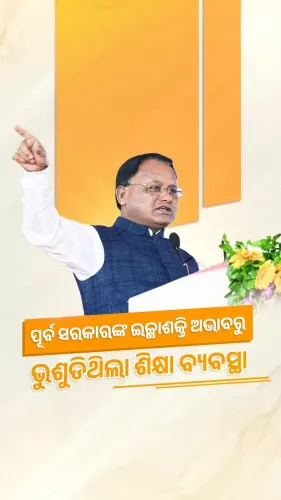
CM Majhi Backs Modi Govt's Exam Paper-Leak Law, Fast-Track Courts
Synopsis
Odisha Chief Minister Mohan Charan Majhi on 24 July 2026 backed PM Modi's Public Examinations (Prevention of Unfair Means) Act, 2024 and fast-track courts for paper-leak offences, calling the measures a landmark step to protect merit and restore public confidence in India's examination system.
Key Takeaways
CM Mohan Charan Majhi publicly endorsed the central government's anti-paper-leak legislative framework on 24 July 2026 .
The Public Examinations (Prevention of Unfair Means) Act, 2024 was passed by Parliament in February 2024 following the NEET-UG and UGC-NET paper-leak controversies.
Dedicated fast-track courts are being established for expeditious trial of examination malpractice offences.
The reforms target paper leaks, impersonation, and allied malpractices affecting millions of competitive exam aspirants across India.
Majhi's endorsement signals Odisha 's readiness to coordinate with the central framework on state-level examinations.
The first convictions under the Act and state-level court notifications will be key markers of the law's real-world impact.
Odisha Chief Minister Mohan Charan Majhi on Friday, 24 July 2026 publicly endorsed the central government's legislative push against examination paper leaks, hailing Prime Minister Narendra Modi's introduction of a stringent anti-malpractice law and the establishment of fast-track courts as a 'decisive step' toward restoring integrity in India's competitive examination system.
Context
In a post on X, CM Majhi described the measures as a 'landmark reform' that 'reaffirms the Government's resolve to uphold merit, ensure transparency, and secure a fair and credible future for millions of young aspirants across the nation.' The statement underscores the alignment between the BJP-led Odisha state government and the central leadership on one of the most politically charged youth issues in recent years.
The post comes against the backdrop of nationwide outrage over paper-leak scandals that rocked high-stakes examinations, triggering street protests and judicial scrutiny that placed the credibility of India's public examination machinery under an intense spotlight.
Policy Backdrop
The legislative anchor for Majhi's endorsement is the Public Examinations (Prevention of Unfair Means) Act, 2024, passed by Parliament in February 2024. The law was a direct response to irregularities in the NEET-UG and UGC-NET examinations that exposed systemic vulnerabilities in how question papers are stored, transported, and administered across the country.
The Act prescribes stringent penalties for paper leaks, impersonation, and allied malpractices in public recruitment and entrance examinations. The companion measure — dedicated fast-track courts for expeditious trial of such offences — is intended to signal that accountability will be swift rather than protracted, a concern that had dogged earlier, more tepid enforcement efforts.
The reforms also sit within the broader framework of the National Education Policy 2020, which called for overhauling assessment and credentialing systems to better reflect merit and reduce scope for manipulation.
Stakeholders and Impact
The primary beneficiaries are competitive exam aspirants — a demographic numbering in the tens of millions — who invest years of preparation and significant financial resources in pursuit of government jobs and professional college seats. For many families, particularly in states like Odisha, a central or state government posting represents the most reliable path to economic security.
State education boards and recruitment agencies are also directly affected, as the law creates accountability chains that extend to administrators and invigilators, not just organised criminal networks. CM Majhi's public endorsement signals that Odisha is prepared to coordinate with central mechanisms, including the fast-track court framework, as it applies to state-level examinations.
The Supreme Court of India had earlier intervened in the NEET-UG controversy, making any credible legislative and judicial response a matter of constitutional as well as political significance.
What's Next
Attention will now turn to state-level notifications establishing fast-track courts and the timeline for their operationalisation ahead of the 2026-27 recruitment cycle. The first convictions under the 2024 Act will be a critical test of whether the law's deterrent effect matches its legislative ambition. Any rules or amendments notified under the Act in the coming months will also be closely watched by student unions, legal advocates, and opposition parties assessing whether the reform delivers on its promise of swift, merit-protecting justice.
Point of View
Particularly in a state where government employment remains a primary aspiration for a large share of the population. By amplifying the central government's reform credentials, the Odisha BJP leadership reinforces a narrative of decisive, merit-first governance at a moment when public trust in examination bodies remains fragile. The framing around 'swift justice' and fast-track courts is also a political signal that the era of impunity for paper-leak networks is closing — a message calibrated as much for aspirants as for state-level administrators. Whether the institutional machinery matches the rhetorical ambition will determine if the reform becomes a durable BJP asset or a liability ahead of future recruitment cycles.
NationPress
24 Jul 2026
Frequently Asked Questions
What is the Public Examinations (Prevention of Unfair Means) Act, 2024?
It is a central law passed by India's Parliament in February 2024 to penalise paper leaks, impersonation, and other malpractices in public recruitment and entrance examinations, with stringent penalties aimed at deterring organised cheating networks.
Why did the Modi government introduce anti-paper-leak legislation?
The law was introduced following widespread irregularities in the NEET-UG and UGC-NET examinations that triggered nationwide protests and Supreme Court intervention, exposing deep vulnerabilities in India's examination administration system.
What are the fast-track courts for exam paper leaks?
Fast-track courts are dedicated judicial bodies set up to ensure expeditious trial of offences under the 2024 Act, reducing the long delays that had previously allowed accused individuals to escape accountability for extended periods.
Why is Odisha CM Majhi endorsing a central government exam law?
As a BJP chief minister, Majhi's endorsement reflects inter-governmental coordination on a politically sensitive youth issue, and signals Odisha's intent to align state-level examination oversight with the central legislative framework.
How does the exam paper-leak law affect competitive exam aspirants in India?
The law strengthens protections for millions of aspirants by creating stricter penalties for those who compromise examination integrity, and the fast-track courts are designed to deliver justice quickly, restoring confidence in merit-based selection processes.