CM Majhi Chairs Jan Sunani in Bhubaneswar, Directs Officers
Synopsis
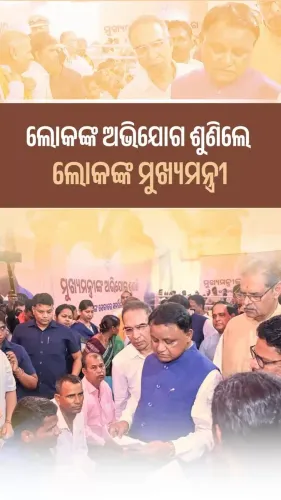
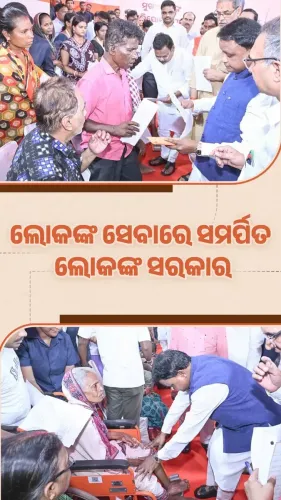
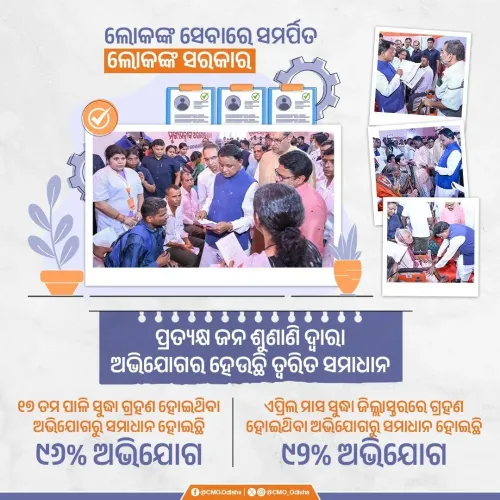
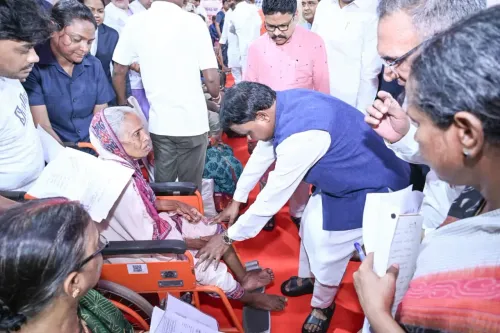
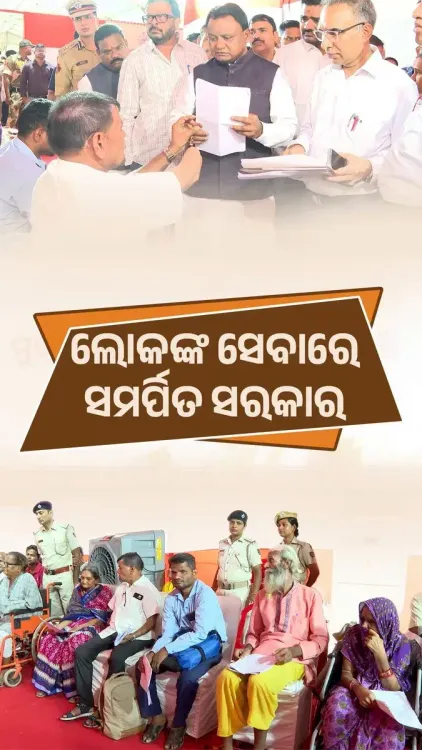
Odisha Chief Minister Mohan Charan Majhi chaired a Jan Sunani public grievance hearing at Bhubaneswar Unit-2 on 27 July 2026, personally hearing citizen complaints from across the state and directing departmental officers to resolve every petition in a time-bound and just manner.
Key Takeaways
CM Mohan Charan Majhi personally attended the Jan Sunani programme at Bhubaneswar Unit-2 on 27 July 2026 .
Citizens from various parts of Odisha presented complaints directly to the Chief Minister and departmental officers.
Majhi issued clear instructions to officers for prompt, time-bound, and just resolution of every application received.
The CM framed the initiative as a deliberate shift from the previous government's 'pompous and inaccessible' administration toward transparency and public service.
The government's stated goal is to reach every citizen 'standing in the last row of society' — aligning with the BJP 's national antyodaya governance doctrine.
The administration has pledged to continue and expand such citizen-outreach efforts across the state.
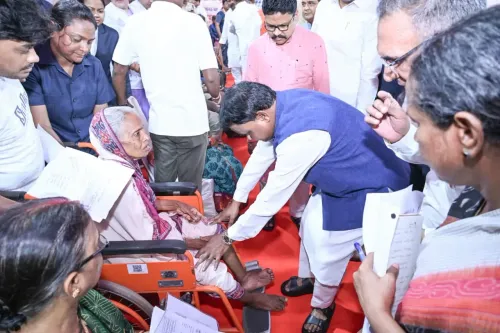
Odisha Chief Minister Mohan Charan Majhi attended a Jan Sunani (public grievance hearing) programme at Bhubaneswar Unit-2 on Monday, 27 July 2026, personally listening to complaints from citizens who had travelled from across the state and directing departmental officers to resolve every application promptly, within a fixed timeframe, and in a just manner.
Context
Posting in Odia on X, CM Majhi said the core goal of his government is to carry governance to 'samajara shesh dhadire thibaa pratyek naagarikaanka paryanta' — 'every citizen standing in the last row of society' — and to resolve their problems in a time-bound manner. He described the public's trust and faith as something that strengthens the administration's sense of responsibility, and pledged that bridging the gap between ordinary citizens and the state machinery would remain a continuous effort.
The chief minister also drew an explicit contrast with the previous government, characterising the earlier administration as 'aaḍambara purna o apahanchha' — 'pompous and inaccessible' — and asserting that his government prioritises transparency and public service. 'This government is the people's government,' he wrote.
Policy Backdrop
The Jan Sunani format — structured public hearings where senior officials sit alongside elected representatives to receive and act on citizen petitions — has precedents in Odisha's own governance history. The previous BJD administration launched the 'Mo Sarkar' initiative in 2019 to improve citizen-government feedback loops, and the Right to Information Act of 2005 established nationwide grievance-redressal frameworks that states have since adapted in various forms.
The BJP government that took office in June 2024, following its assembly election victory, has sought to position direct-access hearings as a structural departure from that era rather than a continuation of it. The Jan Sunani format allows citizens to place complaints directly before officers, bypassing layers of bureaucracy.
Stakeholders and Impact
Citizens from 'various parts of the state' attended the Bhubaneswar Unit-2 hearing, according to CM Majhi's post. The primary beneficiaries of such programmes are rural and remote populations who otherwise face significant barriers — distance, cost, and procedural complexity — in accessing state redressal mechanisms.
Departmental officers were given direct instructions at the event, placing accountability on the administration to follow through. The programme aligns with the BJP's national 'antyodaya' doctrine, which envisions governance reaching the most marginalised citizen first.
What's Next
The Odisha government's stated intent is to sustain and expand such outreach efforts. The key test will be whether Jan Sunani-style hearings are extended to additional districts and whether the assembly sees follow-up orders establishing verifiable timelines for grievance disposal. CM Majhi has committed that 'this effort for the welfare and service of the common people will continue uninterrupted.'
Point of View
CM Majhi is reinforcing a governance optic that places accessibility at the centre of the BJP's Odisha project. The explicit dig at the previous BJD administration's 'inaccessibility' is a calculated political move, framing the new dispensation's outreach not merely as good governance but as a corrective to a decade-and-a-half of entrenched incumbency. The durability of this approach will depend on whether grievance disposal rates improve measurably — something the administration has yet to quantify publicly. If Jan Sunani hearings are scaled to districts beyond the capital, they could become a meaningful accountability mechanism; if they remain periodic and centralised, the optics risk outpacing the outcomes.
NationPress
27 Jul 2026
Frequently Asked Questions
What is Jan Sunani in Odisha?
Jan Sunani is a public grievance hearing programme in Odisha where citizens can present complaints directly to senior government officials and the Chief Minister, with a mandate for time-bound resolution by the relevant department.
What did CM Majhi do at the Bhubaneswar Jan Sunani on 27 July 2026?
CM Mohan Charan Majhi attended the Jan Sunani at Bhubaneswar Unit-2, personally heard complaints from citizens across Odisha, and directed departmental officers to resolve each petition promptly and justly.
How is the BJP government's Jan Sunani different from the previous Odisha government's approach?
CM Majhi has described the earlier administration as 'pompous and inaccessible' and positioned Jan Sunani as a shift toward transparency and direct citizen access, contrasting it with the BJD-era 'Mo Sarkar' feedback model.
Who can attend a Jan Sunani hearing in Odisha?
Any citizen from across Odisha can attend and submit grievances at a Jan Sunani event; the 27 July 2026 hearing drew participants from various parts of the state.
Will Odisha hold more Jan Sunani hearings in other districts?
CM Majhi has pledged that the government's outreach efforts will continue uninterrupted, and expansion of Jan Sunani-style hearings to additional districts is being watched as the next step.