CM Majhi Champions Mudra, SVANidhi, Vishwakarma for Odisha
Synopsis
Odisha CM Mohan Charan Majhi championed PM Mudra, SVANidhi, and Vishwakarma on X, highlighting how the three central schemes and RuPay card access are driving financial inclusion for entrepreneurs, street vendors, artisans, and women's SHGs under the Aatmanirbhar Bharat vision.
Key Takeaways
Odisha CM Mohan Charan Majhi posted on 25 October 2026 amplifying three central welfare schemes targeting the informal economy.
PM Mudra (launched 2015 ) provides micro-credit to small and micro-enterprises across India.
PM SVANidhi (launched 2020 ) offers collateral-free working-capital loans to street vendors.
PM Vishwakarma (announced 2023 ) supports traditional artisans with both credit and skill training.
RuPay cards, distributed through Jan Dhan accounts since 2014 , are positioned as the digital bridge connecting informal workers to formal financial services.
The post aligns Odisha's state messaging with the national Aatmanirbhar Bharat framework without announcing new state-specific measures.
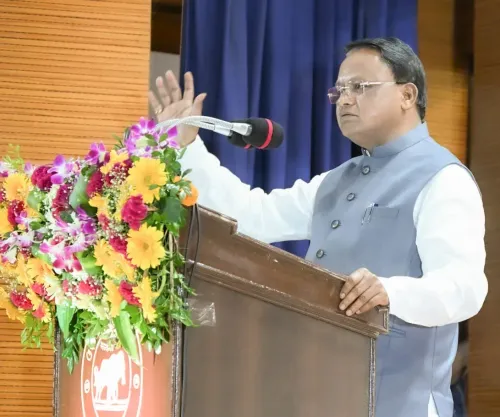
Three central schemes — and a domestic payments card — are quietly reshaping who gets a seat at India's formal economy table, and Odisha Chief Minister Mohan Charan Majhi wants his state to know it. On Sunday, 25 October 2026, the BJP leader took to X to spotlight the economic empowerment potential of PM Mudra, PM SVANidhi, and PM Vishwakarma for the entrepreneurs, street vendors, artisans, and women's self-help groups of Odisha.
In a bilingual post in Odia and English, CM Majhi wrote: 'Schemes like Mudra, PM SVANidhi and PM Vishwakarma are empowering entrepreneurs, street vendors, artisans and women's SHGs. Wider access to RuPay cards and digital financial services is strengthening financial inclusion and advancing the vision of Aatmanirbhar Bharat.'
What each scheme actually does for the informal worker
Pradhan Mantri Mudra Yojana, launched in 2015, extends micro-credit to small and micro-enterprises — the roadside repair shop, the vegetable wholesaler, the tiny textile unit — that would otherwise be invisible to formal lenders. PM SVANidhi, introduced in 2020 during the COVID-19 disruption, provides collateral-free working-capital loans specifically to street vendors, giving the paan-wallah and the fruit-cart vendor their first taste of institutional credit. PM Vishwakarma, announced in 2023, goes further by pairing credit with skill training for traditional craftspeople — blacksmiths, potters, weavers — whose livelihoods depend on centuries-old techniques that modern finance rarely recognises.
Together, the three schemes form a ladder: Mudra catches the micro-entrepreneur, SVANidhi catches the street vendor, Vishwakarma catches the artisan. The common thread is formalisation — pulling informal workers into a system where a credit history, a bank account, and a RuPay card open doors that cash-only living keeps permanently shut.
RuPay and the digital bridge to Aatmanirbhar Bharat
The RuPay card — India's domestic payment network, seeded through Jan Dhan account expansion since 2014 — is the infrastructure that ties these schemes together. Once a street vendor or artisan has a Jan Dhan account, a RuPay card converts that account from a passive savings vessel into an active financial tool: POS transactions, digital transfers, merchant payments. CM Majhi's framing positions RuPay not as a fintech product but as a citizenship instrument — the 'mainstream of financial inclusion', as the post puts it in Odia.
The Aatmanirbhar Bharat vision, announced in 2020, provides the overarching narrative: domestic manufacturing, reduced import dependence, and — critically — an economy resilient enough that its smallest participants are not its most exposed. These schemes are the micro-layer of that macro-ambition.
Odisha's alignment with the national welfare push
CM Majhi, who took office in June 2024, has consistently aligned Odisha's state messaging with the BJP-led central government's flagship welfare architecture. Sunday's post introduces no new state-specific scheme or disbursement figure — it is a signal of political and policy alignment, amplifying New Delhi's welfare narrative to an Odia-speaking audience. What will matter in the months ahead is how many of Odisha's street vendors, artisans, and women's SHG members are actually accessing these schemes — a number that will surface in the next state budget cycle and scheme-review meetings.
For now, the message from Bhubaneswar is clear: the tools exist, the pipeline is open, and the vision of a self-reliant India runs through the smallest loan a potter in Puri or a weaver in Berhampur can access.
Point of View
Where state and central messaging become indistinguishable. The real policy question it raises is execution: Odisha's uptake of SVANidhi and Vishwakarma in semi-urban and tribal districts has historically lagged, and the CM's rhetoric will be tested against disbursement data in the coming budget cycle. Longer term, the post signals that digital financial inclusion — RuPay, Jan Dhan, UPI — is becoming the primary language through which the BJP communicates economic citizenship to its base.
NationPress
25 Oct 2026
Frequently Asked Questions
What is PM Mudra Yojana and who can benefit?
Pradhan Mantri Mudra Yojana , launched in 2015 , provides loans to micro and small enterprises that lack access to formal bank credit. Small traders, manufacturers, and service providers — including women entrepreneurs — are eligible.
What is PM SVANidhi scheme for street vendors?
PM SVANidhi was introduced in 2020 to offer collateral-free working-capital loans to street vendors who lost livelihoods during the COVID-19 pandemic. It helps vendors like fruit sellers and food-stall operators access institutional credit for the first time.
What does the PM Vishwakarma scheme offer artisans?
PM Vishwakarma , announced in 2023 , supports traditional craftspeople — such as potters, weavers, and blacksmiths — with a combination of credit access and skill-development training, recognising occupations that formal finance historically overlooked.
How does RuPay card help with financial inclusion?
RuPay is India's domestic card payment network, issued through Jan Dhan accounts expanded since 2014 . It gives low-income account holders the ability to make digital payments and transactions, integrating them into the formal financial system.
Why did Odisha CM Majhi talk about these central schemes?
Odisha CM Mohan Charan Majhi , a BJP leader who took office in June 2024 , regularly aligns state messaging with central government welfare programs. His post on 25 October 2026 amplifies national schemes to an Odia-speaking audience without announcing new state-specific measures.