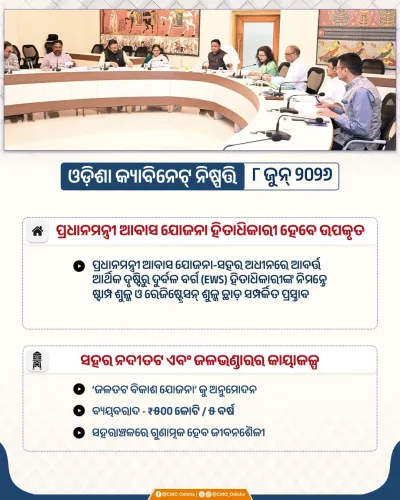
CM Majhi cuts stamp duty for PMAY-U 2.0 homebuyers in Odisha
Synopsis
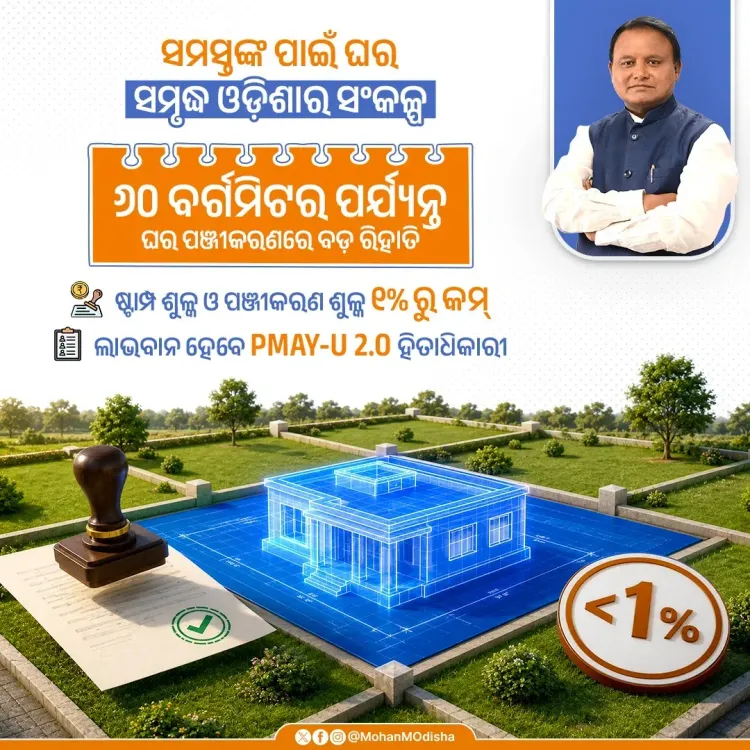
Odisha Chief Minister Mohan Charan Majhi has slashed stamp duty and registration charges to below 1 per cent for PMAY-U 2.0 beneficiaries registering properties up to 60 sq m, lowering the cost of formal home ownership for the urban poor as the BJP government marks two years in office.
Key Takeaways
Odisha CM Mohan Charan Majhi announced the fee cut on 22 June 2026 .
Stamp duty and registration charges for PMAY-U 2.0 beneficiaries will be below 1 per cent .
The concession applies to property registrations up to 60 square metres .
The move targets urban poor families in the EWS and LIG categories.
The announcement coincides with the BJP government's two-year milestone in Odisha.
Formal rollout through sub-registrar offices and a gazette notification is awaited.
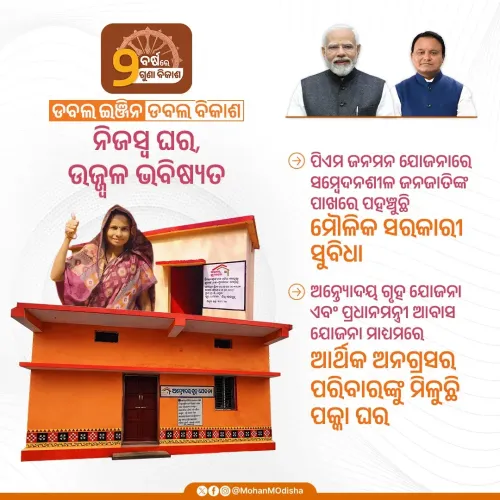
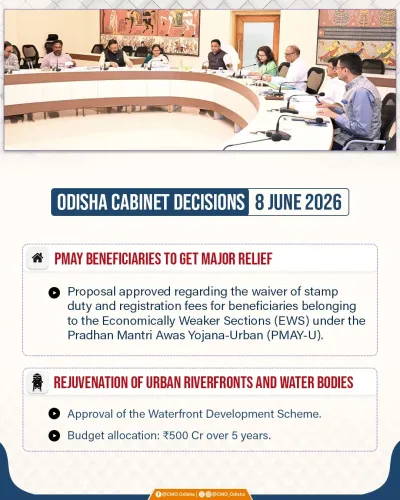
Odisha Chief Minister Mohan Charan Majhi on Monday, 22 June 2026, announced a significant reduction in stamp duty and registration charges for beneficiaries of the Pradhan Mantri Awas Yojana-Urban (PMAY-U) 2.0 scheme, bringing the combined levy to below 1 per cent for properties up to 60 square metres, in a move aimed at making home ownership more accessible for urban poor families across Odisha.
Posting in Odia on X (formerly Twitter), the Chief Minister framed the decision in aspirational terms: 'Ghara kebala eka thikana nuhen, eha suraksha, sammana o swapnara adhara' — 'A home is not merely an address; it is the foundation of security, dignity, and dreams.' He described the fee reduction as 'another historic step' by the 'people's government' toward building a 'prosperous Odisha.'
Context
The announcement comes as the BJP-led Odisha government, in office since June 2024, seeks to align state-level housing delivery with the central PMAY-U 2.0 framework. The revised fee structure specifically targets the registration process, reducing transaction costs that have historically deterred low-income urban households from formally registering their homes. Under the new dispensation, eligible PMAY-U 2.0 beneficiaries registering properties of up to 60 sq m will pay stamp duty and registration charges collectively below 1 per cent of the property value.
Policy Backdrop
The Pradhan Mantri Awas Yojana was launched nationally in 2015 with the goal of providing pucca housing to all eligible rural and urban families. Odisha has been a participant in the urban component since its inception, undertaking beneficiary identification and subsidy disbursement at the state level. The second phase, PMAY-U 2.0, continues that thrust with renewed targets for economically weaker sections and low-income groups in cities and towns.
Reducing stamp duty on PMAY-designated properties is a tool several state governments have deployed to lower the effective cost of formal home ownership. By capping charges below 1 per cent, Odisha joins a pattern of central-state coordination designed to remove the last-mile financial barrier — the registration cost — that can prevent a beneficiary from completing the legal transfer of a subsidised home.
Stakeholders and Impact
The primary beneficiaries are urban poor families in Odisha who qualify under PMAY-U 2.0 eligibility criteria — chiefly those from the Economically Weaker Section (EWS) and Lower Income Group (LIG) categories. For these households, even modest stamp duty amounts can represent a significant share of monthly income, and the reduction is expected to encourage a higher rate of formal registration, giving families clear legal title to their homes.
The move also has fiscal implications for the state exchequer, which will forgo a portion of registration revenue. However, the government's stated calculus is that increased registration volumes — driven by lower costs — will partially offset the per-unit revenue loss, while advancing the broader welfare objective of documented home ownership for the urban poor.
What's Next
Attention will now turn to the operational rollout: specifically, how quickly sub-registrar offices across Odisha's urban local bodies are notified of the revised rates and whether the state issues a formal gazette notification or administrative order to give the announcement legal effect. The volume of new PMAY-U 2.0 registrations in the coming months will serve as the key metric of success. Any supplementary budgetary provision to account for the revenue concession may also surface in forthcoming state finance deliberations. Chief Minister Majhi's use of the hashtags #2YearsofLokankaSarakar and #BikasharaDharaOdishaSara signals that this announcement is part of a broader political communication around the government's two-year welfare record.
Point of View
A narrative the BJP has consistently pursued in states where it inherited welfare deficits. The 60 sq m threshold and sub-1 per cent levy are specific enough to be credible but will require gazette-level operationalisation before they translate into tangible relief. If registration volumes rise measurably, this becomes a replicable model other BJP-governed states may adopt ahead of their own electoral cycles.
NationPress
22 Jun 2026
Frequently Asked Questions
What is the new stamp duty for PMAY-U 2.0 homes in Odisha?
Under the revised structure announced on 22 June 2026, stamp duty and registration charges combined will be below 1 per cent for PMAY-U 2.0 beneficiaries registering properties up to 60 square metres in Odisha.
Who is eligible for the reduced stamp duty on PMAY homes in Odisha?
Beneficiaries enrolled under the PMAY-Urban 2.0 scheme — primarily households from the Economically Weaker Section and Lower Income Group categories — are eligible for the reduced charges on homes up to 60 sq m.
Why did the Odisha government reduce stamp duty for PMAY beneficiaries?
The government stated the reduction is aimed at making home registration easier and more affordable for poor urban families, removing a financial barrier that can prevent beneficiaries from completing the legal transfer of their subsidised homes.
When did the BJP come to power in Odisha?
The BJP, led by Mohan Charan Majhi, came to power in Odisha in June 2024 after winning the state assembly elections, ending the previous government's long tenure.