CM Majhi Highlights PMAY-G House for Koraput Beneficiary
Synopsis
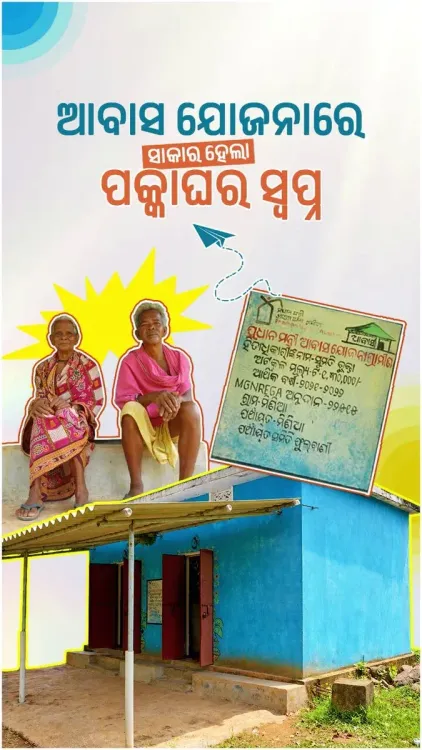
Odisha CM Mohan Charan Majhi highlighted Sumati Bhukta of Koraput as a Pradhan Mantri Awaas Yojana (Gramin) beneficiary, sharing how the tribal-district family moved from a thatched home to a pucca house, framing public service as his government's core resolve.
Key Takeaways
Sumati Bhukta of Koraput district received a pucca house under Pradhan Mantri Awaas Yojana (Gramin) .
The family previously lived in a thatched-roof dwelling, enduring hardship through heat, rain, and cold.
CM Mohan Charan Majhi shared the beneficiary story on 30 September 2026 as an example of scheme delivery.
Koraput is a tribal-majority, economically vulnerable district in southern Odisha where rural housing delivery is especially significant.
PMAY-G was launched by the central government in 2016 to provide financial assistance for pucca house construction to eligible rural poor.
The post is part of a broader BJP-state pattern of using individual beneficiary stories to demonstrate implementation of flagship central programmes.
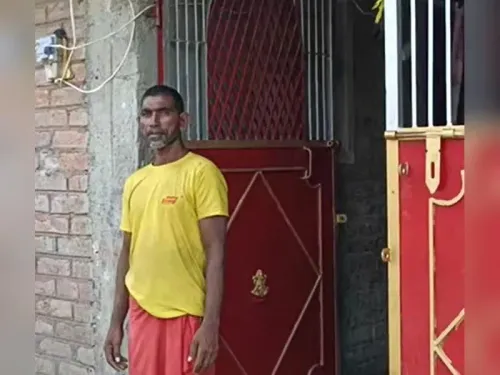
A family in Koraput district that once endured heat, rain, and cold inside a thatched-roof home now has a pucca house — and Odisha Chief Minister Mohan Charan Majhi is making sure the story is heard. On Wednesday, 30 September 2026, the CM took to X to spotlight Sumati Bhukta, a resident of Koraput, as the latest face of Pradhan Mantri Awaas Yojana (Gramin) delivery in the state.
Writing in Odia, Majhi said the fruits of development are reaching every eligible beneficiary through 'service and resolve' — 'ସେବା ଓ ସଂକଳ୍ପ' ['seva o sankalpa']. He described how Sumati Bhukta's family, which previously suffered through the elements in a makeshift dwelling, has today received 'a safe roof, dignity, and new self-confidence.'
Koraput: A District Where Housing Delivery Carries Extra Weight
Koraput, nestled in southern Odisha, is one of the state's most tribal-dominated and economically vulnerable districts. Rural housing schemes like PMAY-G carry outsized significance here, where inadequate shelter intersects with broader challenges of poverty and geographic remoteness. Highlighting a beneficiary from this district — rather than a more prosperous coastal zone — signals the scheme's reach into the state's hardest-to-serve pockets.
Pradhan Mantri Awaas Yojana (Gramin) was launched by the central government in 2016 to replace earlier rural housing efforts with a more structured, target-driven programme. It provides financial assistance to eligible rural households for constructing pucca houses with basic amenities. Targets under the scheme have been extended and revised in subsequent years to cover residual demand across states.
BJP's Beneficiary Storytelling Strategy in Odisha
Since Mohan Charan Majhi took office in June 2024 following the BJP's historic win in Odisha — ending two decades of Biju Janata Dal rule — his government has leaned into beneficiary-centred communication. Putting a name and a face to a central scheme is a deliberate political grammar: it personalises policy, localises credit, and links state governance to national flagship programmes.
This is not unique to Odisha. Across BJP-governed states, social media posts featuring individual beneficiaries of PMAY-G, Ujjwala, and Jan Dhan have become a standard template for demonstrating delivery. The message is consistent: the government's 'sankalp' (resolve) finds its proof not in spreadsheets but in a specific family's changed life.
The broader question for Odisha is how many such stories remain to be written. State-level progress on residual PMAY-G targets — and whether the next state budget includes supplementary rural housing allocations — will be the real measure of the programme's momentum.
For Sumati Bhukta's family in Koraput, the arithmetic is already settled. One house. One family. That is the unit the Chief Minister is counting on to make the policy tangible.
Point of View
A tribal heartland with historical underdevelopment, is pointed — it pre-empts any narrative that welfare gains are bypassing the poorest. The durability of this strategy, however, will depend on whether Odisha can close its residual PMAY-G gap before the next election cycle.
NationPress
30 Sept 2026
Frequently Asked Questions
What is Pradhan Mantri Awaas Yojana (Gramin)?
Pradhan Mantri Awaas Yojana (Gramin), or PMAY-G, is a central government scheme launched in 2016 that provides financial assistance to eligible rural poor households for constructing pucca (permanent) houses with basic amenities.
Who is Sumati Bhukta?
Sumati Bhukta is a resident of Koraput district in Odisha who received a pucca house under the Pradhan Mantri Awaas Yojana (Gramin) scheme, as highlighted by Chief Minister Mohan Charan Majhi on 30 September 2026.
Why is Koraput significant for rural housing schemes?
Koraput is a tribal-majority district in southern Odisha with high levels of poverty and geographic remoteness, making rural housing delivery under schemes like PMAY-G especially impactful for its population.
When did Mohan Charan Majhi become Odisha Chief Minister?
Mohan Charan Majhi became Chief Minister of Odisha in June 2024 after the BJP won the state assembly elections, ending two decades of Biju Janata Dal rule.
How does PMAY-G work for beneficiaries?
Under PMAY-G, the central government provides direct financial assistance to identified eligible rural households to construct pucca houses with basic facilities such as toilets, electricity connections, and cooking fuel access.