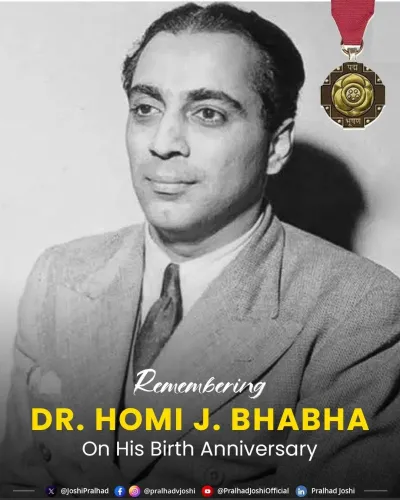
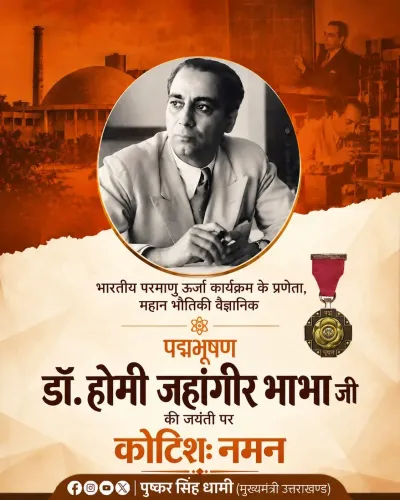
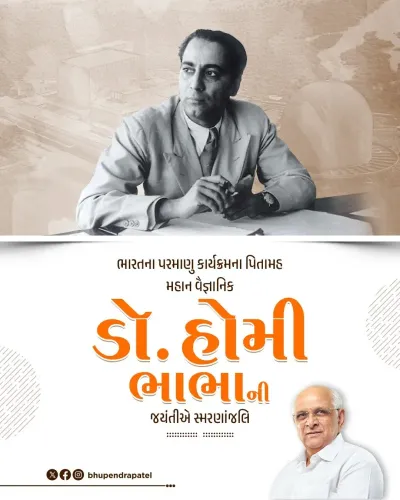
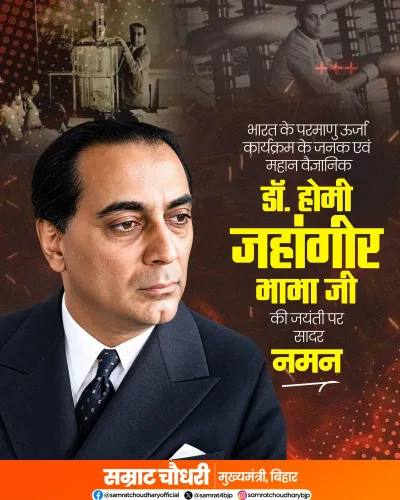
CM Majhi Pays Tribute to Homi Bhabha on Birth Anniversary
Synopsis
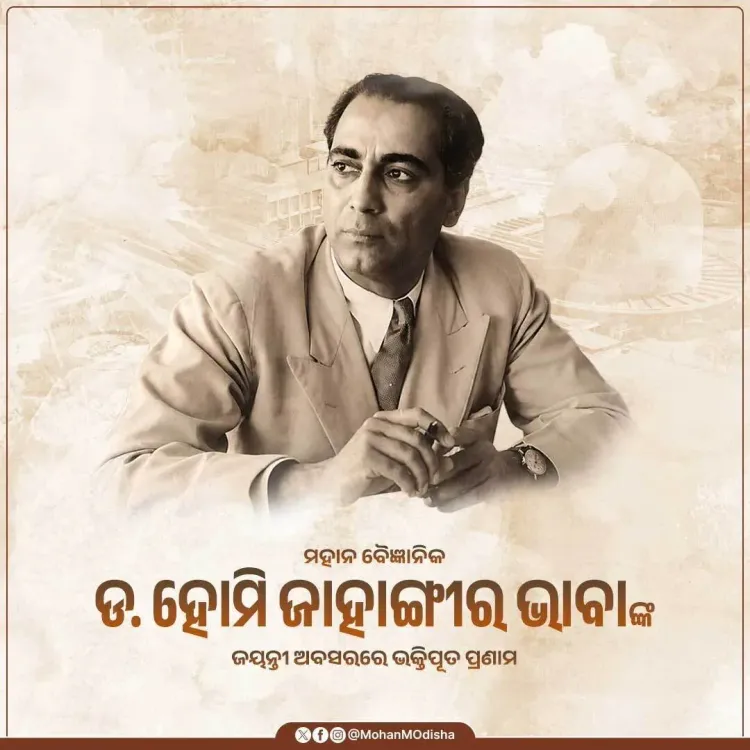
Odisha Chief Minister Mohan Charan Majhi offered reverential tribute to Dr. Homi Jehangir Bhabha on his birth anniversary, honouring the Cambridge-trained physicist who founded TIFR in 1945 and built the bedrock of India's nuclear programme.
Key Takeaways
CM Mohan Charan Majhi paid homage to Dr.
Homi Jehangir Bhabha on his birth anniversary, October 30, 2026 .
Bhabha founded the Tata Institute of Fundamental Research (TIFR) in 1945 , India's first dedicated centre for basic scientific research.
He established the Atomic Energy Establishment Trombay , later renamed Bhabha Atomic Research Centre (BARC) in his honour.
Bhabha is universally recognised as the father of India's nuclear programme .
Indian leaders across party lines observe October 30 annually as a day of national scientific remembrance.
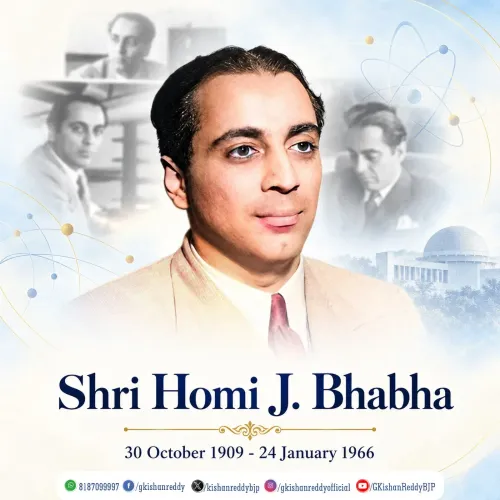
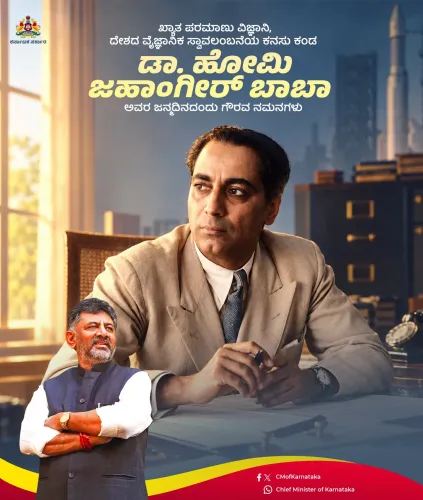
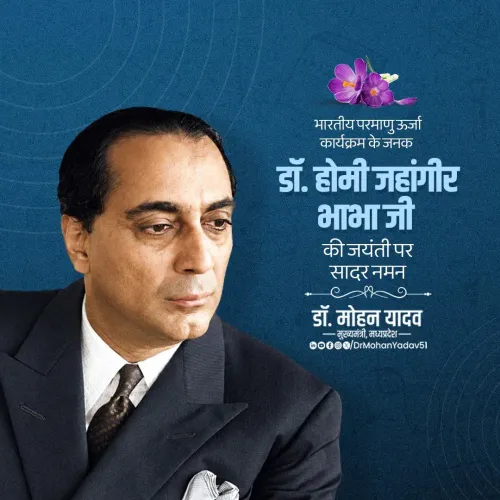
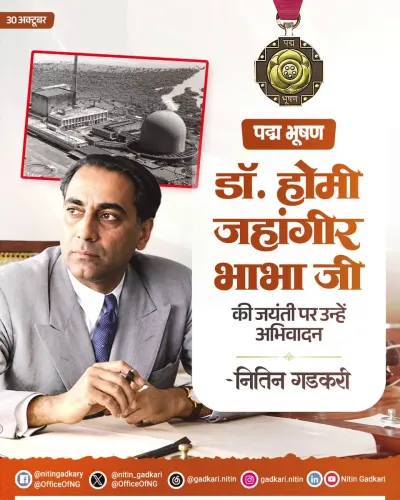
On the birth anniversary of one of modern India's most consequential minds, Odisha Chief Minister Mohan Charan Majhi paid homage to Dr. Homi Jehangir Bhabha on Friday, October 30, 2026 — the day India's scientific community marks the founding father of its nuclear programme.
Posting in Odia on X, CM Majhi offered what translates as 'reverential salutations on the birth anniversary of distinguished scientist Dr. Homi Jehangir Bhabha' — a crisp, dignified tribute that echoed similar remembrances from leaders across the political spectrum on this date every year.
The Man Who Built India's Atomic Foundation
Dr. Homi Jehangir Bhabha is no ordinary figure in the national memory. The Cambridge-trained physicist founded the Tata Institute of Fundamental Research (TIFR) in 1945, giving India its first serious home for basic scientific research. He then established the Atomic Energy Establishment Trombay — the institution later renamed the Bhabha Atomic Research Centre (BARC) in his honour — and is universally regarded as the architect of India's nuclear programme. His vision shaped not just a laboratory but a strategic doctrine: that a newly independent nation could and should command the full depth of modern science.October 30 and the Ritual of National Remembrance
Every October 30, Indian leaders from the ruling dispensation to the opposition pause to acknowledge Bhabha's legacy. The consistency of these tributes — across decades and across party lines — signals something beyond political courtesy. It reflects a shared national consensus that the foundations of atomic energy and fundamental research are achievements worth protecting from the churn of partisan politics. CM Majhi's post fits squarely within that tradition. For a state like Odisha, whose own industrial and energy landscape has evolved significantly, the gesture also connects a regional leader to a pan-Indian scientific heritage that continues to underpin the country's energy security and strategic autonomy. India's nuclear establishment — from BARC's research reactors to the broader Department of Atomic Energy ecosystem — traces its institutional DNA directly to the choices Bhabha made in the 1940s and 1950s. Honouring him is, in a quiet way, honouring the infrastructure that still powers parts of the republic. The father of Indian atomic science built something that outlasted him by more than six decades — and on his birth anniversary, the nation still stops to notice.Point of View
Cross-party ritual that insulates India's atomic heritage from political contestation — a rare zone of consensus in an otherwise combative public discourse. It also signals how regional leaders use national scientific anniversaries to project alignment with India's foundational modernisation project. For the BJP, invoking Bhabha connects the current government's emphasis on self-reliance and technology to an older, Congress-era scientific nationalism — a subtle reclaiming of that legacy. The consistency of such tributes year after year reinforces the idea that India's nuclear and scientific institutions enjoy a legitimacy that transcends electoral cycles.
NationPress
30 Oct 2026
Frequently Asked Questions
Who was Homi Jehangir Bhabha?
Dr. Homi Jehangir Bhabha was a pioneering Indian nuclear physicist, widely regarded as the father of India's nuclear programme. He founded the Tata Institute of Fundamental Research in 1945 and established the Atomic Energy Establishment Trombay, later renamed BARC in his honour.
When is Homi Bhabha's birth anniversary?
Homi Jehangir Bhabha's birth anniversary falls on October 30 . Indian leaders and the scientific community mark the date each year with tributes to his legacy.
What did Mohan Charan Majhi post about Homi Bhabha?
Odisha Chief Minister Mohan Charan Majhi posted in Odia on X, offering reverential salutations on the birth anniversary of Dr. Homi Jehangir Bhabha, describing him as a distinguished scientist.
What is BARC and how is it connected to Homi Bhabha?
BARC — the Bhabha Atomic Research Centre — is India's premier nuclear research facility in Trombay, Mumbai. It was originally established by Bhabha as the Atomic Energy Establishment Trombay and renamed in his honour after his death.
Why do Indian politicians pay tribute to Homi Bhabha?
Bhabha's foundational role in building India's nuclear and scientific infrastructure makes him a figure of rare national consensus. Leaders across parties mark his birth anniversary to acknowledge the strategic and intellectual legacy he left the republic.