CM Majhi Announces Dedicated Archaeology Directorate for Odisha
Synopsis
Odisha Chief Minister Mohan Charan Majhi announced on 28 May 2026 that the state will establish a dedicated Directorate of Archaeology to manage, protect, and scientifically conserve ancient temples, monuments, and archaeological sites — framing the move as a historic step for Odia cultural identity.
Key Takeaways
CM Mohan Charan Majhi announced a dedicated Directorate of Archaeology for Odisha on 28 May 2026 .
The directorate will oversee protection, administration, and scientific conservation of the state's ancient temples, memorials, and archaeological sites.
The move is framed around Odia Asmita — Odia cultural pride — a key theme of the BJP-led state government since the 2024 assembly elections .
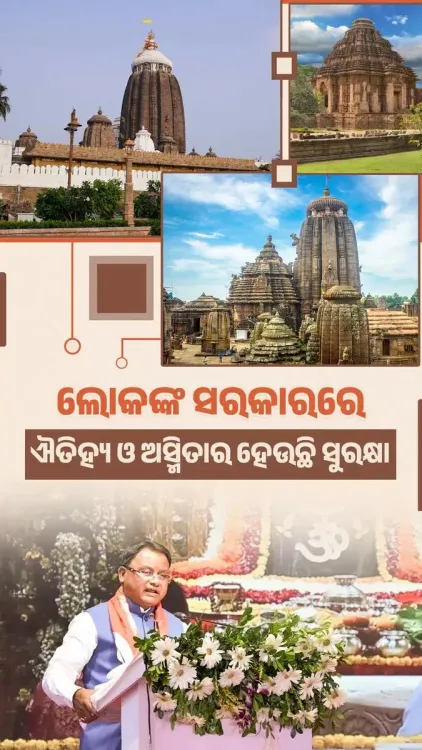
Odisha hosts major heritage sites including the Konark Sun Temple and the Jagannath Temple at Puri , alongside numerous state-protected monuments.
The formal structure, budget, and powers of the new directorate are yet to be notified by the government.
The announcement fits a national pattern of states creating dedicated archaeology bodies to complement ASI oversight.
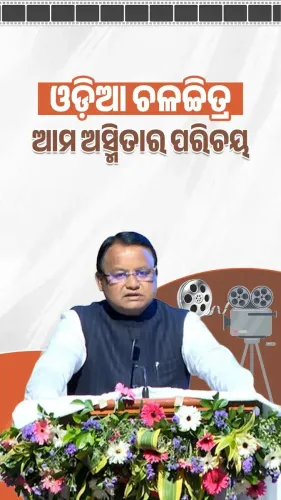
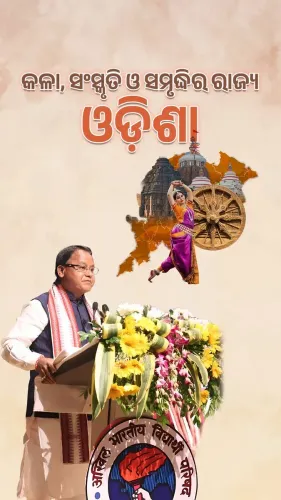
Odisha Chief Minister Mohan Charan Majhi announced on Thursday, 28 May 2026, that the state government will establish a dedicated Directorate of Archaeology to strengthen the protection, management, and scientific conservation of Odisha's ancient temples, monuments, and archaeological heritage sites.
Posting in Odia on X, CM Majhi described every temple, memorial, and archaeological site in the state as a 'living identity of Odia Asmita' — Odia Asmita meaning Odia cultural pride and identity. He called the move an 'historic step' by his government, adding that the new directorate would bring 'better administration, protection, and scientific conservation' of the state's ancient heritage.
Context
Odisha is home to some of India's most significant heritage sites, including the Konark Sun Temple — a UNESCO World Heritage Site — and the Jagannath Temple at Puri, both of which draw millions of pilgrims and tourists annually. The state also holds a vast inventory of lesser-known temples, rock-cut monuments, and excavation sites spread across its districts. Managing this heritage has historically involved coordination between state-level departments and the Archaeological Survey of India (ASI), the central body established in 1861 that oversees nationally protected monuments.
Policy Backdrop
The Ancient Monuments and Archaeological Sites and Remains Act, 1958 provides the national legal framework for heritage protection, but states are empowered to establish their own archaeology directorates for sites not under central protection. Several Indian states have upgraded or created standalone archaeology departments to exercise greater local control and faster decision-making over state-listed monuments. CM Majhi's announcement follows this established pattern, with his government framing the move explicitly around Odia cultural identity — a theme that has gained political salience since the BJP's victory in the 2024 Odisha assembly elections.
The proposal also aligns with a broader trend of BJP-led state governments linking institutional heritage-conservation mechanisms to regional cultural pride, positioning such moves as both administrative reform and affirmation of local identity.
Stakeholders and Impact
Heritage professionals, temple trusts, and the state's tourism sector stand to be directly affected by the new directorate. A dedicated body is expected to reduce administrative fragmentation, enabling faster responses to conservation emergencies such as structural deterioration or encroachment at unprotected sites. Temple trusts managing state-listed shrines could see clearer regulatory oversight and potentially greater access to conservation expertise and funding.
The tourism sector, which relies heavily on Odisha's archaeological and religious circuit, may benefit from improved upkeep and presentation of heritage sites. Scholars and heritage professionals have long argued that many state-protected monuments in Odisha lack the technical staffing needed for scientific conservation.
What's Next
The government is yet to issue a formal gazette notification detailing the directorate's structure, staffing strength, jurisdictional powers, and its relationship with existing state departments and the ASI. Budget allocations for the new body will be a key indicator of the administration's commitment to the initiative. Observers will also watch whether the directorate is given independent statutory authority or functions as a reorganised wing of an existing department. CM Majhi's government faces the task of translating this policy announcement into operational reality — a process that will require legislative or executive action in the months ahead.
Point of View
Moving heritage governance from a shared or subordinate function to a dedicated administrative unit with focused mandate. By anchoring the announcement in the language of Odia Asmita, CM Majhi is simultaneously making a governance argument and a cultural-identity argument — a combination that has proven politically effective for BJP-led governments in heritage-rich states. The real test will be in the details: a well-staffed, adequately funded directorate with clear jurisdiction could meaningfully accelerate conservation of the hundreds of state-protected sites that currently lack scientific attention. If the announcement remains aspirational without legislative backing or budget commitment, it risks becoming a symbolic gesture rather than a structural reform.
NationPress
24 Sept 2026
Frequently Asked Questions
What is the Odisha Directorate of Archaeology announced by CM Majhi?
It is a proposed dedicated state-level body that will manage, protect, and carry out scientific conservation of ancient temples, monuments, and archaeological sites across Odisha , as announced by Chief Minister Mohan Charan Majhi on 28 May 2026 .
How is the new Odisha archaeology directorate different from the Archaeological Survey of India?
The Archaeological Survey of India (ASI) is a central government agency that protects nationally designated monuments. The new state directorate will focus on Odisha 's state-protected and locally significant sites, giving the state government direct control over their management and conservation.
What is Odia Asmita and why is it significant?
Odia Asmita translates to Odia cultural pride or identity. CM Majhi used the term to frame the archaeology directorate as a step toward preserving Odisha 's distinct cultural and historical character, a theme central to his government's political messaging since the 2024 elections .
Which heritage sites in Odisha will benefit from the new directorate?
The directorate is intended to cover all state-protected ancient temples, memorials, and archaeological sites in Odisha . Major sites in the state include the Konark Sun Temple and the Jagannath Temple at Puri , though many lesser-known monuments are also expected to benefit.
When will the Odisha Directorate of Archaeology become operational?
No formal notification detailing the directorate's structure, staffing, or timeline has been issued yet. The government's next steps — including budget allocation and a gazette notification — will determine when it becomes operational.