CM Mohan Yadav Backs Modi's Push for Indigenous Defence
Synopsis
MP Chief Minister Dr. Mohan Yadav amplified PM Modi's call for defence self-reliance on 21 June 2026, highlighting the induction of over 40 Made in India warships and submarines into the Indian Navy as proof of India's manufacturing momentum.
Key Takeaways
Mohan Yadav , Chief Minister of Madhya Pradesh , shared PM Narendra Modi 's vision on 21 June 2026 linking manufacturing capacity to strategic decision-making power.
More than 40 'Made in India' warships and submarines have been inducted into the Indian Navy in recent years, as cited in the post attributed to PM Modi .
The Make in India initiative (launched September 2014 ) and Atmanirbhar Bharat Abhiyan (launched May 2020 ) form the policy backbone of India's defence indigenization drive.
INS Vikrant , commissioned in September 2022 , was a landmark as India's first indigenously built aircraft carrier.
Ongoing programmes such as Project 75(I) for advanced submarines represent the next frontier of naval self-reliance.
Domestic shipyards and private defence manufacturers are the primary economic beneficiaries of this sustained policy shift.
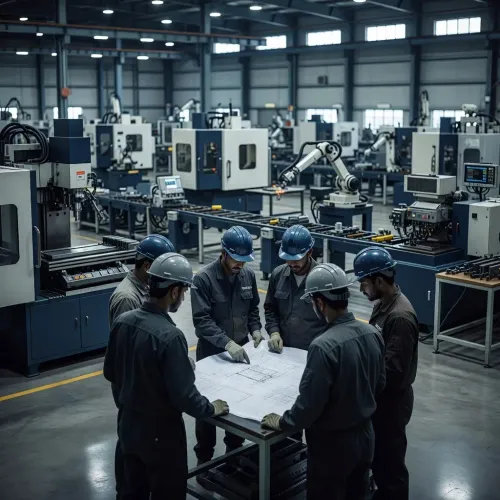
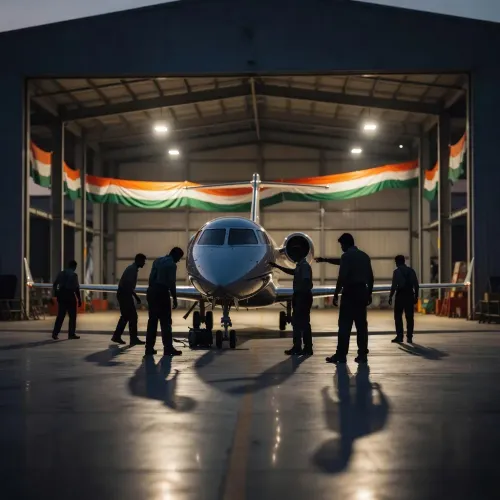
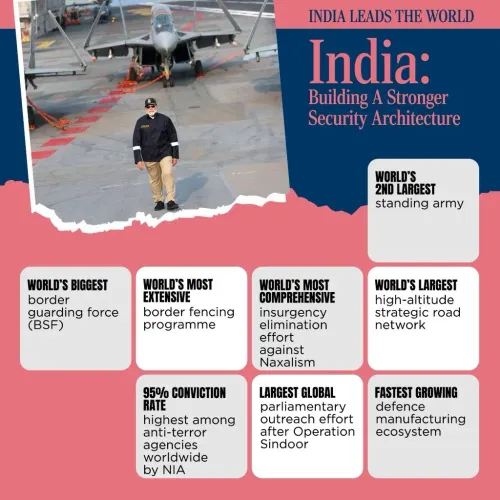
Madhya Pradesh Chief Minister Dr. Mohan Yadav on Sunday, 21 June 2026, amplified Prime Minister Narendra Modi's vision of India becoming a defence manufacturing powerhouse, citing the induction of more than 40 'Made in India' warships and submarines into the Indian Navy over recent years as evidence of accelerating progress.
Context
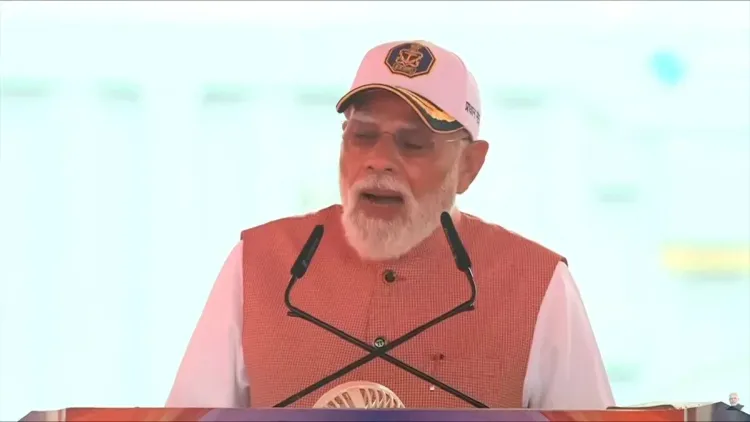
Quoting Prime Minister Modi directly, Dr. Yadav shared the message: 'Bharat 'nirmata' banna chahta hai. Jis din hum nirmata honge, us din hum 'nirnayak' bhi honge' — ('India wants to become a 'maker'. The day we become makers, we will also become 'decisive'.'). The post, which accompanied a video, frames domestic defence production not merely as an industrial goal but as a prerequisite for strategic sovereignty.
The figure of more than 40 indigenously built warships and submarines inducted into the Indian Navy is cited directly in the post as attributed to Prime Minister Modi. This claim is presented by Dr. Yadav as a marker of how swiftly India is moving toward self-reliance in defence.
Policy Backdrop
The messaging aligns with two flagship central government programmes. The Make in India initiative, launched in September 2014, set out to expand domestic manufacturing across sectors, with defence production as a key pillar. The Atmanirbhar Bharat Abhiyan, announced in May 2020, deepened this thrust by setting explicit targets for reducing defence imports and expanding the role of Indian shipyards and private firms.
A landmark in this journey was the commissioning of INS Vikrant in September 2022 — India's first indigenously built aircraft carrier — which signalled the country's capacity to design and deliver large-scale naval platforms. Updated defence procurement procedures introduced in 2016 also raised indigenous content requirements, giving domestic manufacturers a structural advantage in government contracts.
Stakeholders and Impact
The primary beneficiaries of this policy direction are domestic shipyards — both public sector units such as Mazagon Dock Shipbuilders and Garden Reach Shipbuilders and Engineers, and a growing ecosystem of private defence manufacturers. The Indian Navy, which operates across the strategically vital Indian Ocean Region, stands to gain enhanced operational capability as its fleet increasingly comprises vessels built and maintained within the country.
For the broader economy, a thriving indigenous defence manufacturing base generates skilled employment, fosters technology transfer, and reduces the foreign exchange outflow associated with large-scale arms imports. Madhya Pradesh, with its developing industrial corridor, has been positioning itself to attract ancillary defence manufacturing investment aligned with these national goals.
What's Next
Attention will now turn to the progress of ongoing submarine acquisition programmes, including Project 75(I), which seeks to add advanced submarines to the Navy's fleet through domestic construction with technology transfer. The next Union Defence Budget session will be a key moment for parliamentary scrutiny of indigenization targets and spending allocations.
As India seeks to cement its role as a net security provider in the Indo-Pacific, the pace of indigenous warship inductions will remain a closely watched indicator of whether the country's ambition to be not just a 'maker' but a 'decisive' force in global affairs is translating from policy into hardware on the water.
Point of View
The messaging frames indigenization not as a distant goal but as a delivered outcome, strengthening the BJP's governance credentials on national security. The framing of 'nirmata' (maker) leading to 'nirnayak' (decisive) is a rhetorically potent bridge between economic and geopolitical aspiration, consistent with India's broader push for strategic autonomy in the Indo-Pacific. Whether the specific induction numbers withstand independent scrutiny will determine how durable this narrative proves to be in parliamentary and public debate.
NationPress
21 Jun 2026
Frequently Asked Questions
How many Made in India warships and submarines have joined the Indian Navy?
According to a post by MP Chief Minister Dr. Mohan Yadav quoting PM Narendra Modi, more than 40 'Made in India' warships and submarines have been inducted into the Indian Navy in recent years.
What is India's Make in India defence initiative?
Make in India is a national manufacturing initiative launched in September 2014 that includes defence production as a key sector, aiming to reduce imports and build domestic capability in areas such as shipbuilding and aerospace.
What is Atmanirbhar Bharat in defence?
Atmanirbhar Bharat Abhiyan, announced in May 2020, set specific targets for reducing defence imports and expanding domestic manufacturing, including indigenously built warships, submarines, and other military platforms.
What is India's first indigenous aircraft carrier?
INS Vikrant, commissioned in September 2022, is India's first indigenously designed and built aircraft carrier, and is widely regarded as a landmark achievement in the country's naval self-reliance programme.
What is Project 75(I) in the Indian Navy?
Project 75(I) is an Indian Navy programme to acquire advanced submarines through domestic construction with technology transfer, representing the next major step in India's underwater defence indigenization efforts.