CM Mohan Yadav Backs UCC as Step Toward Equal Rights in MP
Synopsis
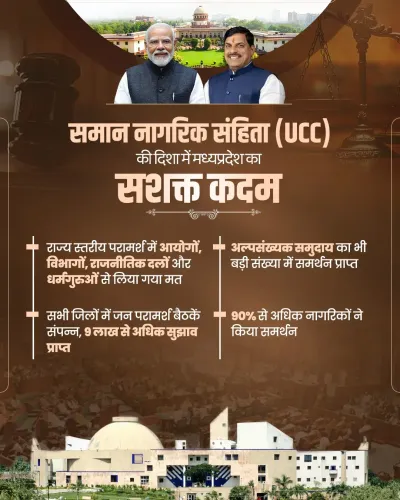
Chief Minister Dr. Mohan Yadav of Madhya Pradesh declared the Uniform Civil Code an important step toward equal rights for every citizen, citing India's cultural commitment to equality and the constitutional directive under Article 44. The statement, made under the #UCC_MP and #CabinetMP hashtags, signals active cabinet-level deliberation in the state.
Key Takeaways
Mohan Yadav publicly endorsed the Uniform Civil Code as a step toward ensuring equal rights for all citizens of Madhya Pradesh .
The statement was made on 19 July 2026 through the official Chief Minister's Office X account under #UCC_MP and #CabinetMP .
Article 44 of the Indian Constitution has directed the State to implement a UCC since 1950 .
Uttarakhand enacted India's first state-level UCC in February 2024 , providing a legislative model for other states.
Madhya Pradesh , governed by the BJP since 2003 , is signalling cabinet-level movement toward a similar law.
The next key milestone is the potential introduction of a UCC bill in the Madhya Pradesh state assembly.
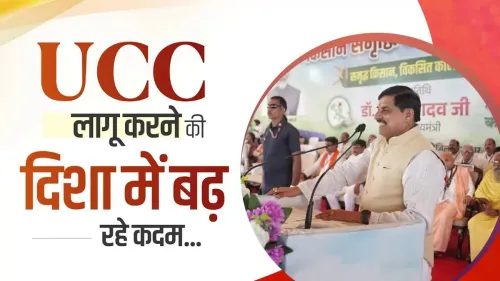
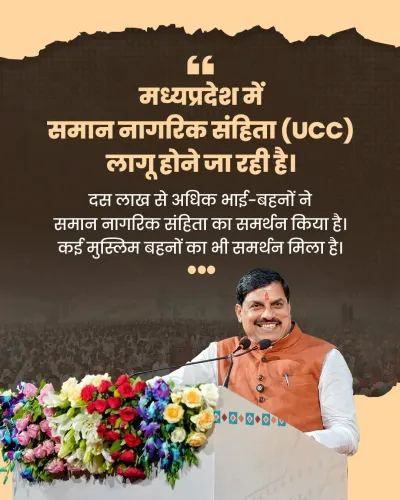
The Chief Minister's Office of Madhya Pradesh, speaking for Chief Minister Dr. Mohan Yadav, declared on Sunday, 19 July 2026 that the Uniform Civil Code (UCC) is a vital step toward ensuring equal rights for every citizen, framing it as an expression of India's foundational cultural values.
Context
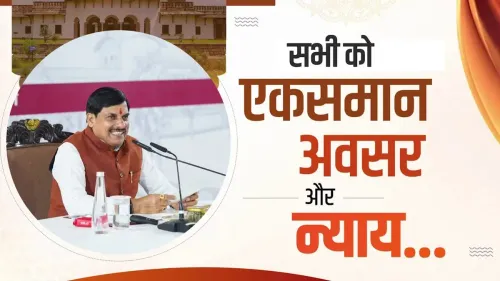
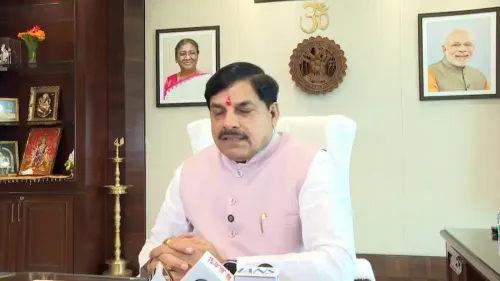
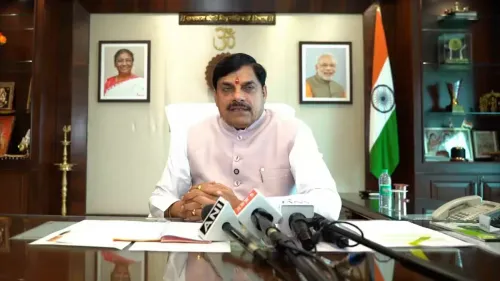
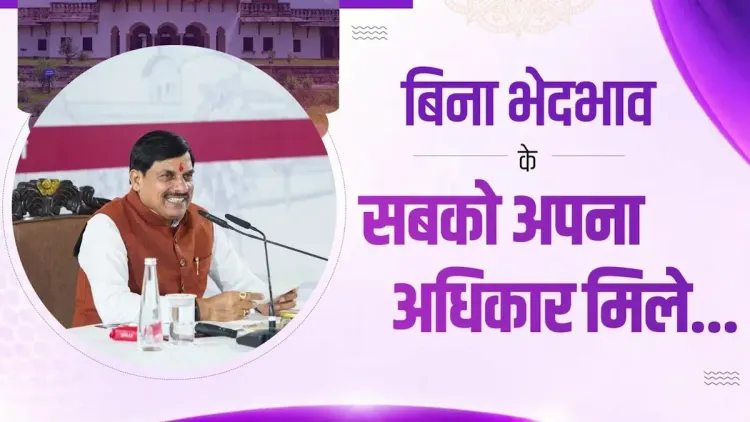
Addressing the public through the official CMO handle, Dr. Mohan Yadav stated: 'Samaanta Bharatiya sanskriti aur sanskaron ka mool aadhar rahi hai' ('Equality has always been the core foundation of Indian culture and values'). He added that the government's resolve is to ensure that 'every citizen receives equal rights and no one faces discrimination of any kind.' The Chief Minister described the Uniform Civil Code as an important step in fulfilling this commitment.
The statement was made under the hashtags #CabinetMP and #UCC_MP, signalling that the discussion has moved into the domain of cabinet-level deliberation within Madhya Pradesh.
Policy Backdrop
Article 44 of the Indian Constitution, part of the Directive Principles of State Policy since 1950, directs the State to secure a Uniform Civil Code for all citizens. The provision has long remained aspirational, with personal laws governing marriage, divorce, inheritance, and adoption varying across religious communities.
Uttarakhand became the first state in India to enact a UCC law in February 2024, setting a legislative precedent for other BJP-governed states. The Bharatiya Janata Party (BJP) has carried UCC as a long-standing manifesto commitment, and Madhya Pradesh — governed by the BJP continuously since 2003 — has consistently aligned with central policy priorities on such issues.
Several BJP-ruled states have since signalled intent to study or introduce similar legislation, framing the UCC as an instrument of gender equality and national integration.
Stakeholders and Impact
Proponents of the UCC argue that a common civil code would eliminate discriminatory practices that persist under religion-specific personal laws, particularly those affecting women's rights in matters of marriage, divorce, and inheritance. Dr. Yadav's statement explicitly invokes the principle that 'no citizen should face discrimination of any kind,' placing gender and social equity at the centre of the argument.
Critics and representatives of minority communities, however, have raised concerns about cultural autonomy and the potential erosion of community-specific practices. Opposition voices have consistently argued that such legislation must be preceded by broad public consultation and parliamentary debate.
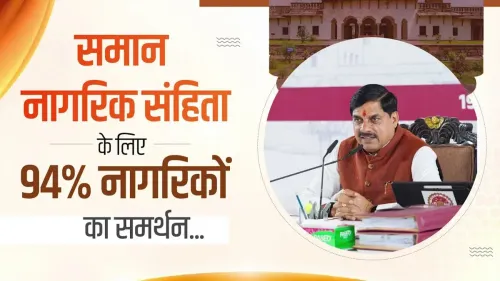
The use of #UCC_MP and #CabinetMP in the post indicates that the subject is being actively deliberated at the state cabinet level, making the development significant for all citizens of Madhya Pradesh — a state with a population of over 8.5 crore.
What's Next
The immediate focus will be on whether the Madhya Pradesh government introduces a formal UCC bill in the state assembly, and whether it is referred to a select committee or opened for public consultation — a process that Uttarakhand undertook before passing its own legislation. Any draft bill's specific provisions on marriage, divorce, inheritance, and adoption will determine the depth of its social and legal impact.
With the Chief Minister personally anchoring the UCC debate in the language of constitutional equality and cultural identity, Madhya Pradesh appears to be building the political groundwork for a legislative push that could reshape civil law for millions of its citizens.
Point of View
The BJP in MP is attempting to broaden the code's appeal beyond its traditional support base. This mirrors the strategy used in Uttarakhand, where cultural and gender-equity framing helped neutralise some opposition before the bill's passage. If Madhya Pradesh proceeds, it would mark a significant expansion of state-level UCC adoption and could intensify pressure on the Centre to pursue a national framework.
NationPress
20 Jul 2026
Frequently Asked Questions
What is the Uniform Civil Code and why is Madhya Pradesh discussing it?
The Uniform Civil Code is a proposed common set of civil laws — covering marriage, divorce, inheritance, and adoption — applicable to all citizens regardless of religion. Madhya Pradesh CM Dr. Mohan Yadav has described it as a step toward ensuring equal rights for every citizen, with the state's cabinet actively deliberating the matter as of July 2026.
Has any Indian state already implemented the Uniform Civil Code?
Yes. Uttarakhand became the first state in India to enact a UCC law in February 2024, establishing a legislative precedent that several other BJP-governed states, including Madhya Pradesh, are now studying.
What does Article 44 of the Indian Constitution say about UCC?
Article 44, part of the Directive Principles of State Policy, directs the State to secure a Uniform Civil Code for all citizens across India. It has been part of the Constitution since 1950 but has not yet been implemented at the national level.
What are the main arguments for and against the Uniform Civil Code in India?
Proponents argue the UCC would eliminate discriminatory practices in religion-specific personal laws, particularly those affecting women's rights. Critics, including minority community representatives, raise concerns about cultural autonomy and argue that broad public consultation must precede any legislation.
What happens next for UCC in Madhya Pradesh?
The next expected step is the introduction of a formal UCC bill in the Madhya Pradesh state assembly, potentially followed by referral to a select committee or a public consultation process, similar to the legislative path taken by Uttarakhand.