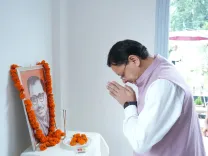
CM Mohan Yadav pays tribute to Deendayal Upadhyay on 110th birth anniversary
Synopsis
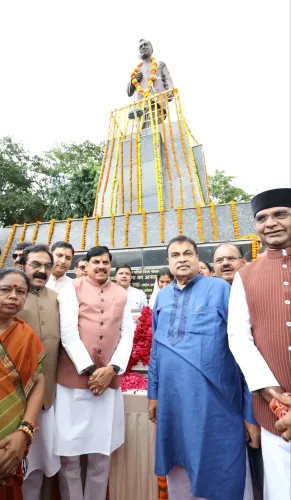
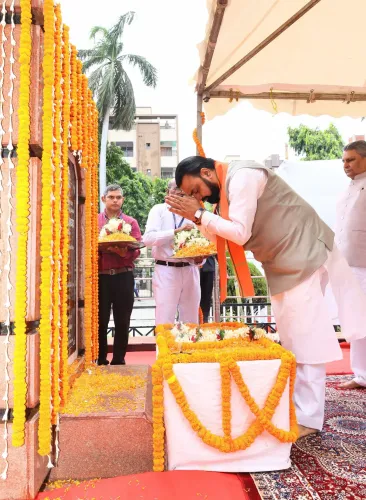
Madhya Pradesh CM Dr. Mohan Yadav and Union Minister Nitin Gadkari marked Pandit Deendayal Upadhyay's 110th birth anniversary at Lalghati, Bhopal, with a wreath-laying and a mango sapling planted under the Ek Ped Maa Ke Naam campaign on 25 September 2026.
Key Takeaways
Pandit Deendayal Upadhyay's 110th birth anniversary was observed on 25 September 2026 at his statue in Lalghati, Bhopal .
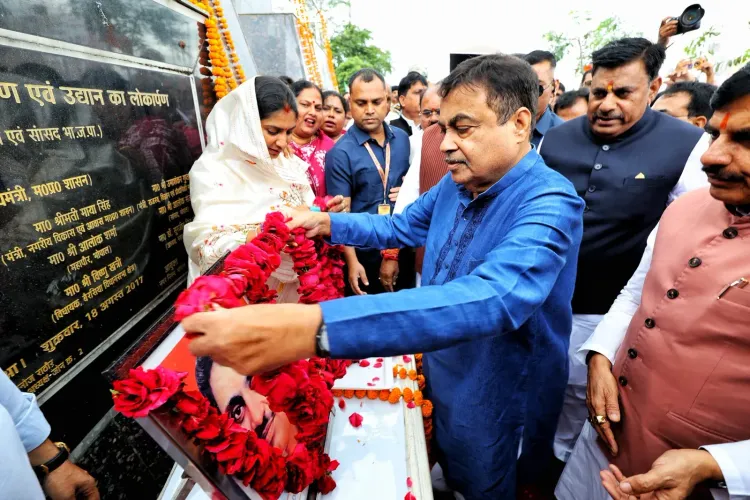
Mohan Yadav and Union Minister Nitin Gadkari jointly offered floral tributes, marking both state and central BJP participation.
Yadav reaffirmed Upadhyay's Antyodaya principle — uplifting the last person in society — as the guiding philosophy for public service.
A mango sapling was planted under the Ek Ped Maa Ke Naam national tree-plantation campaign, launched in 2024 .
Upadhyay's Ekatma Manavvad (Integral Humanism) remains the stated ideological foundation of the BJP and its welfare-scheme framework.
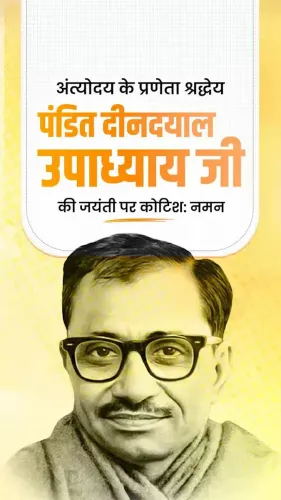
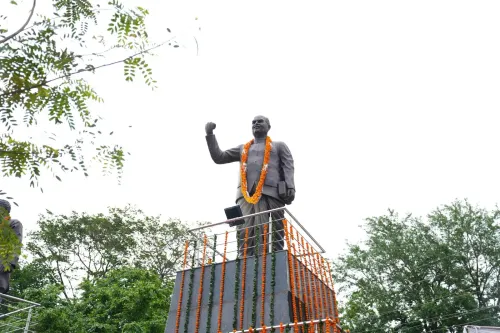
On the 110th birth anniversary of Pandit Deendayal Upadhyay, Madhya Pradesh Chief Minister Dr. Mohan Yadav joined Union Road Transport and Highways Minister Nitin Gadkari at Lalghati, Bhopal, on 25 September 2026, to garland the ideologue's statue and renew a pledge that still shapes BJP governance decades after his passing.
Antyodaya at Lalghati: what the wreath-laying meant
Standing before Upadhyay's statue at Lalghati, Dr. Yadav invoked the philosopher's signature concept of Antyodaya — the commitment to lift the person standing at the very last row of society. 'His philosophy of Antyodaya continuously guides us to work for the upliftment of the person at the last row of society and steadily directs our resolve of public service,' the Chief Minister wrote on X. The moment was not merely ceremonial. For BJP-ruled governments, Upadhyay's birth anniversary on 25 September functions as an annual ideological recalibration — a public reminder that every welfare scheme, road laid, and hospital opened is supposed to trace back to this foundational idea of the last person first.
Nitin Gadkari's presence alongside the Chief Minister amplified the occasion's signal: central and state leadership jointly owning the Upadhyay legacy, bridging New Delhi and Bhopal on a day the party treats as its philosophical founding moment.
Ekatma Manavvad: the idea that outlasted its author
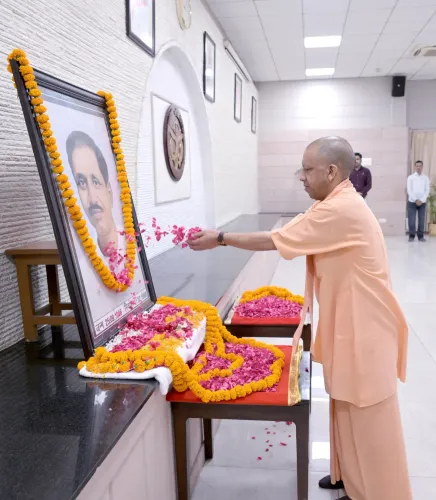
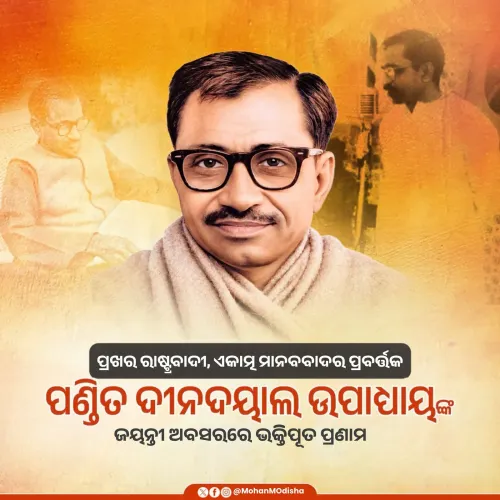
Pandit Deendayal Upadhyay was born on 25 September 1916 and went on to articulate Ekatma Manavvad — Integral Humanism — as an alternative to both Western capitalism and Soviet communism, arguing that India's path had to be rooted in the holistic development of the human being within a civilisational continuum. He became the ideological lodestar of the Jana Sangh, the precursor to the BJP, and his Antyodaya framework was later formalized into government policy — most visibly in the Antyodaya Anna Yojana food-security scheme and in numerous state-level welfare programmes that explicitly invoke his name.
Since 1968, BJP leaders and governments have marked his birth anniversary with public homage. The consistency is itself the message: this is not nostalgia but operating philosophy.
One tree in a mother's name — ideology meets environment
Dr. Yadav added a second act to the occasion: planting a mango sapling under the Ek Ped Maa Ke Naam (One Tree in Mother's Name) campaign. Launched nationally in 2024, the initiative encourages every citizen to plant a tree as a tribute to their mother, weaving together environmental conservation and personal devotion into a single symbolic gesture.
The pairing was deliberate. Combining an ideological tribute with a green-action campaign extends the anniversary's reach beyond party faithful — it ties Upadhyay's memory to a live, visible public movement, and gives state governments a concrete deliverable to report on a day that could otherwise remain purely symbolic.
On the 110th anniversary of the man who told India to measure progress by its most forgotten citizen, the Chief Minister of Madhya Pradesh laid flowers, planted a tree, and asked a question that Upadhyay first posed in 1965 — one that governance in 2026 is still being tested against.
Point of View
Used to frame every governance act as a fulfilment of Antyodaya. The presence of both a Chief Minister and a senior Union Cabinet minister at a single statue-garlanding in Bhopal signals deliberate coordination between state and central leadership in managing the party's philosophical brand. Pairing the tribute with the Ek Ped Maa Ke Naam plantation broadens the event's audience beyond the ideological core, linking a foundational thinker to a contemporary mass campaign — a pattern that turns anniversaries into governance optics.
NationPress
25 Sept 2026
Frequently Asked Questions
Who was Pandit Deendayal Upadhyay and why is he celebrated on 25 September?
Pandit Deendayal Upadhyay was born on 25 September 1916 and is revered as the founding ideologue of the BJP's predecessor, the Jana Sangh. He propounded Ekatma Manavvad (Integral Humanism) and the Antyodaya principle of prioritising the poorest citizen in governance. His birth anniversary is observed annually by BJP leaders and governments as an ideological milestone.
What is Antyodaya philosophy and how does it relate to Indian government schemes?
Antyodaya means 'upliftment of the last person' and was central to Deendayal Upadhyay's thinking. It has been formally adopted in schemes such as the Antyodaya Anna Yojana food-security programme and is regularly invoked by BJP governments as the philosophical basis for welfare policies.
What is the Ek Ped Maa Ke Naam campaign?
The Ek Ped Maa Ke Naam (One Tree in Mother's Name) campaign is a national tree-plantation initiative launched in 2024 that encourages citizens to plant a tree as a tribute to their mothers, combining environmental conservation with a personal act of honour.
Where is Deendayal Upadhyay's statue in Bhopal?
The statue at which CM Dr. Mohan Yadav and Union Minister Nitin Gadkari offered tributes is located at Lalghati, Bhopal , in Madhya Pradesh.
What is Ekatma Manavvad or Integral Humanism?
Ekatma Manavvad , or Integral Humanism, is the political and economic philosophy articulated by Pandit Deendayal Upadhyay , proposing a distinctly Indian development path centred on the holistic wellbeing of the individual within a civilisational and societal continuum, as an alternative to both Western capitalism and communism.