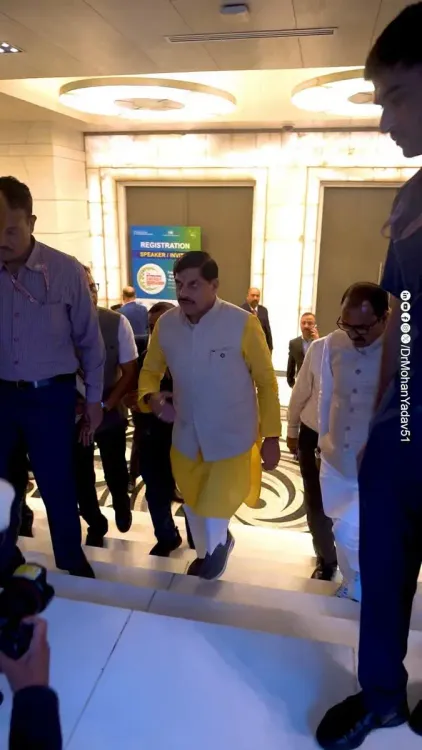
CM Mohan Yadav pitches MP as India's green energy hub at RE Expo 2026
Synopsis
Madhya Pradesh CM Dr. Mohan Yadav addressed the 7th International Renewable Energy Conference in New Delhi, highlighting a record ₹2.14/unit solar tariff at the Agar-Shajapur-Neemuch project and green power supply to Indian Railways across eight states, positioning MP as India's clean energy investment hub.
Key Takeaways
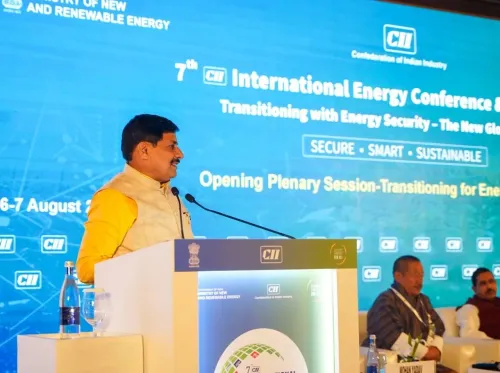
Madhya Pradesh presented its green energy model at the 7th International Renewable Energy Conference and Exhibition 2026 in New Delhi on August 6, 2026 .
The Agar-Shajapur-Neemuch solar project achieved a record-low solar tariff of ₹2.14 per unit .
The project supplies green energy to Indian Railways across eight states .
The state has implemented policies covering renewable energy, pumped hydro storage, and biomass over the past two years.
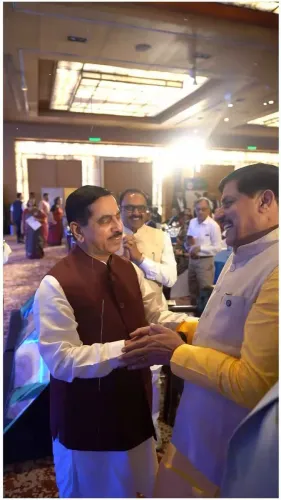
Union Minister Pralhad Joshi appeared alongside CM Dr.
Mohan Yadav at the conference.
MP aims to become India's 'leading centre' for clean energy, energy security, and sustainable development.
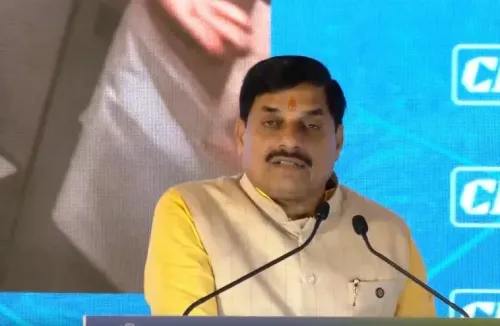
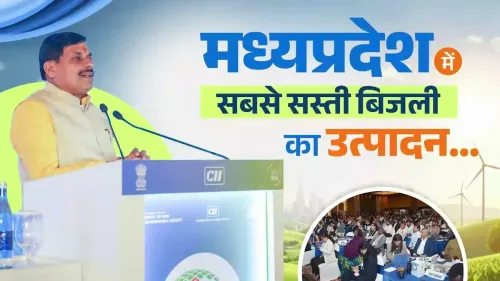
A record solar tariff of ₹2.14 per unit — and a promise to power Indian Railways across eight states — is how Madhya Pradesh Chief Minister Dr. Mohan Yadav chose to open his state's pitch at the 7th International Renewable Energy Conference and Exhibition 2026 in New Delhi on Thursday, August 6.
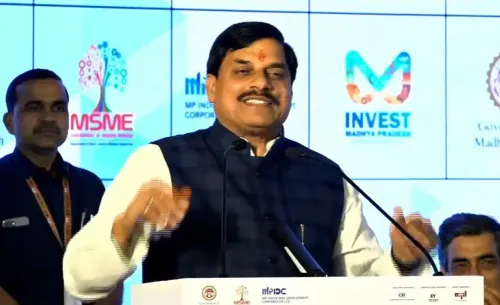
Speaking alongside Union Minister Pralhad Joshi, Dr. Yadav declared that Madhya Pradesh is on course to become the country's 'leading centre' (अग्रणी केंद्र) for clean energy, energy security, and sustainable development. The audience at the seventh edition of India's flagship renewable energy forum heard a state government making a direct play for investor attention — backed by numbers.
The ₹2.14 tariff that turns heads
The headline figure from the Chief Minister's address is the record-low solar tariff achieved at the Agar-Shajapur-Neemuch solar project. At ₹2.14 per unit, it ranks among the most competitive solar bids in the country's history — a signal to private developers that Madhya Pradesh can deliver bankable, low-cost renewable power at scale. The project is already supplying green energy to Indian Railways across eight states, giving the output an immediate, large-scale off-taker with a creditworthy balance sheet. That Railways connection matters. A single institutional buyer consuming power across multiple states removes one of solar developers' biggest anxieties: payment risk. It also aligns the project with the national push to decarbonise one of the world's largest rail networks.Two years of policy groundwork
The low tariff did not emerge from thin air. Dr. Yadav pointed to two years of deliberate policy-building: the state government has rolled out frameworks covering renewable energy, pumped hydro energy storage, and biomass — a trio designed to address solar's intermittency problem while opening a second revenue stream from agricultural waste. Pumped hydro, in particular, is a capital-intensive but strategically vital technology that few Indian states have moved to regulate proactively. Madhya Pradesh's solar story has roots going back to the Rewa Ultra Mega Solar project of the mid-2010s, which itself set a then-record tariff and supplied power to the Delhi Metro. The Agar-Shajapur-Neemuch project follows that template — a large, government-backed solar park that uses competitive bidding to drive down costs — but the policy architecture around it is now broader and more explicitly storage-linked.Why states compete at forums like this
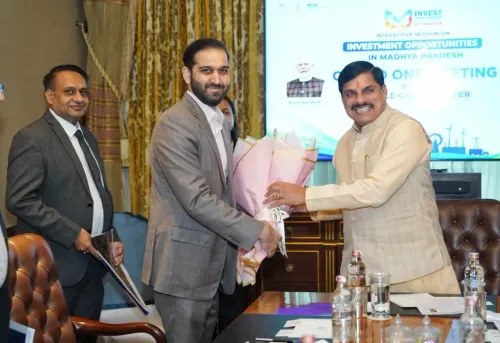
The 7th International Renewable Energy Conference and Exhibition is precisely the arena where sub-national governments audition for global and domestic capital. With India committed to ambitious non-fossil fuel targets, states that can show investor-friendly policies, grid connectivity, and proven tariff benchmarks hold a structural advantage in attracting the next wave of clean-energy investment. Madhya Pradesh's appearance — with the Union Minister on the same stage — signals Centre-state alignment, which is itself a risk-reduction signal for investors. The road from conference stage to signed power purchase agreements is never automatic. But a record tariff, a Railways off-take deal, and three new policy frameworks give Madhya Pradesh a credible opening argument.Point of View
He is doing something politically smart: converting an abstract policy agenda into a concrete, investable story. The Centre-state optics — Union Minister Pralhad Joshi on the same stage — also signal that Madhya Pradesh's green energy push carries federal backing, reducing political risk for private capital. If the pumped hydro and biomass frameworks deliver comparable results, MP could genuinely shift from a coal-dependent energy economy to a diversified clean-power exporter within the decade.
NationPress
6 Aug 2026
Frequently Asked Questions
What is the Agar-Shajapur-Neemuch solar project?
The Agar-Shajapur-Neemuch solar project is a large-scale solar initiative in Madhya Pradesh that achieved a record-low tariff of ₹2.14 per unit and supplies green energy to Indian Railways across eight states.
What did CM Mohan Yadav announce at RE Expo 2026?
CM Dr. Mohan Yadav highlighted Madhya Pradesh's record solar tariff of ₹2.14 per unit, its green energy supply to Indian Railways, and new policies on renewable energy, pumped hydro storage, and biomass at the 7th International Renewable Energy Conference in New Delhi.
What is India's record low solar tariff?
The Agar-Shajapur-Neemuch project in Madhya Pradesh secured a tariff of ₹2.14 per unit, which CM Mohan Yadav cited as a record-low solar tariff at the RE Expo 2026 conference.
How is Indian Railways getting green energy from Madhya Pradesh?
Indian Railways receives green energy through the Agar-Shajapur-Neemuch solar project in Madhya Pradesh, with supply extended across eight states under the state's clean energy framework.
What new energy policies has Madhya Pradesh introduced?
Over the past two years, Madhya Pradesh has implemented policies covering renewable energy, pumped hydro energy storage, and biomass to attract investment and promote clean energy innovation.