CM Mohan Yadav Pushes UCC as MP Takes Step Forward
Synopsis
Madhya Pradesh Chief Minister Dr. Mohan Yadav declared on 22 July 2026 that India needs a secular civil code and that Madhya Pradesh is taking concrete steps toward one, speaking during a Vidhan Sabha session — signalling a possible second state-level UCC enactment after Uttarakhand's 2024 law.
Key Takeaways
Mohan Yadav stated on 22 July 2026 that Madhya Pradesh is taking 'concrete steps' toward a secular civil code.
The announcement was made during a Madhya Pradesh Vidhan Sabha session, giving it formal legislative weight.
Article 44 of the Constitution of India has directed the State to secure a uniform civil code since 1950 .
Uttarakhand became the first state to pass a UCC law in February 2024 , setting a precedent for BJP-ruled states.
The UCC has been a stated BJP manifesto commitment since at least 2014 .
If enacted, Madhya Pradesh would become the second state in independent India to have a Uniform Civil Code law.
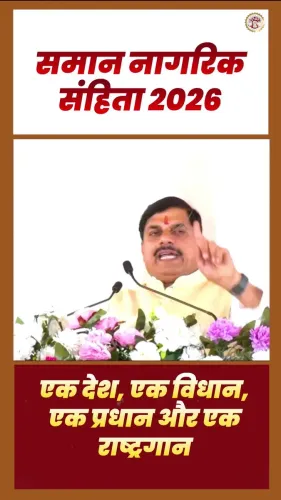
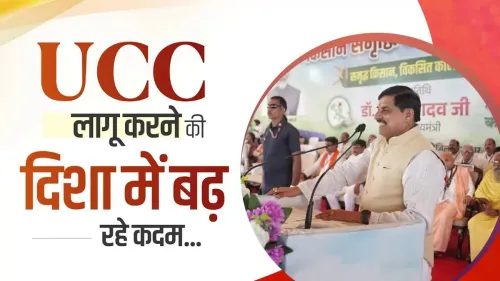
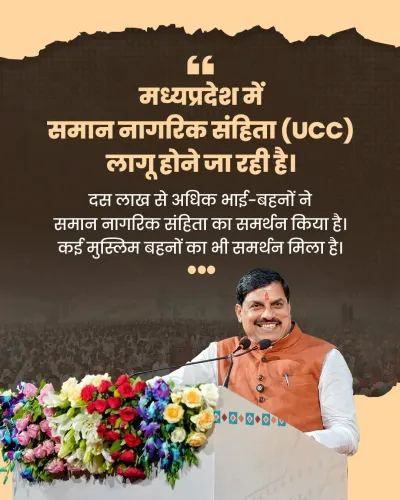
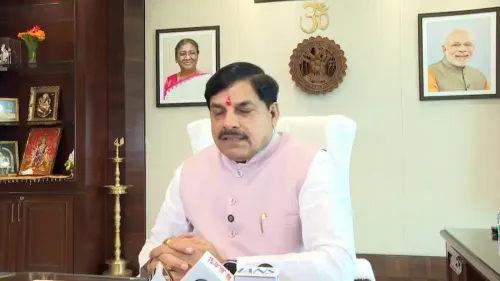
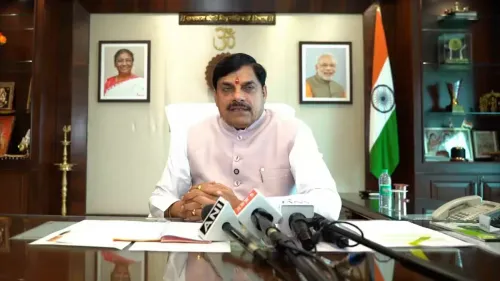
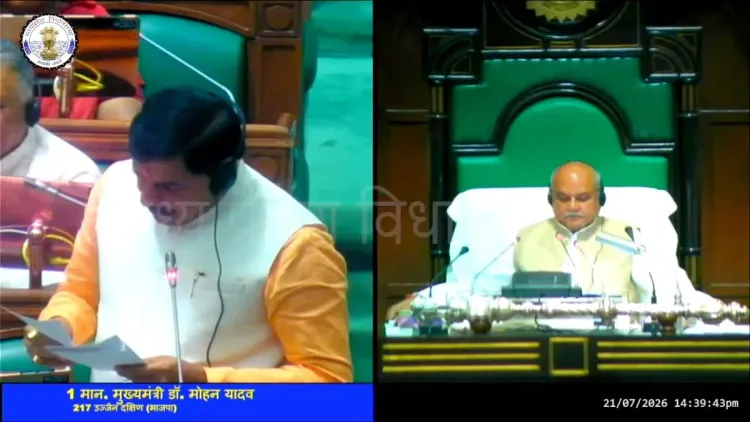
Madhya Pradesh Chief Minister Dr. Mohan Yadav declared on Wednesday, 22 July 2026 that the country should have a secular civil code, announcing that Madhya Pradesh is taking concrete steps in that direction — a statement made from the floor of the Madhya Pradesh Vidhan Sabha.
Posting on X with the hashtag #VidhanSabhaMP, the Chief Minister wrote: 'देश में एक सेक्युलर सिविल कोड होना चाहिए और मध्यप्रदेश आज उस दिशा में ठोस कदम बढ़ा रहा है' — translated as: 'The country should have a secular civil code, and Madhya Pradesh is today taking concrete steps in that direction.'
Context
The Uniform Civil Code (UCC) refers to a proposed common framework of personal laws governing marriage, divorce, inheritance, and adoption for all citizens regardless of religion. The idea is rooted in Article 44 of the Constitution of India (1950), a Directive Principle that directs the State to endeavour to secure a uniform civil code throughout the territory of India.
The UCC has been a long-standing ideological commitment of the Bharatiya Janata Party (BJP), featuring prominently in its national election manifestos of 2014 and 2019. Dr. Yadav's statement signals that Madhya Pradesh, governed by the BJP since 2003 with brief interruptions, is now moving from electoral commitment to legislative action.
Policy Backdrop
Uttarakhand became the first state in independent India to pass a UCC law when its Assembly approved the Uniform Civil Code Bill in February 2024 under a BJP government. That legislation set a precedent for other BJP-ruled states to initiate their own legislative or committee-level processes.
Dr. Yadav's use of the phrase 'secular civil code' — rather than simply 'uniform civil code' — is notable. It frames the proposal as a gender-justice and national-integration measure rather than a religiously motivated one, a framing consistent with how BJP leaders have sought to broaden the proposal's appeal. The Vidhan Sabha session provides a formal legislative platform for any bill introduction or committee announcement.
Stakeholders and Impact
Women across religious communities stand to be the most directly affected stakeholders, as a UCC would aim to standardise protections around marriage age, divorce rights, and inheritance regardless of which personal law currently governs them. Religious communities — particularly those governed by distinct personal law systems — have historically been the most vocal in debates over the proposal.
Madhya Pradesh has a population of over 8.5 crore and is among the largest BJP-governed states. Any legislative move here would carry significant symbolic and practical weight, potentially influencing the pace at which other states follow Uttarakhand's 2024 example.
What's Next
The immediate focus will be on what specific legislative or administrative steps Madhya Pradesh tables in the current Vidhan Sabha session — whether a full bill, a draft committee, or a preliminary resolution. The phrasing 'concrete steps' suggests action beyond mere intent, though the precise nature of those steps will become clear as the session proceeds.
If Madhya Pradesh advances a UCC bill, it would mark the second state-level enactment of such legislation in India, adding momentum to what appears to be a coordinated BJP state-level strategy ahead of any potential national legislation. Other BJP-ruled states are likely to be watching closely.
Point of View
' the Chief Minister is consciously repositioning the UCC debate away from religious optics and toward gender justice and constitutional obligation, a framing designed to pre-empt minority-community opposition. This follows a visible pattern of BJP state governments using Uttarakhand's 2024 law as a template to test incremental implementation at the state level, potentially building political and legal precedent ahead of any national push. The timing — mid-2026, well into the BJP's third national term — suggests the party is now prepared to convert a decades-old manifesto promise into concrete statute, state by state.
NationPress
22 Jul 2026
Frequently Asked Questions
What is the Uniform Civil Code and why is Madhya Pradesh in the news for it?
The Uniform Civil Code (UCC) is a proposed common set of personal laws on marriage, divorce, inheritance and adoption applicable to all citizens regardless of religion. Madhya Pradesh is in the news because CM Dr. Mohan Yadav announced on 22 July 2026 that the state is taking concrete steps toward enacting such a code.
Which state first passed a Uniform Civil Code law in India?
Uttarakhand was the first state to pass a Uniform Civil Code law in independent India, with its Assembly approving the bill in February 2024 under a BJP government.
What does Article 44 of the Indian Constitution say about UCC?
Article 44 is a Directive Principle of State Policy that directs the State to endeavour to secure a uniform civil code for all citizens throughout the territory of India. It has been part of the Constitution since 1950 .
What did CM Mohan Yadav say about the secular civil code?
CM Dr. Mohan Yadav said: 'The country should have a secular civil code, and Madhya Pradesh is today taking concrete steps in that direction,' posting the statement on X during a Vidhan Sabha session on 22 July 2026 .
How does the Madhya Pradesh UCC move fit into BJP's national policy?
The BJP has committed to implementing a Uniform Civil Code in its national election manifestos since 2014 . Multiple BJP-ruled states have initiated legislative processes after Uttarakhand's 2024 law, and Madhya Pradesh's move appears to be part of a coordinated state-level strategy to build precedent ahead of potential national legislation.