CM Nitish Orders Bihar Policy Body on NITI Aayog Lines
Synopsis
Bihar Chief Minister Nitish Kumar has ordered the formation of a state planning commission on the lines of the central government's NITI Aayog. The directive, issued in a high-level meeting, aims to give structured, evidence-based direction to Bihar's development priorities and strengthen coordination across state departments.
Key Takeaways
Bihar CM Nitish Kumar has directed the creation of a new state-level planning commission.
The body is to be modelled on the central government's NITI Aayog , established in 2015 .
The directive was issued during a high-level meeting and communicated via the official Chief Minister's Office account on 4 July 2026 .
The commission is intended to provide new momentum and effective direction to Bihar's development agenda.
Details including the commission's name, composition, leadership, and mandate are yet to be formally announced.
The move follows a broader national pattern of states restructuring sub-national planning institutions after the shift from the Planning Commission to NITI Aayog.
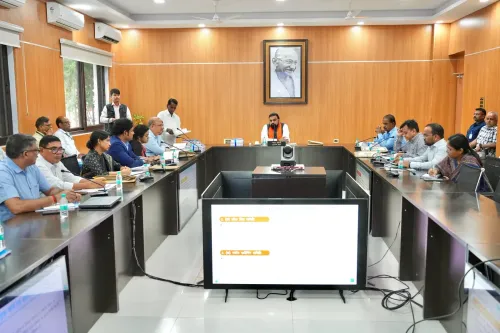
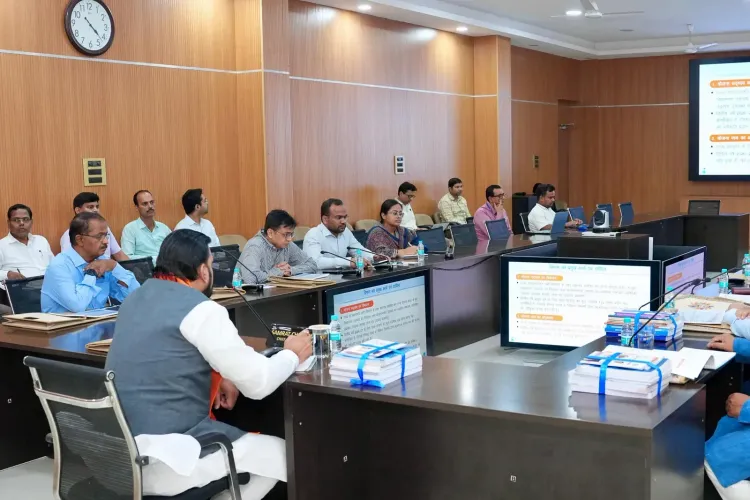
The Chief Minister's Office of Bihar announced on Saturday, 4 July 2026 that Chief Minister Nitish Kumar has directed the formation of a new state-level planning commission modelled on the central government's NITI Aayog, with the aim of giving fresh momentum and effective direction to Bihar's development agenda.
The directive was issued during a high-level meeting. The official post quoted the Chief Minister as instructing: 'kendra sarkar ke NITI Aayog ki tarz par Bihar mein bhi ek aayog ka gathan kiya jaye' — 'a commission be constituted in Bihar on the lines of the central government's NITI Aayog, so that the state's development can receive new momentum and effective direction.'
Context
India's NITI Aayog was established in 2015 by the central government to replace the Planning Commission, which had overseen the country's five-year plans since independence before being dissolved in 2014. The shift was designed to enable more flexible, state-centric development strategies and promote cooperative federalism. Chief Minister Nitish Kumar has over his tenure pursued a series of institutional and infrastructure reforms in Bihar, and this directive signals a continuation of that governance-first approach.
Policy Backdrop
Several Indian states have periodically created or restructured sub-national planning bodies to mirror or adapt central models, particularly following the transition from the Planning Commission to NITI Aayog. The move reflects a broader national trend toward evidence-based, data-driven policymaking at the state level. A Bihar-specific commission would allow the state to set its own strategic priorities, coordinate across departments, and engage directly with central planning frameworks.
Bihar is among India's fastest-growing states by GDP growth rate in recent years, yet continues to face significant development challenges in per-capita income, infrastructure, and human development indices. A dedicated planning body is intended to provide institutional continuity and analytical capacity to address these gaps systematically.
Stakeholders and Impact
State planning officials and heads of government departments are the immediate stakeholders, as the new commission is expected to coordinate policy inputs across ministries and align state schemes with central programmes. For citizens, the body could translate into more targeted delivery of welfare and infrastructure projects. Economists and governance experts who have long advocated for stronger sub-national planning institutions are likely to view the announcement as a positive step toward structured development governance in Bihar.
The commission's mandate, once finalised, may also shape how Bihar positions itself in negotiations with the central government over resource allocation, special category status debates, and flagship scheme implementation.
What's Next
The critical details — the commission's formal name, composition, leadership, and specific mandate — are yet to be announced. Observers will watch for any legislative or executive notification that formally constitutes the body, as well as budgetary allocations that may accompany it in upcoming state assembly sessions. The first concrete test of the commission's effectiveness will be the policy frameworks and development benchmarks it sets once operational.
Point of View
Not merely an administrative reshuffle. By explicitly invoking the NITI Aayog model, the state is aligning itself with the post-Planning Commission philosophy of flexible, outcome-oriented governance — while simultaneously asserting Bihar's need for its own strategic planning apparatus. The move fits a longer arc in which Nitish Kumar has used institutional creation to project governance credibility, particularly ahead of electoral cycles. Whether the commission delivers substantive policy outputs or becomes a largely ceremonial body will depend entirely on the mandate, calibre of leadership, and resources assigned to it.
NationPress
5 Jul 2026
Frequently Asked Questions
What is the new commission Bihar CM Nitish Kumar has ordered?
Bihar CM Nitish Kumar has directed the formation of a state-level planning commission modelled on the central government's NITI Aayog, intended to provide strategic direction and new momentum to Bihar's development programmes.
What is NITI Aayog and why is Bihar creating a similar body?
NITI Aayog is India's national policy think tank, set up in 2015 to replace the Planning Commission. Bihar is creating a similar body to strengthen evidence-based planning and improve coordination of state development schemes.
When did Nitish Kumar give the order for the Bihar planning commission?
The directive was issued at a high-level meeting and announced by the Chief Minister's Office on 4 July 2026.
What will the Bihar planning commission do?
The commission is expected to set development priorities, coordinate across state government departments, and align Bihar's schemes with central government programmes, similar to the role NITI Aayog plays at the national level.
Has any other Indian state created a body like NITI Aayog?
Yes, several Indian states have periodically created or restructured sub-national planning institutions modelled on central bodies, especially after the transition from the Planning Commission to NITI Aayog in 2015.