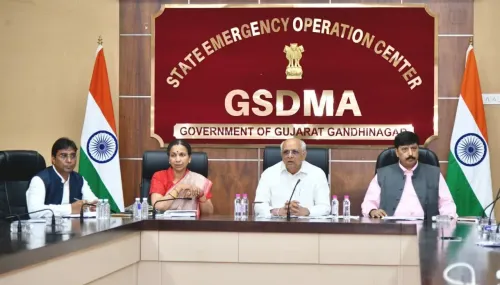
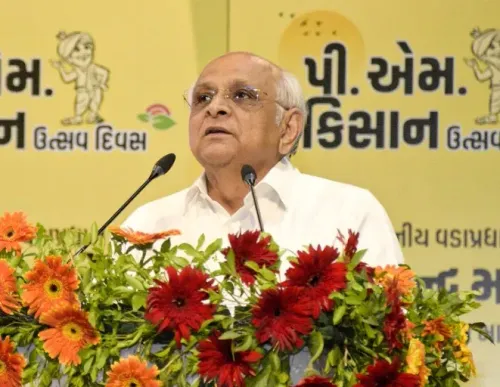
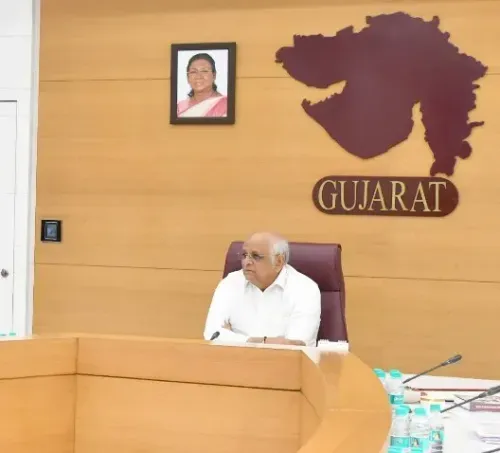
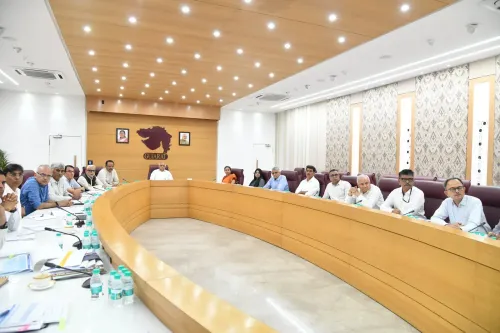
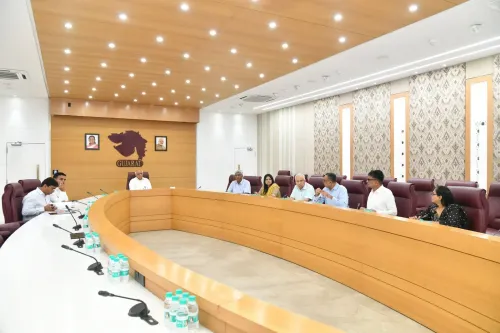
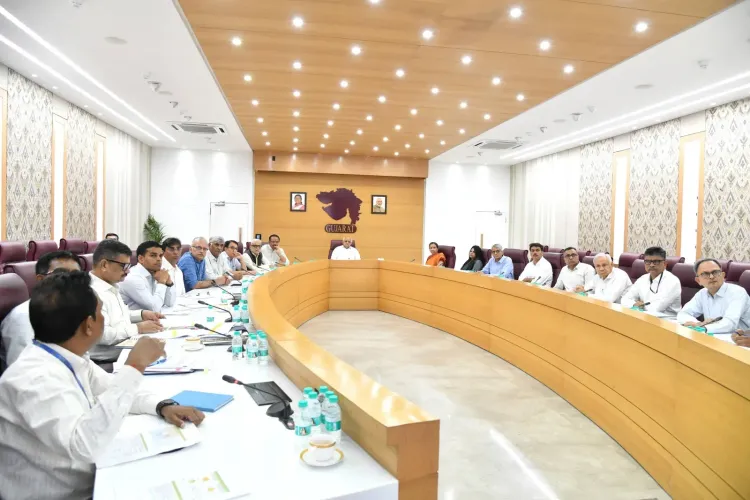
CM Bhupendra Patel chairs El Niño review meet in Gandhinagar
Synopsis
Gujarat CM Bhupendra Patel chaired a high-level El Niño review in Gandhinagar on 18 June 2026, expanding Narmada pipeline lake-filling coverage, deploying AI-based farm advisories to over 50 lakh farmers, and confirming a two-year fodder buffer for livestock across the state.
Key Takeaways
CM Bhupendra Patel chaired a high-level El Niño preparedness review in Gandhinagar on 18 June 2026 .
The Narmada pipeline lake-filling radius has been expanded from 3 km to 7 km to widen drinking water access.
Directives issued to fill 300-plus lakes in North Gujarat and multiple Saurashtra dams urgently under the Sujalam Sufalam Yojana .
The AI-based Krishi Pragati Portal is providing live weather and crop advisories to more than 50 lakh farmers on their mobiles.
State fodder buffer stocks are sufficient for up to two years for livestock across Gujarat.
Historical data cited: Gujarat recorded 117% normal rainfall even during strong El Niño years in 2006 and 2023 .
Gujarat Chief Minister Bhupendra Patel on Thursday, 18 June 2026 chaired a high-level review meeting in Gandhinagar to assess the state's preparedness against the potential challenges of El Niño and to finalise advance contingency plans covering drinking water, agriculture, and livestock.
Context
Posting in Gujarati on X, CM Patel said the protection of Gujarat na nagrikо, khedutо ane pashudhан (Gujarat's citizens, farmers, and livestock) is the government's highest priority. The meeting reviewed multiple sectors simultaneously — water supply, crop planning, and fodder stocks — signalling a whole-of-government approach ahead of the 2026 kharif season.
The chief minister noted that historical data should temper alarm: in 2006 and 2023, Gujarat received 117 per cent of normal rainfall even during intense El Niño years. He urged citizens and farmers not to panic or be misled by rumours, stating that the administration is fully prepared to handle every situation.
Policy Backdrop
A key decision announced at the meeting is the expansion of the Narmada pipeline lake-filling radius from 3 km to 7 km, allowing a significantly wider network of water bodies to be topped up using Narmada waters. Under the Sujalam Sufalam Yojana, directives have been issued to urgently fill more than 300 lakes in North Gujarat and various dams in Saurashtra with Narmada water before the monsoon arrives.
On the agriculture front, the government stated that adequate seed and fertiliser stocks are in place for Kharif 2026. A dedicated Aakasмik Pak Ayojan (Contingency Crop Plan) has been prepared to guide farmers, and the AI-based Krishi Pragati Portal is delivering live weather updates and crop advisories directly to the mobiles of more than 50 lakh farmers.
The Sujalam Sufalam Yojana has been a cornerstone of Gujarat's inter-basin water management since the Sardar Sarovar Dam on the Narmada became fully operational, enabling large-scale seasonal transfers to water-scarce regions of North Gujarat and Saurashtra.
Stakeholders and Impact
Farmers across North Gujarat and Saurashtra — regions historically vulnerable to rainfall deficits — stand to benefit most immediately from the expanded lake-filling directive. Livestock owners across the state have been assured that existing fodder buffer stocks are sufficient for up to two years, reducing the risk of distress sales or migration of cattle during a potential dry spell.
The Revenue Department has been instructed to maintain 24-hour surveillance of the ground situation, creating a real-time feedback loop between district administrations and the state government. The Krishi Pragati Portal's direct-to-mobile advisory system is intended to cut through misinformation and give farmers science-based guidance on crop choices if rainfall proves erratic.
What's Next
The immediate focus will be on executing the lake-filling targets under Sujalam Sufalam before the onset of the southwest monsoon, with the expanded 7-km pipeline radius serving as the operational benchmark. The Revenue Department's round-the-clock monitoring cell will be the key early-warning mechanism if conditions deteriorate. Farmers and officials alike will watch whether the Krishi Pragati Portal can sustain real-time advisory coverage across its stated base of over 50 lakh registered users through the critical June-September window.
Point of View
The administration is pre-emptively managing public anxiety and limiting the space for opposition narratives around drought mismanagement.
NationPress
18 Sept 2026
Frequently Asked Questions
What is El Niño and how does it affect Gujarat's monsoon?
El Niño is a periodic warming of Pacific Ocean surface temperatures that can weaken the Indian monsoon, raising drought risk in parts of the country. However, Gujarat has historically seen variable outcomes: the state recorded 117 per cent of normal rainfall even during strong El Niño years in 2006 and 2023, meaning the phenomenon does not automatically translate into drought in Gujarat.
What is the Sujalam Sufalam Yojana?
Sujalam Sufalam Yojana is a Gujarat government water conservation scheme that uses Narmada river water to fill lakes, tanks, and dams across the state, particularly in water-scarce North Gujarat and Saurashtra. CM Patel has now directed that more than 300 lakes in North Gujarat and various Saurashtra dams be filled urgently under this scheme.
What is the Krishi Pragati Portal?
The Krishi Pragati Portal is an AI-based platform launched by the Gujarat government to deliver live weather forecasts and crop advisory guidance directly to farmers' mobile phones. The government states it is currently reaching more than 50 lakh farmers across the state.
How much fodder stock does Gujarat have for livestock during a possible drought?
According to CM Patel's statement at the 18 June 2026 review meeting, Gujarat currently holds a fodder buffer stock sufficient to last up to two years, providing a significant cushion against any potential feed shortage during an El Niño-affected season.
What is the new Narmada pipeline lake-filling distance limit announced by CM Patel?
CM Patel announced that the permissible radius for filling lakes using the Narmada pipeline has been expanded from 3 km to 7 km, allowing a much larger number of water bodies to receive Narmada water ahead of the 2026 monsoon season.