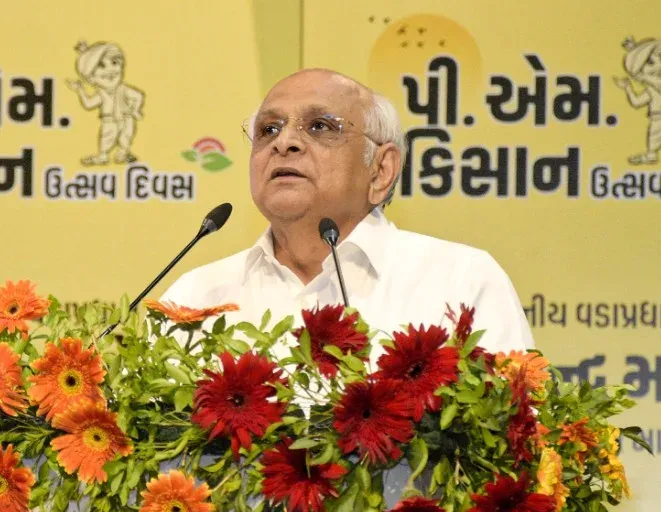
Gujarat CM Bhupendra Patel urges scientific farming amid El Niño rainfall deficit
Synopsis
With El Niño threatening below-normal monsoon rainfall, Gujarat CM Bhupendra Patel has pivoted from reactive drought relief to proactive farm planning — urging crop selection changes, leaning on Narmada canal infrastructure, and deploying ₹50 lakh per MLA for water conservation. It is a template for climate-adaptive agriculture that other rain-fed states may be watching closely.
Key Takeaways
Gujarat CM Bhupendra Patel on 20 June urged farmers to adopt scientific, planned farming in view of El Niño-linked below-normal rainfall.
The appeal came at a state-level PM Kisan Utsav Diwas marking the release of the 23rd PM-Kisan instalment .
Patel advised farmers to shift to low-water-consuming crops and follow advisory-based practices.
The permissible lake-filling limit in the Narmada command area has been raised from 3 km to 7 km .
Each MLA has been allocated ₹50 lakh for water conservation works under the 'Catch the Rain' and 'Amrit Sarovar' initiatives.
More than 75 Amrit Sarovars per district have been constructed, exceeding the original target.
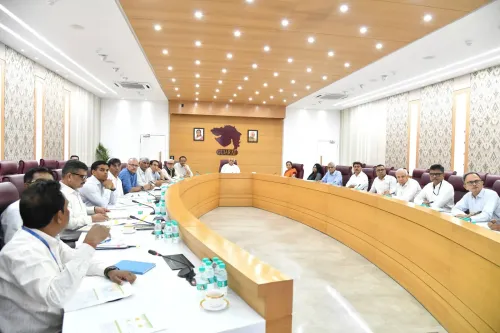
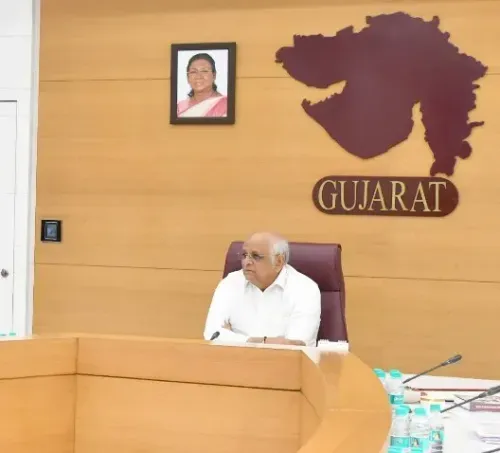
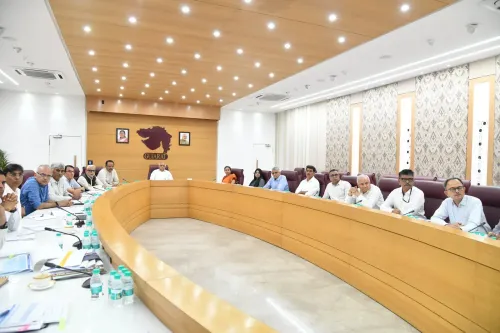
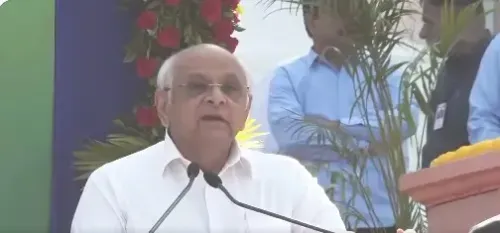
Gujarat Chief Minister Bhupendra Patel on Saturday, 20 June urged farmers across the state to embrace planned, science-backed agricultural methods in anticipation of below-normal monsoon rainfall linked to the El Niño phenomenon. Speaking at a state-level event in Gandhinagar, Patel asserted that Gujarat's expanding irrigation infrastructure is steadily reducing the farming community's dependence on seasonal rainfall.
PM Kisan Utsav Diwas Triggers the Call to Action
The occasion was a state-level PM Kisan Utsav Diwas held in Gandhinagar following the release of the 23rd instalment of the Pradhan Mantri Kisan Samman Nidhi (PM-Kisan) scheme. Farmers across Gujarat watched a live telecast of Prime Minister Narendra Modi's address from West Bengal, where the nationwide instalment was formally released.
What the Chief Minister Said
Patel underscored the state government's focus on water conservation, natural farming, and modern agricultural development. 'Even in low rainfall conditions, planned farming is possible with a scientific approach. Natural farming improves soil quality, maintains production capacity and increases the chances of farmers getting better market prices,' he said.
He specifically advised farmers to select low-water-consuming crops and follow scientifically advisory-based farming practices rather than reacting to seasonal uncertainty. 'Due to expected lower rainfall this year, farmers should select low-water-consuming crops and follow scientifically advisory-based farming practices instead of reacting to seasonal uncertainty,' he said.
Irrigation Infrastructure and Water Management
Patel highlighted Gujarat's transition from rain-dependent agriculture to a structured irrigation-based system, driven primarily by Narmada canal networks and systematic water distribution planning. This shift, he said, has enabled farmers in several regions to cultivate multiple crops across different seasons.
He added that irrigation management is being strengthened through effective utilisation of Narmada waters and systematic storage in lakes and reservoirs. Notably, the permissible limit for filling lakes in the Narmada command area has been raised from 3 km to 7 km to improve water availability for agriculture.
Support for Small and Marginal Farmers
Small and marginal farmers have been given expanded access to fencing schemes and support for storage infrastructure, aimed at reducing crop losses and improving market access, according to Patel.
He also pointed to progress under the 'Catch the Rain' campaign and the 'Amrit Sarovar' initiative, under which more than the targeted 75 Amrit Sarovars have been constructed in each district. Each MLA has been allocated ₹50 lakh for water conservation works, and efforts are ongoing to recharge groundwater through rainwater harvesting, he added.
Broader Context: El Niño and Indian Agriculture
El Niño events have historically suppressed monsoon rainfall over the Indian subcontinent, triggering drought-like conditions in rain-fed farming belts. Gujarat, which has invested heavily in canal-based irrigation over the past two decades, is better positioned than many states to absorb the shock — but the risk to kharif crop output remains real. The Chief Minister's appeal reflects a wider Centre and state push to prepare farmers for climate variability rather than rely solely on relief measures after the fact.
Point of View
But only if farmers change behaviour proactively. The ₹50 lakh per MLA allocation for water conservation is a decentralised execution bet; whether MLAs deploy it efficiently or it gets absorbed in low-impact works is the real accountability question. More broadly, Gujarat's Narmada-backed model is not replicable in states without comparable surface water infrastructure, which means the Centre's uniform PM-Kisan messaging needs state-specific climate advisories to be actionable.
NationPress
19 Sept 2026
Frequently Asked Questions
Why is Gujarat CM Bhupendra Patel urging scientific farming?
Chief Minister Bhupendra Patel has urged scientific farming because El Niño conditions are expected to cause below-normal monsoon rainfall in Gujarat this year. He wants farmers to plan crop selection and water use in advance rather than respond reactively to drought conditions.
What is the El Niño effect on Gujarat's monsoon?
El Niño is a climate phenomenon that historically suppresses monsoon rainfall over the Indian subcontinent, including Gujarat. Below-normal rainfall can reduce kharif crop output and strain water availability, making irrigation-based farming and crop diversification critical.
What infrastructure changes has Gujarat made to handle low rainfall?
Gujarat has expanded its Narmada canal network and raised the permissible lake-filling limit in the Narmada command area from 3 km to 7 km. The state is also implementing rainwater harvesting under the 'Catch the Rain' campaign and the 'Amrit Sarovar' initiative.
What is the PM-Kisan 23rd instalment and who benefits?
The 23rd instalment of the Pradhan Mantri Kisan Samman Nidhi (PM-Kisan) scheme is a direct cash transfer to eligible farmers across India. The nationwide release was announced by Prime Minister Narendra Modi from West Bengal, with Gujarat holding a state-level PM Kisan Utsav Diwas in Gandhinagar.
How much has each MLA been allocated for water conservation in Gujarat?
Each MLA in Gujarat has been allocated ₹50 lakh for water conservation works, as part of efforts to recharge groundwater levels through rainwater harvesting and strengthen local water storage capacity.