CM Bhupendra Patel Hails 12 Years of Modi's Infrastructure Push
Synopsis
Gujarat Chief Minister Bhupendra Patel on 16 June 2026 lauded PM Narendra Modi's 12-year infrastructure record, citing expressways, rural roads, high-speed rail corridors and aviation expansion as foundations for a developed India by 2047.
Key Takeaways
Gujarat CM Bhupendra Patel credited PM Narendra Modi with a 'historic revolution' in infrastructure over 12 years since 2014 .
The Bharatmala Pariyojana targets over 34,000 km of national highways and expressways since its 2015 approval.
The UDAN scheme (launched 2016 ) and the Mumbai-Ahmedabad High-Speed Rail Corridor (approved 2017 ) are cited as key milestones.
The PM Gati Shakti National Master Plan (inaugurated 2021 ) integrates planning across roads, rail, ports and logistics.
The National Infrastructure Pipeline set a ₹111 lakh crore investment target across central, state and private projects.
The post is part of BJP's #12YearsOfNayaBharatNirman campaign framing infrastructure as the foundation of Viksit Bharat 2047 .
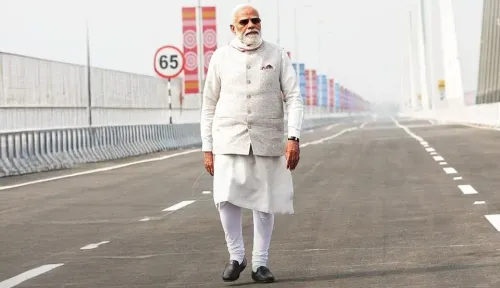
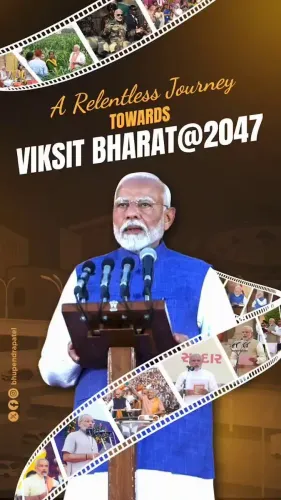
Gujarat Chief Minister Bhupendra Patel on Tuesday, 16 June 2026 credited Prime Minister Narendra Modi with delivering a 'historic revolution' in national infrastructure over the past 12 years, saying the expansion has transformed modern connectivity into a daily reality for citizens across India.
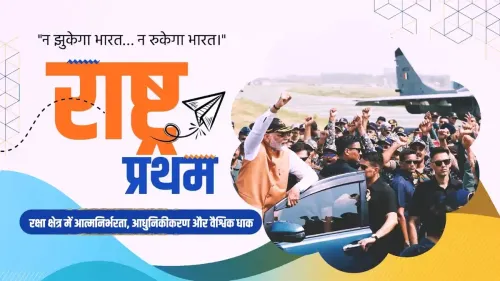
Posting under the hashtag #12YearsOfNayaBharatNirman (12 years of building a new India), CM Patel said the emphasis on 'rapid delivery over delays' had linked every corner of the country through 'world-class expressways, extensive rural roads, high-speed rail corridors, and a booming aviation network.' He described the combined effort as laying the 'robust physical foundations for a prosperous Viksit Bharat.'
Context
The post marks what the BJP is framing as a 12-year milestone since Narendra Modi assumed office as Prime Minister in May 2014. The ruling party has in recent weeks amplified messaging around this anniversary, with chief ministers and senior leaders cataloguing policy achievements across sectors. CM Patel, who leads one of India's most industrialised states, added his voice to that chorus by foregrounding infrastructure as the defining legacy of the period.
Policy Backdrop
The infrastructure push CM Patel references has been anchored by several flagship programmes. The Bharatmala Pariyojana, approved in 2015, targets construction of over 34,000 km of national highways and expressways. The UDAN regional connectivity scheme, launched in 2016, has operationalised new airports and air routes aimed at making air travel accessible beyond metro cities.
On the rail front, the Mumbai-Ahmedabad High-Speed Rail Corridor — India's first bullet-train project — received final approval in 2017 and remains under active construction. Overarching all these efforts is the PM Gati Shakti National Master Plan, inaugurated in 2021, which integrates planning across roads, railways, ports and logistics parks through a unified digital portal. The National Infrastructure Pipeline, announced in 2019, set an investment target of ₹111 lakh crore across central, state and private projects through 2025.
Together these schemes represent a structural shift from incremental road-widening to large-scale corridor and expressway construction, accompanied by institutional mechanisms designed to compress project timelines and reduce cost overruns.
Stakeholders and Impact
The beneficiaries of this infrastructure build-out span a wide range of actors. Rural communities have gained improved road connectivity under programmes such as the Pradhan Mantri Gram Sadak Yojana, while logistics companies and private investors stand to gain from lower freight costs as expressway and multimodal corridor networks mature. State governments, including Gujarat, have been key implementation partners, with the Gati Shakti framework encouraging state-level master plans aligned to the national grid.
For Gujarat specifically, the period has seen investments in port-linked expressways, the high-speed rail corridor passing through the state, and expansion of Ahmedabad and Surat airports. CM Patel's post implicitly positions Gujarat as a model beneficiary and co-executor of the national infrastructure vision.
What's Next
Attention in policy circles is now on the next phase of Bharatmala corridor approvals and the pace of high-speed rail construction, both of which are expected to feature in the 2026-27 Union Budget deliberations. State-level adoption of Gati Shakti master plans — particularly in BJP-governed states such as Gujarat, Uttar Pradesh and Madhya Pradesh — will be a key indicator of how deeply the coordinated planning model has taken root beyond the central government. The broader political narrative around Viksit Bharat 2047 means infrastructure milestones are likely to remain a central theme in BJP communications through the electoral cycle.
Point of View
Slotting into a coordinated BJP campaign marking 12 years of the Modi government with sector-specific achievement narratives. By centering infrastructure — an area where capital expenditure data and visible physical assets make claims relatively easy to substantiate — the party is playing to one of its strongest policy cards ahead of the next electoral cycle. The invocation of Viksit Bharat 2047 also serves a dual function: it roots present spending in a long-term vision while implicitly arguing that only continuity of the same leadership can deliver on that promise. For Gujarat, where the high-speed rail corridor and port-linked expressways are tangible local deliverables, the messaging carries particular resonance and reinforces CM Patel's alignment with the central government's development narrative.
NationPress
15 Sept 2026
Frequently Asked Questions
What is the #12YearsOfNayaBharatNirman campaign about?
The #12YearsOfNayaBharatNirman hashtag marks 12 years since Narendra Modi became Prime Minister in May 2014 . The BJP and its leaders are using it to highlight policy achievements across sectors, with infrastructure being a primary focus.
What is Viksit Bharat and how does infrastructure relate to it?
Viksit Bharat is the official government vision for India to become a developed nation by 2047 . Infrastructure — roads, rail, ports and aviation — is positioned as the foundational layer that enables economic growth required to reach that goal.
What is the Bharatmala Pariyojana?
Bharatmala Pariyojana is a flagship national highway development programme approved in 2015 targeting construction of over 34,000 km of roads and expressways across India to improve freight movement and regional connectivity.
What is PM Gati Shakti?
PM Gati Shakti is a National Master Plan inaugurated in 2021 that uses a unified digital portal to integrate infrastructure planning across roads, railways, ports and logistics parks, aiming to reduce project delays and duplication.
What infrastructure projects are significant for Gujarat under PM Modi?
Gujarat has seen key projects including the Mumbai-Ahmedabad High-Speed Rail Corridor — India's first bullet-train project approved in 2017 — along with port-linked expressways and expansions of Ahmedabad and Surat airports under the UDAN scheme.