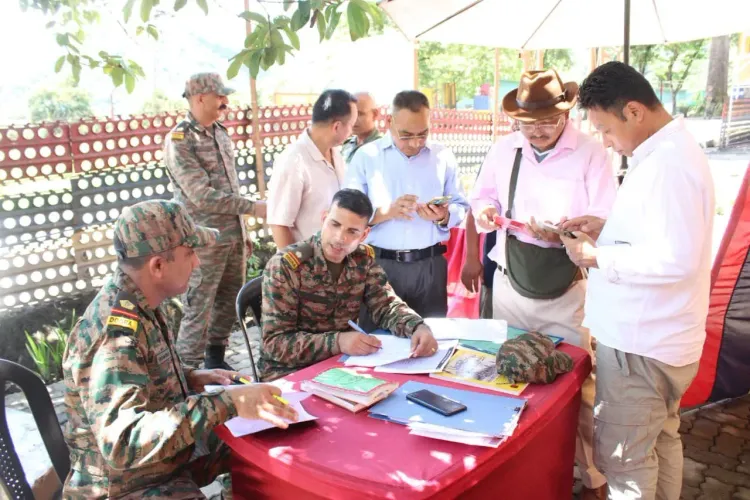
CM Pema Khandu hails Army's Shaurya Sambandh veterans outreach at Tuting
Synopsis
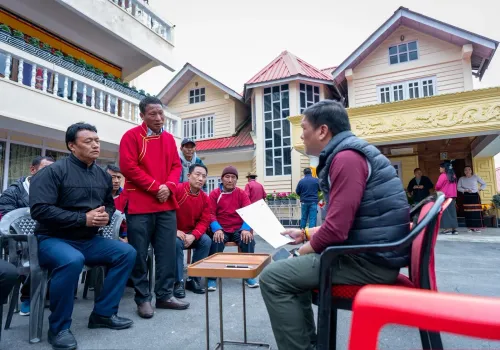
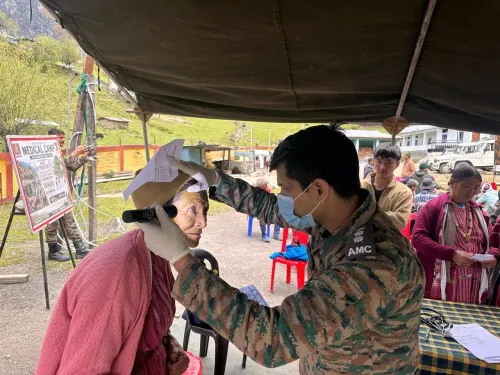
Arunachal Pradesh CM Pema Khandu on 25 July 2026 commended the Indian Army's Shaurya Sambandh outreach by Spear Corps at Tuting, which brought welfare support to veterans, war widows, and mothers of fallen soldiers in a remote LAC border region.
Key Takeaways
Arunachal Pradesh CM Pema Khandu publicly praised the Indian Army's Shaurya Sambandh – Veterans Outreach programme on 25 July 2026 .
The programme was conducted by the SpearHead Division under Spear Corps at Tuting , a remote town near the Line of Actual Control in Upper Siang district.
Beneficiaries include veterans, Veer Naris (war widows), and Veer Matas (mothers of fallen soldiers) in one of Arunachal Pradesh's most geographically isolated border regions.
The initiative is part of a broader pattern of Indian Army welfare outreach in the northeast, complementing the Ministry of Defence's Department of Ex-Servicemen Welfare established in 2004 .
Khandu tagged Eastern Command and MyGov Arunachal , indicating intent for coordinated civil-military welfare delivery in border districts.
Analysts will watch for expansion of the Shaurya Sambandh model to other remote Arunachal districts and integration with state welfare schemes.
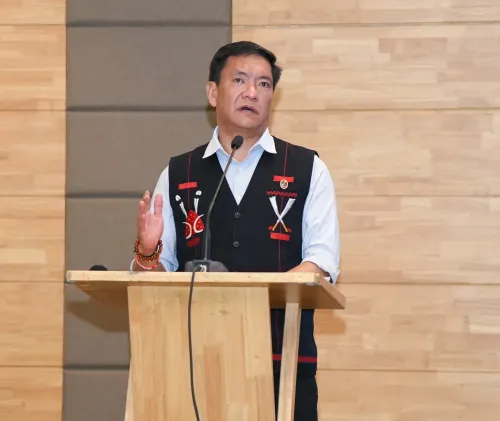
Arunachal Pradesh Chief Minister Pema Khandu on Saturday, 25 July 2026, praised the Indian Army's Shaurya Sambandh – Veterans Outreach programme conducted by the SpearHead Division under Spear Corps at Tuting, calling it a shining example of the nation's commitment to those who have served in uniform. The initiative reached veterans, Veer Naris (war widows), and Veer Matas (mothers of fallen soldiers) in one of Arunachal Pradesh's most remote border regions.
Context
Tuting, a remote town in Upper Siang district of Arunachal Pradesh, sits close to the Line of Actual Control (LAC) with China and is among the most logistically challenging areas in the country's northeast. Reaching veterans and their families in such terrain demands deliberate effort, making the Shaurya Sambandh outreach particularly significant. CM Khandu noted that the programme reaffirms that 'service to the nation never goes forgotten.'
In his post, Khandu wrote that 'the strength of a nation is measured not only by how it honours those in uniform, but also by how it stands with them after their service.' He tagged @adgpi (Additional Directorate General of Public Information), @EasternComd (Eastern Command), and @MyGovArunachal, signalling coordination across military and state government channels.
Policy Backdrop
The Ministry of Defence established the Department of Ex-Servicemen Welfare in 2004 to coordinate post-retirement benefits and outreach across states. Since the 2000s, the Indian Army has conducted veterans' meets and medical camps in Arunachal Pradesh's border areas under its Sadbhavana and border area development initiatives. Shaurya Sambandh fits within this longer continuum of welfare-oriented engagement by operational formations.
Spear Corps, the Indian Army formation responsible for the eastern sector of the India-China border, has historically combined operational readiness with civil-military outreach in the region. Eastern Command, headquartered in Kolkata, oversees both operational and welfare activities across the northeast, providing institutional backing for such programmes.
Stakeholders and Impact
The primary beneficiaries of Shaurya Sambandh are Indian Army veterans, Veer Naris, and Veer Matas residing in Arunachal Pradesh's border districts — communities that often face geographic and administrative barriers in accessing welfare entitlements. For families in areas like Tuting, physical outreach by Army formations can mean the difference between receiving and being denied pension documentation, medical referrals, and other benefits.
Successive central governments have prioritised ex-servicemen welfare in remote northeastern border regions to sustain morale and reinforce loyalty in strategically sensitive zones. Such outreach programmes by operational formations complement state-level welfare departments and national rehabilitation policies, and carry added weight given the sustained infrastructure development and troop presence along the LAC in Arunachal Pradesh.
What's Next
Observers will watch whether the Shaurya Sambandh model is extended to other remote districts of Arunachal Pradesh, and whether it is formally integrated with the state's Ex-Servicemen Welfare Department schemes. CM Khandu's public endorsement lends political visibility to the initiative and could accelerate state-level coordination with the Army's welfare machinery. As infrastructure along the LAC continues to improve, the logistical barriers to such outreach are expected to reduce, potentially enabling more frequent and wider-reaching camps.
Point of View
It could become a template for civil-military welfare convergence in India's northeastern frontier.
NationPress
25 Jul 2026
Frequently Asked Questions
What is Shaurya Sambandh?
Shaurya Sambandh is a veterans outreach programme conducted by the SpearHead Division under Spear Corps of the Indian Army at Tuting in Arunachal Pradesh, aimed at reaching veterans, Veer Naris (war widows), and Veer Matas (mothers of fallen soldiers) in remote border areas.
Where is Tuting located and why is it significant?
Tuting is a remote town in Upper Siang district of Arunachal Pradesh, situated close to the Line of Actual Control with China. Its geographic remoteness makes welfare outreach to veteran families there particularly challenging and meaningful.
What is Spear Corps?
Spear Corps is an Indian Army formation responsible for operations along the eastern sector of the India-China border. It operates under Eastern Command, which is headquartered in Kolkata.
Why did CM Pema Khandu praise this initiative?
CM Khandu highlighted Shaurya Sambandh as a model of post-service commitment to soldiers, stating that the strength of a nation is measured by how it stands with those in uniform even after their service ends.
What is the Department of Ex-Servicemen Welfare?
Established by the Ministry of Defence in 2004, the Department of Ex-Servicemen Welfare coordinates post-retirement benefits, pensions, and outreach programmes for veterans across Indian states, including in the northeast.