CM Rekha Gupta Backs Cabinet Nod for Agniveer Second Tour
Synopsis
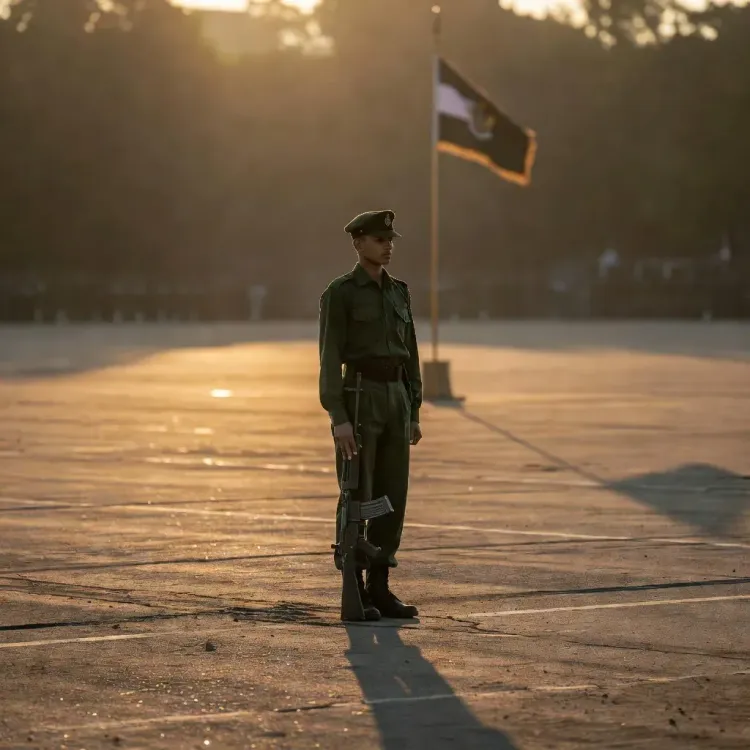
The Union Cabinet approved a voluntary two-year 'Second Tour of Duty' for Agniveers completing their initial four-year term, with eligible recruits also gaining access to regular military service pathways. Delhi CM Rekha Gupta hailed the decision as strengthening both young soldiers' careers and India's armed forces.
Key Takeaways
The Union Cabinet approved a voluntary two-year 'Second Tour of Duty' for Agniveers after their initial four-year service tenure.
Agniveers who meet specified selection criteria will now be eligible for regular military service — the most significant career-progression expansion since the scheme launched.
The Agnipath scheme was originally introduced in June 2022 , replacing permanent recruitment with a contractual four-year model across the Army, Navy and Air Force .
Delhi Chief Minister Rekha Gupta welcomed the decision, crediting PM Narendra Modi's leadership for the Cabinet move.
The second tour is designed to retain experienced personnel at peak operational value while preserving the fiscal discipline of the original framework.
Specific absorption percentages and selection benchmarks are awaited in forthcoming Ministry of Defence notifications.
A quiet but consequential shift in India's military recruitment architecture landed on Wednesday, 4 November 2026, when the Union Cabinet approved a voluntary 'Second Tour of Duty' — an additional two years of service for Agniveers who complete their initial four-year tenure. Delhi Chief Minister Rekha Gupta swiftly welcomed the move, calling it a vital step toward harnessing the experience, skills and capability of young recruits for deeper national service.
Posting on X in Hindi, CM Gupta credited Prime Minister Narendra Modi for the decision: 'अग्निवीरों को चार वर्ष की प्रारंभिक सेवा के बाद दो वर्ष और राष्ट्रसेवा का अवसर मिलेगा' — 'Agniveers will get the opportunity to serve the nation for two more years after the initial four-year service.' She added that the decision would also open pathways to regular military service for those who meet the specified selection criteria.
What the Agnipath scheme was designed to do — and what critics said it left undone
When the Agnipath scheme was first approved by the Union Cabinet in June 2022, it replaced India's decades-old permanent recruitment model with a contractual four-year tenure. The stated goals were clear: bring down the average age profile of the armed forces, reduce the long-term pension burden, and infuse fresh energy across the Indian Army, Navy and Air Force. Only a fraction of each cohort — the original framework specified roughly 25 per cent — would be retained permanently as Agniveers transitioned to full-service cadre.
The launch triggered widespread protests across several states in 2022, with aspirants raising concerns about job security, pension entitlements and the compressed service window. The feedback loop from those protests, and from the first cohorts now approaching the end of their initial tenures, appears to have shaped the Cabinet's latest calibration. A second tour does not dissolve the contractual architecture — it extends it, buying time and experience for both the recruit and the institution.
The second-tour logic: bridging experience and operational continuity
The core military argument for the extension is straightforward. A soldier with four years of training and fieldwork is an asset at peak operational value. Releasing that personnel at the four-year mark — before institutional knowledge fully matures — was seen by defence planners as a structural inefficiency. The Second Tour of Duty allows the armed forces to retain experienced short-service personnel for two additional years without converting them to permanent pensionable rolls, preserving the fiscal discipline the scheme was originally designed to enforce.
Critically, the Cabinet decision also opens a parallel track: Agniveers who meet defined selection criteria will now be eligible for regular military service — the most significant career-progression signal since the scheme's launch. The specific absorption percentages and selection benchmarks are expected to be detailed in forthcoming Ministry of Defence notifications, and the practical impact will only become visible once the first cohorts actually navigate the new pathways.
Delhi's Chief Minister and the BJP's political messaging on defence reform
CM Gupta's post is part of a broader pattern of BJP leaders publicly anchoring military welfare decisions to PM Modi's leadership — a consistent communications strategy that places party governance at the centre of national-security narratives. For Delhi, a city with a substantial population connected to military service, the message carries direct constituency resonance. Gupta described the decision as one that would 'further strengthen the Indian armed forces' even as it creates better opportunities for the young Agniveers themselves.
The Agnipath framework remains a live political flashpoint. Opposition parties have consistently demanded its rollback, arguing the contractual model devalues military service. The second-tour approval is unlikely to end that debate — but it hands the government a concrete counter-argument: the scheme is not static, it evolves in response to feedback.
India's first Agnipath cohorts are approaching the crossroads. What happens to them next — how many get the second tour, how many earn regular commissions, how many re-enter civilian life — will write the real verdict on this reform. The Cabinet decision sets the rules. The recruits will live them.
Point of View
But an acknowledgement that four years alone cannot extract full value from trained military personnel. By layering a voluntary extension and a regular-service pathway onto the existing model, the government addresses two of the loudest criticisms — career truncation and limited absorption — without dismantling the pension-cost rationale at the scheme's core. For BJP leaders like CM Gupta, amplifying this decision reinforces the party's military-welfare credentials ahead of a continued political battle over Agnipath's legitimacy. The real test, however, lies in implementation: the selection criteria and absorption numbers will determine whether this is genuine career reform or a symbolic gesture to a generation of recruits who took a leap of faith on a contested scheme.
NationPress
4 Nov 2026
Frequently Asked Questions
What is the Agniveer Second Tour of Duty approved by the Cabinet?
The Union Cabinet approved a voluntary additional two-year service period — called the 'Second Tour of Duty' — for Agniveers who complete their initial four-year tenure under the Agnipath scheme. This extends their service to a possible six years.
Can Agniveers now get permanent jobs in the Indian Army?
The Cabinet decision opens a pathway to regular military service for Agniveers who meet specified selection criteria, but the exact absorption percentages and benchmarks are expected to be detailed in forthcoming Ministry of Defence notifications.
What is the Agnipath scheme and when was it launched?
The Agnipath scheme is a contractual four-year military recruitment model covering the Indian Army, Navy and Air Force, approved by the Union Cabinet in June 2022. It replaced the earlier permanent recruitment model to lower the average age of the forces and manage pension costs.
Why did the Cabinet extend the Agniveer service period?
The extension responds to feedback on experience retention and career progression since the scheme's 2022 launch. Retaining trained personnel at peak operational readiness for two additional years addresses concerns about institutional knowledge being lost at the four-year exit point.
What did Delhi CM Rekha Gupta say about the Agniveer second tour decision?
Delhi Chief Minister Rekha Gupta welcomed the decision on X, calling it 'highly commendable' and stating it would ensure better use of young Agniveers' experience, skills and capability while further strengthening the Indian armed forces.