CM Rekha Gupta hails GST Council reforms on arrest, refund rules
Synopsis
Delhi CM Rekha Gupta praised the GST Council's newly approved reforms — covering removal of arrest clauses, decriminalisation, process simplification, and automated refunds — saying the changes will lower compliance costs, build taxpayer trust, and accelerate India's economic growth.
Key Takeaways
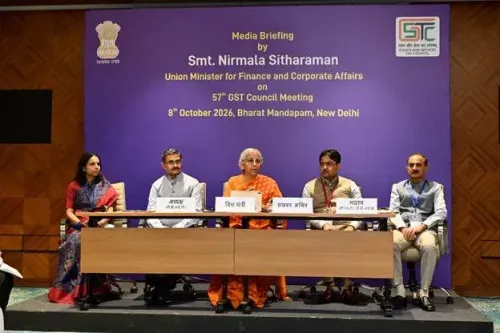
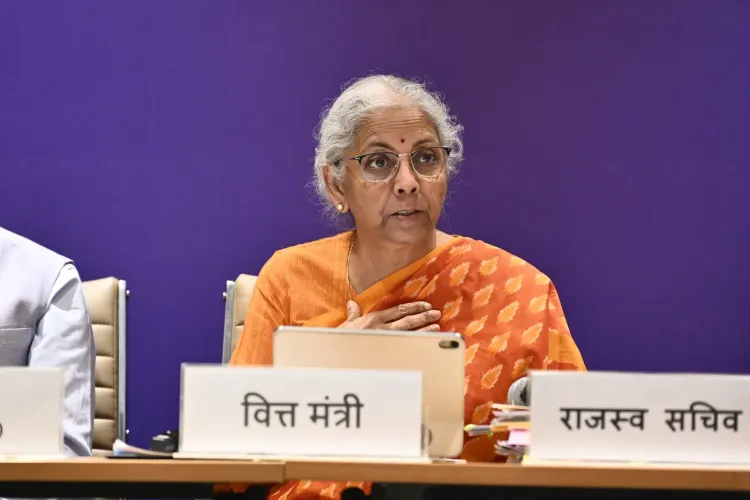
The GST Council , chaired by Finance Minister Nirmala Sitharaman , approved a major reform package on or before October 9, 2026 .
Key changes include removal of arrest-related GST provisions and a reduction in criminal clauses for certain offences.
Automated refunds are a central feature, aimed at freeing up working capital for exporters and small businesses.
Delhi CM Rekha Gupta said the reforms will reduce compliance costs and speed up tax-administration decisions.
The changes are positioned as strengthening the trust relationship between the government and India's taxpaying community.
The reforms continue a multi-year arc of GST rationalisation that has included rate corrections and expanded e-invoicing since 2022.
A sweeping set of changes to India's goods and services tax framework — covering arrests, criminal provisions, process simplification, and automated refunds — has drawn an emphatic welcome from Delhi Chief Minister Rekha Gupta, who called the reforms a decisive step toward a simpler, more business-friendly tax order on Friday, October 9, 2026.
What the GST Council actually approved
The GST Council, chaired by Union Finance Minister Nirmala Sitharaman, greenlit a package of amendments that traders and industry bodies have long sought. Four changes stand out: removal of arrest-related provisions for certain GST violations, a reduction in criminal clauses, streamlining of compliance procedures, and the introduction of automated refunds — a reform that directly cuts the time businesses wait for their money back.
CM Gupta, posting in Hindi, said these decisions will deliver 'badi rahat' (great relief) to traders and entrepreneurs across the country, reducing the cost of compliance and accelerating decision-making within the tax administration.
Why decriminalisation matters for Indian business
The arrest and criminal-provision clauses under GST have been a persistent flashpoint since the tax's rollout in 2017. Small and medium traders, in particular, complained that the threat of arrest for procedural defaults — not wilful fraud — created a climate of fear rather than compliance. Removing or softening those provisions signals a fundamental shift: the state treating taxpayers as partners, not suspects.
Automated refunds address a separate but equally acute pain point. Manual refund processing has historically meant weeks or months of follow-up, tying up working capital for exporters and small manufacturers. Automation compresses that cycle significantly.
Delhi's stake in smoother GST compliance
Delhi, as one of India's largest commercial hubs, hosts hundreds of thousands of GST-registered businesses — from wholesale markets in Chandni Chowk to tech-services firms in Gurugram's orbit. Any reduction in compliance burden lands directly on the city's trader community, a constituency CM Gupta has repeatedly focused on since taking office. Her post frames the reforms not just as a policy update but as a trust-building exercise between the government and the taxpayer.
She wrote that the changes will 'kar prashasan mein vishwas badhega' — strengthen confidence in the tax administration — and give fresh momentum to India's economic progress under Prime Minister Narendra Modi.
The broader GST reform arc
The Council's move fits a pattern of incremental GST rationalisation since 2022: rate corrections, tightened input-tax-credit rules, and the gradual expansion of the e-invoice mandate. The decriminalisation direction, in particular, was recommended by a Group of Ministers and had cleared preliminary rounds before reaching a formal Council vote. Its approval marks one of the more structurally significant adjustments to GST's enforcement architecture since the tax's inception.
For Indian businesses, easier GST compliance is also an ease-of-doing-business metric watched closely by global investors and multilateral agencies. Smoother tax administration, paired with faster refunds, feeds directly into export competitiveness — particularly for sectors like textiles, gems and jewellery, and engineering goods where refund delays hit hardest.
Whether the amended rules translate swiftly into ground-level relief will depend on implementation timelines and the GSTN's technical rollout — and that is the number every trader will be watching next.
Point of View
The Centre is trying to convert GST from a compliance burden into a trust-building instrument — a pivot that also gives state-level BJP leaders like Rekha Gupta a positive local narrative. The real test, however, is implementation speed: reforms that stay on paper generate cynicism faster than no reform at all. If the GSTN's technical rollout matches the political ambition, this could mark a genuine inflection point in India's tax-administration culture.
NationPress
9 Oct 2026
Frequently Asked Questions
What did the GST Council approve in October 2026?
The GST Council approved reforms including the removal of arrest-related provisions for certain violations, a reduction in criminal clauses, simplified compliance procedures, and automated refunds for traders and businesses.
Why is removing GST arrest provisions important for traders?
Arrest clauses under GST created fear among small and medium traders who faced detention even for procedural lapses rather than wilful fraud. Removing these provisions shifts the enforcement approach from punitive to compliance-oriented, reducing legal risk for honest businesses.
What are automated GST refunds and who benefits?
Automated refunds replace the manual refund process, which often took weeks or months, tying up exporters' and manufacturers' working capital. Automation speeds up the cycle significantly, benefiting sectors like textiles, gems, and engineering goods most.
What is Delhi CM Rekha Gupta's reaction to the GST reforms?
Rekha Gupta welcomed the reforms enthusiastically, saying they will provide great relief to traders and entrepreneurs, lower compliance costs, accelerate tax decisions, and strengthen trust between the government and taxpayers.
How do the new GST changes affect ease of doing business in India?
Simpler compliance, fewer criminal risks, and faster refunds directly improve India's ease-of-doing-business rankings and make the country more attractive to domestic investors and exporters competing in global markets.