CM Rekha Gupta Hails ₹23,731 Cr GOBARdhan Cabinet Nod
Synopsis
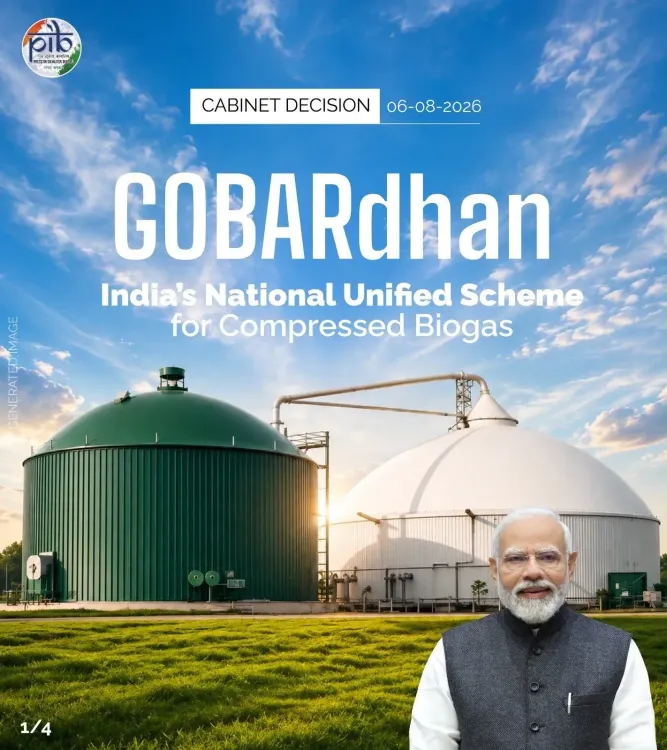
The Union Cabinet under PM Modi has approved ₹23,731 crore for the GOBARdhan scheme, targeting a near-tenfold rise in Compressed Biogas output to boost rural incomes, clean energy, and India's energy security. Delhi CM Rekha Gupta welcomed the move as a milestone for 'Aatmanirbhar Bharat'.
Key Takeaways
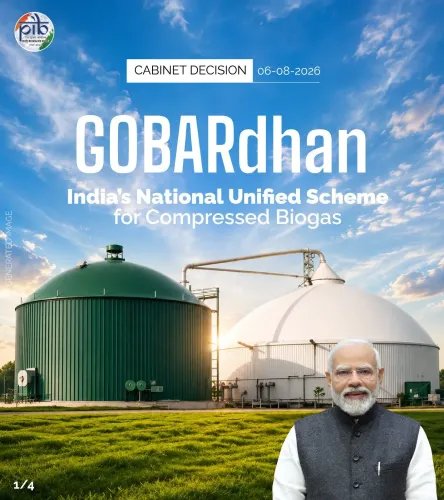
The Union Cabinet approved ₹23,731 crore for the expanded GOBARdhan scheme under PM Narendra Modi.
The scheme targets a nearly tenfold increase in Compressed Biogas (CBG) production.
Beneficiaries include farmers, cooperatives, MSMEs, women entrepreneurs, and rural industries .
GOBARdhan was originally launched in 2018 to convert organic waste into biogas and manure.
The expansion complements the SATAT initiative and Swachh Bharat Mission's waste-to-wealth goals.
Delhi CM Rekha Gupta welcomed the decision as a step toward rural prosperity and energy security.
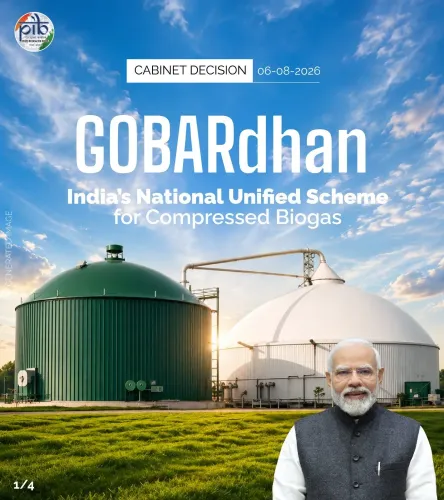
Cattle dung is now a cabinet priority. The Union Cabinet, under Prime Minister Narendra Modi, has approved a ₹23,731 crore outlay for the GOBARdhan scheme — a sweeping push to turn organic waste into Compressed Biogas and rural prosperity, with production targeted to rise nearly tenfold. Delhi Chief Minister Rekha Gupta welcomed the decision on 6 August 2026, calling it a 'visionary step' toward rural self-reliance.
What GOBARdhan actually does — and why the scale matters
GOBARdhan — short for Galvanizing Organic Bio-Agro Resources Dhan — was first launched in 2018 to convert cattle dung, crop residue, and other organic waste into biogas and organic manure. The new cabinet sanction dramatically expands that mandate. A tenfold jump in Compressed Biogas (CBG) output would not only generate clean fuel — it would convert a chronic disposal problem into a revenue stream for farmers, cooperatives, MSMEs, women entrepreneurs, and rural industries.
The arithmetic of rural waste is staggering. India generates hundreds of millions of tonnes of agricultural and animal waste annually, much of it burned or left unmanaged — a source of both pollution and lost value. GOBARdhan's logic is simple: intercept that waste, ferment it, and sell the output as fuel and fertiliser. At this approved scale, the scheme moves from pilot ambition to national infrastructure.
Fitting into India's bigger energy-security puzzle
The GOBARdhan expansion slots into a broader policy architecture. It complements the SATAT (Sustainable Alternative Towards Affordable Transportation) initiative, which aims to supply CBG to the transport sector, and aligns with the Swachh Bharat Mission's waste-to-wealth philosophy. Together, these programmes represent successive governments' sustained bet on bio-energy as a lever to trim India's heavy crude-oil import bill while meeting renewable energy commitments.
Energy security is the quiet urgency behind the rural-prosperity framing. Every cubic metre of biogas produced domestically is one less unit of imported fossil fuel. At the volumes this scheme targets, the macro impact on India's energy balance sheet becomes real — not symbolic.
Who stands to gain on the ground
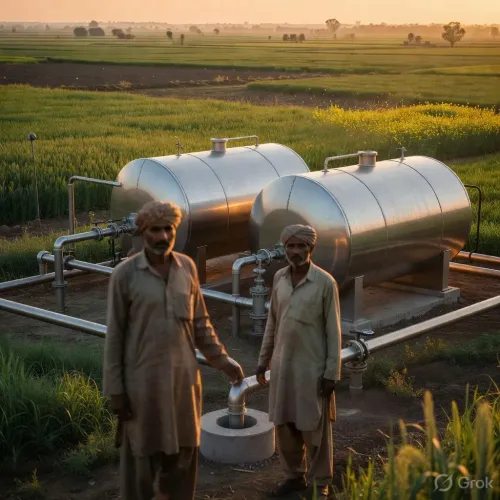
CM Gupta's post specifically names the beneficiary chain: farmers who sell organic feedstock, cooperative societies that can own and operate plants, MSMEs that build and service biogas infrastructure, and women entrepreneurs who are explicitly called out as a target group. Rural industries gain a cheaper, locally sourced energy input. The design signals an intent to distribute economic gains across the value chain rather than concentrate them in large utilities.
The watch items now are phased fund releases, the pace of tendering new CBG plants, and whether incremental production figures actually track toward the tenfold target. Policy announcements of this size live or die in implementation.
From dung heap to energy grid — if the execution matches the ambition, GOBARdhan's revised scale could rewrite what rural India's waste is worth.
Point of View
731 crore GOBARdhan sanction is one of the larger single-scheme outlays in India's bio-energy history, signalling that the government is moving CBG from a niche programme to mainstream energy infrastructure. Politically, the framing — farmers, women entrepreneurs, MSMEs — is carefully calibrated to broaden the scheme's constituency ahead of rural electoral cycles. The tenfold production target is aggressive; the credibility test will come in plant-tendering timelines and actual CBG offtake data. If delivery tracks the announcement, it meaningfully advances India's twin goals of rural income diversification and fossil-fuel import reduction.
NationPress
6 Aug 2026
Frequently Asked Questions
What is the GOBARdhan scheme?
GOBARdhan stands for Galvanizing Organic Bio-Agro Resources Dhan. Launched in 2018, it converts cattle dung, crop residue, and other organic waste into Compressed Biogas and organic manure, generating clean energy and rural income.
How much money has the Cabinet approved for GOBARdhan in 2026?
The Union Cabinet approved ₹23,731 crore for the expanded GOBARdhan scheme, as announced on 6 August 2026.
Who benefits from the GOBARdhan scheme expansion?
The scheme is designed to benefit farmers, cooperative societies, MSMEs, women entrepreneurs, and rural industries by creating new income and employment through biogas production and waste management.
What is Compressed Biogas and how does it help India?
Compressed Biogas (CBG) is purified biogas compressed for use as a transport and industrial fuel. Scaling CBG production domestically reduces India's dependence on imported fossil fuels and supports renewable energy targets.
How does GOBARdhan connect to Swachh Bharat Mission?
GOBARdhan is aligned with Swachh Bharat Mission's waste-to-wealth approach, converting organic waste that would otherwise be burned or dumped into commercially valuable biogas and manure.