CM Rekha Gupta Hails DRDO Missile Defence Milestone
Synopsis
Delhi Chief Minister Rekha Gupta on June 13, 2026, congratulated DRDO on demonstrating India's multi-layered Ballistic Missile Defence and anti-ship missile capabilities, framing the achievement as a landmark in the Atmanirbhar Bharat journey under Prime Minister Modi.
Key Takeaways
Delhi Chief Minister Rekha Gupta publicly congratulated DRDO on June 13, 2026 , for a successful missile defence demonstration.
The demonstration covered both multi-layered Ballistic Missile Defence and anti-ship missile capabilities.
India's Integrated Guided Missile Development Programme dates to 1983 , with the first BMD interception test conducted in 2007 .
The Atmanirbhar Bharat Abhiyan , launched in May 2020 , has provided the policy framework for accelerating indigenous defence manufacturing.
Operational induction timelines and follow-on tests by the Ministry of Defence are the key developments to watch.
Delhi Chief Minister Rekha Gupta on Saturday, June 13, 2026, congratulated DRDO on the successful demonstration of India's multi-layered Ballistic Missile Defence and anti-ship missile capabilities, calling it a proud milestone in the nation's journey toward self-reliance in defence.
Context
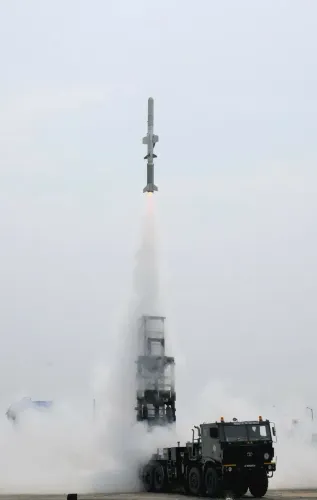
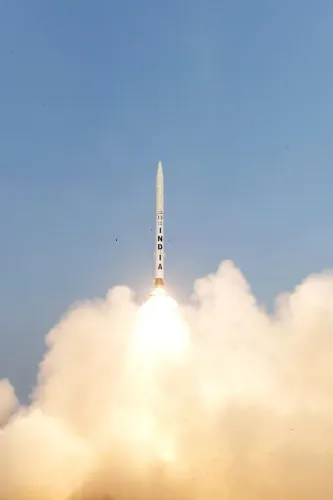
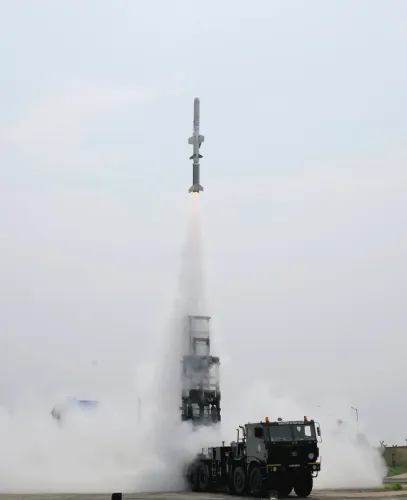
Posting on X, Chief Minister Gupta wrote: 'Congratulations to Team DRDO on the successful demonstration of India's multi-layered Ballistic Missile Defence and anti-ship missile capabilities.' She linked the achievement directly to the leadership of Prime Minister Narendra Modi, stating that India's indigenous defence capabilities 'continue to scale new heights.'
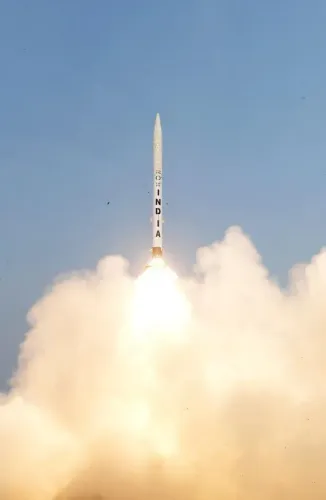
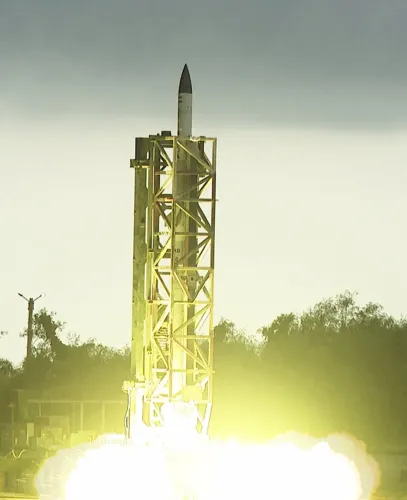
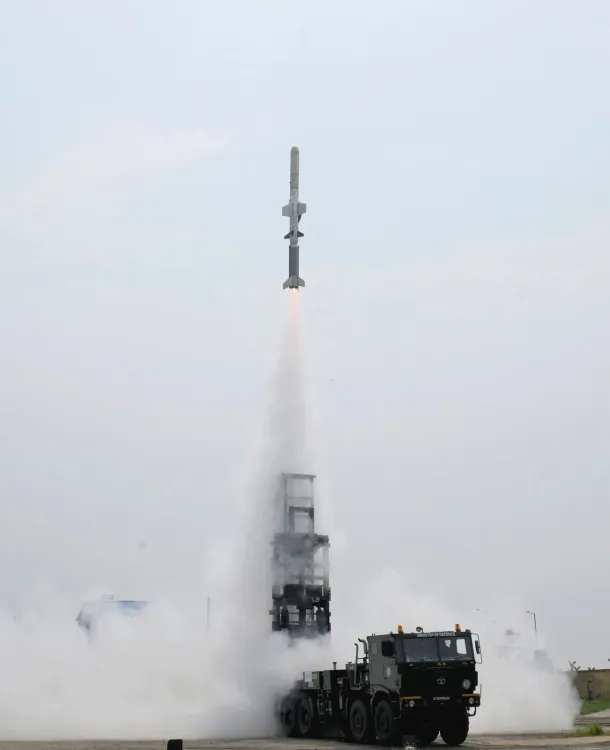
The post, accompanied by three images, invoked the Atmanirbhar Bharat framework — the national self-reliance initiative — framing the demonstration as evidence of India 'securing our skies' and 'strengthening our seas.'
Policy Backdrop
India's pursuit of layered missile defence is rooted in decades of institutional effort. The Integrated Guided Missile Development Programme, launched in 1983, laid the technological foundation for core indigenous missile systems. India conducted its first successful Ballistic Missile Defence interception test in 2007, marking the beginning of a structured BMD programme.
The Atmanirbhar Bharat Abhiyan, announced in May 2020, gave fresh political impetus to domestic defence manufacturing, with the government placing successive restrictions on imported weapons and platforms to compel local production. Multi-layered BMD — capable of intercepting threats at varying altitudes and ranges — alongside anti-ship missile systems, represents a strategic priority for both continental and maritime security.
DRDO, as India's premier defence research and development agency, has been the institutional engine behind these programmes, working in coordination with the armed forces and the Ministry of Defence.
Stakeholders and Impact
The primary beneficiaries of advances in BMD and anti-ship missile technology are the Indian Army, Indian Air Force, and Indian Navy, which would eventually induct operationally proven interceptors and sea-skimming missiles into their arsenals. For DRDO scientists and engineers, successful demonstrations validate years of research investment and strengthen the case for continued public funding.
Strategically, a credible multi-layered missile defence capability enhances deterrence by complicating adversary strike calculations, while indigenous anti-ship missiles reduce dependence on foreign suppliers for critical naval armaments. Both capabilities are central to India's stated goal of strategic autonomy.
What's Next
Attention will now turn to operational induction timelines — the point at which demonstrated systems are formally inducted into service with the armed forces. The Ministry of Defence is expected to announce follow-on test schedules and any planned sea-based or space-linked variants of the interceptor systems. Sustained political endorsement from leaders such as Chief Minister Gupta signals that indigenisation of defence technology will remain a prominent theme in public discourse ahead of future budget and procurement cycles.
Point of View
She reinforces the BJP's broader messaging that indigenous defence capability is a governance deliverable, not merely a bureaucratic outcome. The framing of 'securing our skies' and 'strengthening our seas' maps neatly onto a dual-front strategic anxiety that resonates with a wide cross-section of Indian voters. Over time, such endorsements build a political constituency for defence self-reliance that transcends the technical domain and enters mainstream electoral discourse.
NationPress
18 Sept 2026
Frequently Asked Questions
What did DRDO demonstrate in June 2026?
DRDO successfully demonstrated India's multi-layered Ballistic Missile Defence and anti-ship missile capabilities, as acknowledged by Delhi Chief Minister Rekha Gupta on June 13, 2026.
What is Atmanirbhar Bharat in defence?
Atmanirbhar Bharat Abhiyan, launched in May 2020, is India's national self-reliance initiative that includes a push to manufacture defence equipment indigenously and reduce dependence on foreign arms imports.
When did India first test its Ballistic Missile Defence system?
India conducted its first successful Ballistic Missile Defence interception test in 2007, marking the start of a structured programme to build layered missile defence capabilities.
What is the Integrated Guided Missile Development Programme?
The Integrated Guided Missile Development Programme was launched in 1983 to develop core indigenous missile technologies in India, forming the foundation for systems such as Agni, Prithvi, and the BMD interceptors.
Why is Rekha Gupta commenting on a defence test?
As Delhi Chief Minister and a BJP leader, Rekha Gupta used the DRDO milestone to publicly reinforce the party's Atmanirbhar Bharat narrative and credit Prime Minister Modi's leadership for India's growing indigenous defence capabilities.